Key Terms
Amatonormativity is a term coined by Elizabeth Brake in her 2012 book Minimizing Marriage: Marriage, Morality, and the Law. In that book, Brake defines amatonormativity as “the assumptions that a central, exclusive, amorous relationship is normal for humans in that it is a universally-shared goal, and that such a relationship is normative in that it should be aimed for in preference to other relationship types.”
Brake gives another explanation of amatonormativity in a 2018 paper called “Do Subversive Weddings Challenge Amatonormativity: Polyamorous Weddings and Romantic Love Ideals,” where she describes amatonormativity as “the expectation and normative expectation that everyone seeks and flourishes in the same type of dyadic, romantic, sexual love relationship.”
Aromanticism is a romantic orientation. The word aromantic commonly describes someone who experiences little to no romantic attraction and can be abbreviated to aro.
Asexuality is a sexual orientation. The word asexual commonly describes someone who experiences little to no sexual attraction and can be abbreviated to ace.
A-spec is an umbrella term for orientations based on conditional and no romantic and/or sexual attraction, so anyone on the aromantic or asexual spectrums is a-spec.
The definitions above are from the Aromantic-spectrum Union for Recognition, Education, and Advocacy (AUREA).
We often describe sexuality as a spectrum. You can also think of aromanticism and asexuality as spectrums, and there are many, many different identities at varying points along those spectrums. So, for example, somewhere between allosexual and asexual is demisexual, which describes someone on the asexual spectrum who experiences conditional attraction. A demisexual person might not be sexually attracted to someone upon first meeting them, but might eventually experience sexual attraction to them after forming a significant emotional bond.
Similarly, there are a range of identities on the aromantic spectrum. Grayromanticism is a point on that matrix and describes when someone may experience romantic attraction but not as frequently or intensely as is deemed normative.





I really like this alternate definition provided by Sherronda J. Brown in Refusing Compulsory Sexuality:
“People on the asexuality spectrum, also called ace, experience little to no sexual attraction and/or little to no sexual desire, and these things are not evidenced by either the presence or absence of sexual arousal or activity. Even though “lacking sexual attraction and/or desire” is the widely accepted general definition, I do not understand asexuality to be defined by this “lack.” It is not about being without sexuality, though some may choose to describe themselves this way. I believe it is more true to say that asexuality is defined by a relationship to sex that is atypical to what has been decided on by society at large to be normative, and that atypical nature is marked by varying degrees of sexual attraction and desire. Asexual experiences stand outside what has been accepted and approved of as “normal” sexual experiences for both the queer and the heterosexual communities.”
Refusing Compulsory Sexuality: A Black Asexual Lens on Our Sex-Obsessed Culture, p. 2
I think the same can be said for aromanticism – it is defined by a relationship to romance that is nonnormative, and aromantic people have experiences that do not conform to the accepted experiences of romantic attraction.
Aphobia is discrimination and prejudice against people on the asexual and aromantic spectrums.
Allonormativity is the assumption that everyone is allosexual and alloromantic and that that is the normal, preferred way of being.
So while amatonormativity describes how we value certain kinds of relationships over others, allonormativity describes how allosexuality and alloromanticism – experiencing sexual and romantic attraction – are seen as ideal, whereas asexuality and aromanticism are seen as inferior or even non-existent.
Aphobia, allonormativity, and amatonormativity are extremely interrelated.
What’s the Problem?
A lot of people are married. A lot of people are happily married. What’s wrong with thinking that marriage is good and that people should aspire to it? In this presentation, I’m focusing on asexuals and aromantics, but amatonormativity harms us all.
It’s harmful for single people, who others sometimes assume must be lonely and miserable because they’re single, or it’s assumed that because they’re “still single,” there must be something wrong with them. Single people are often viewed as immature, not having their lives together, or not leading a life that is as full and enjoyable as that of someone who has a partner. Amatonormativity can pressure people into pursuing romance and marriage in an effort to be whole or successful. (It should be said that this stigma against single people affects men and women very differently.)
Amatonormativity also harms polyamorous people. Polyamory is still considered deviant, and polyamorous relationships are seen as less loving, less committed, less legitimate, and less deserving of respect.
It can be harmful for partnered people, who might be influenced to stay in a bad situation or settle because they’ve been told that it’s better to have a bad relationship than no relationship.
And amatonormativity limits our potential. Because the nuclear family is so idealized, things like cohabitating with friends into old age, co-parenting with a platonic partner or partners, multiple generations or multiple families in one household raising any children together and taking care of one another are things we might not even think about because we’ve never seen them modeled. That is an injustice.
There are some issues that uniquely impact a-specs that I want to touch on, starting with the pathologization and medicalization of aromanticism and asexuality. A-spec people often have their orientations attributed to trauma, mental illness, or hormone imbalances; many have been subjected to conversion therapy. The UK’s 2018 National LGBT Survey found that asexual respondents were the most likely to have undergone or been offered conversion therapy.
Hypoactive Sexual Desire Disorder (HSDD), “a deficiency or absence of sexual fantasies and desire for sexual activity” contingent that the “disturbance must cause marked distress or interpersonal difficulty” was in the 4th edition of the Diagnostic and Statistical Manual of Mental Disorders. In the DSM-V, this disorder is split by gender (WEIRD) and a clause was added that says, “if the patient self-identifies as asexual, then treatment is not needed.” So basically, asexuality is a diagnosable mental disorder.
Because many medical professionals see asexuality as sexual dysfunction rather than an orientation and natural human variation, asexuals are often subject to unwanted medical interventions to treat a low libido, for example. And this can make it really hard for a-specs to actually get the medical help they need.
A-specs also face pressure to enter into romantic or sexual relationships as well as shame, claims that their orientations are made up, marginalization (both outside of and within queer communities), and low self-acceptance and self-satisfaction as a result.
These are all issues that are documented in research and surveys, and much of the research on a-spec experiences has been conducted by independent researchers who are part of the ace and aro communities.
The following are just a few examples of the privileges afforded to married couples vs. people in other kinds of relationships.
The Marital Tax Deduction. You can transfer an unlimited amount of assets to your spouse and incur no estate or gift tax.
Married couples also enjoy government benefits like social security survivorship benefits, which allow you to collect monthly payments based on your spouse’s social security earnings record if they were to pass away.
And there are health- and care-related privileges associated with marriage. I could marry a random stranger off the street and put them on my health insurance, but there are very few places where I could add my sister, who I’ve known for 23 years, to my health insurance unless she is my legal dependent. With most insurance companies, I could only cover my spouse and any children I might have up until they turn 26.
The Family and Medical Leave Act (FMLA) allows paid leave to care for a sick parent, child, or spouse. So if I was ill and my best friend was taking care of me, they couldn’t get FMLA leave.
Incentivizing people to marry has erected these structural barriers to caring for the people we have non-romantic relationships with.
Aromanticism & Asexuality in Japan
The ways we understand and talk about sexuality and romance are determined by our socio-cultural contexts. I’m approaching this topic from a Western perspective, but since we’re talking about Japanese media, I do want to touch on a little bit of the Japanese context.
While it is more common in Western conversations about asexuality and aromanticism to see sexual attraction and romantic attraction split, considered to be two different categories of attraction with corresponding orientations, the term “asexual” is used in Japan to describe someone who experiences neither sexual nor romantic attraction. In the West, we might call someone like that an aromantic asexual, or aroace. But as it is used in Japan, the term “asexual” covers both. The word “nonsexual” is used in Japan to describe those who feel romantic attraction but not sexual attraction.
The declining birth and marriage rates in Japan are a common topic of conversation globally. My understanding is that this decline is mostly attributed to working conditions – if you’re always working, you don’t have time to get married and start a family. And I can’t speak to the nature or severity of amatonormativity in Japan, but I imagine this situates Japanese a-specs very specifically. I could see that creating additional pressure to couple up. Or maybe it’s a really good excuse… “Sorry mom, I know you want me to get married, but I’m SO busy at work, I don’t know when I’ll find the time!”
Aromantic & Asexual Representation
I Want to Be a Wall
Yuriko and Gakurouta are getting married. But he’s gay and pining after his childhood friend, and she’s an asexual boys’ love fangirl. I Want to Be a Wall is a slice of life manga series that follows this unlikely couple as they learn about one another and how to be the partner that the other needs even though their relationship is not based on attraction.
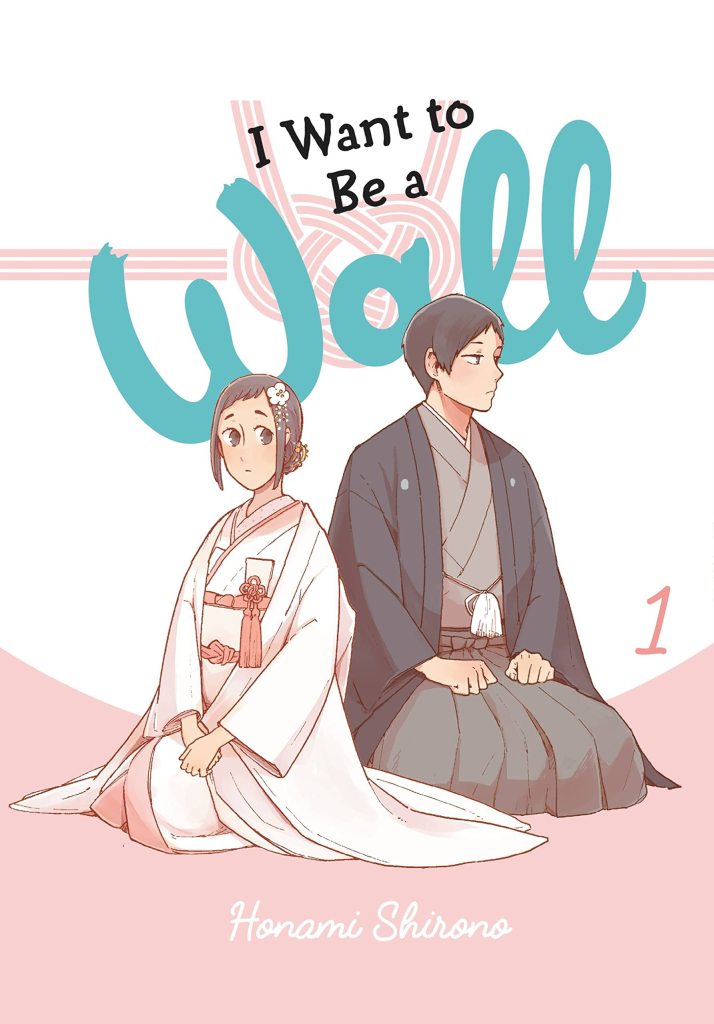
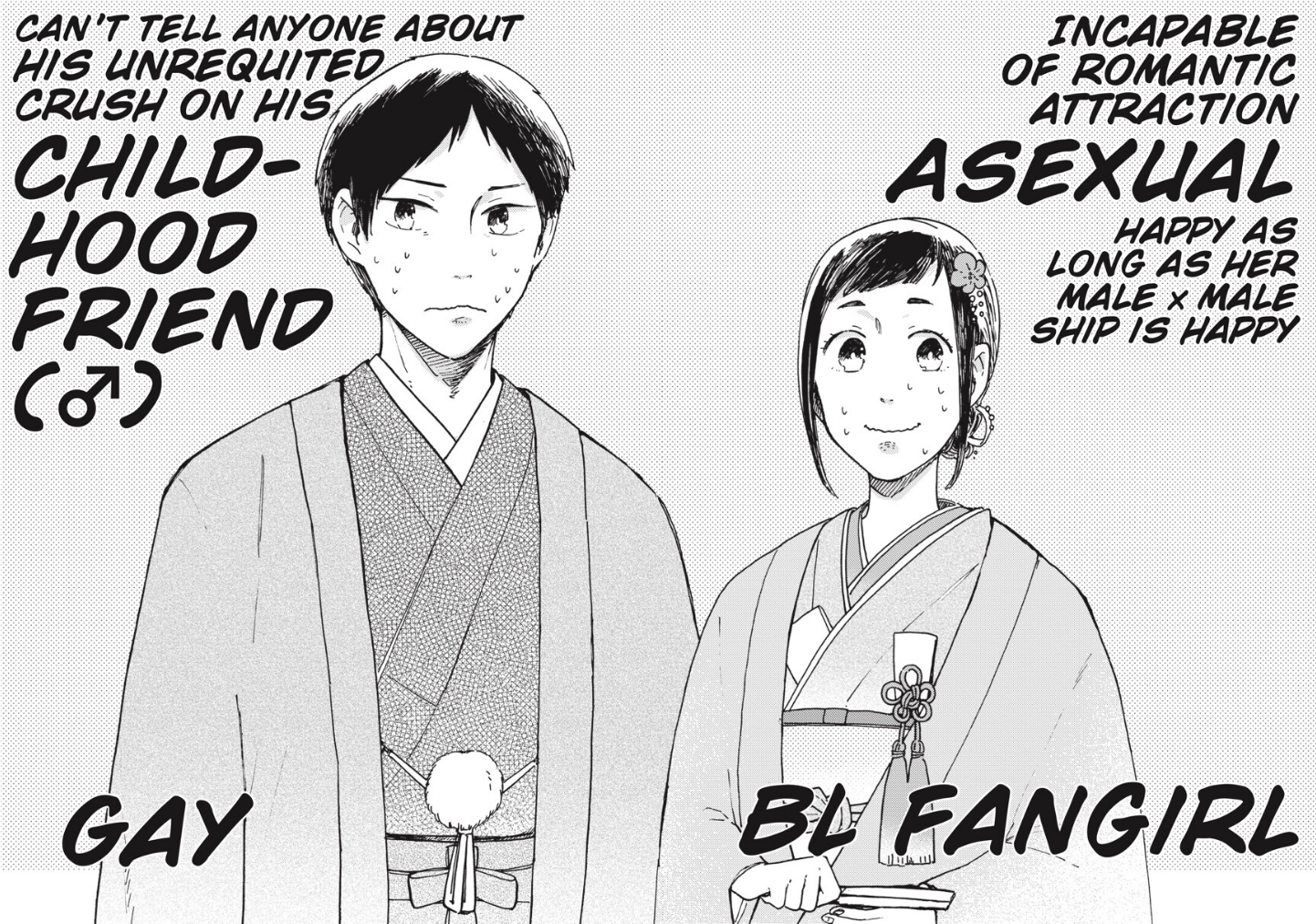
This manga is so precious. It’s really lovely to see how seriously they take their partnership. Gakurouta makes an effort to learn about boys’ love so that he and Yuriko can enjoy her hobby together. He has this book about how to be the perfect husband that he references because he wants to be the man his wife needs. There’s this one scene where Yuriko gets home from a night out and Gakurouta’s coming out the front door and he looks upset. She’s like, “What’s wrong?” And he’s upset because she took a taxi, but his book said a good husband should pick his wife up when she’s out drinking. I Want to Be a Wall is filled with moments like that where you really get to see the thoughtfulness and softness of the relationship between Yuriko and Gakurouta.
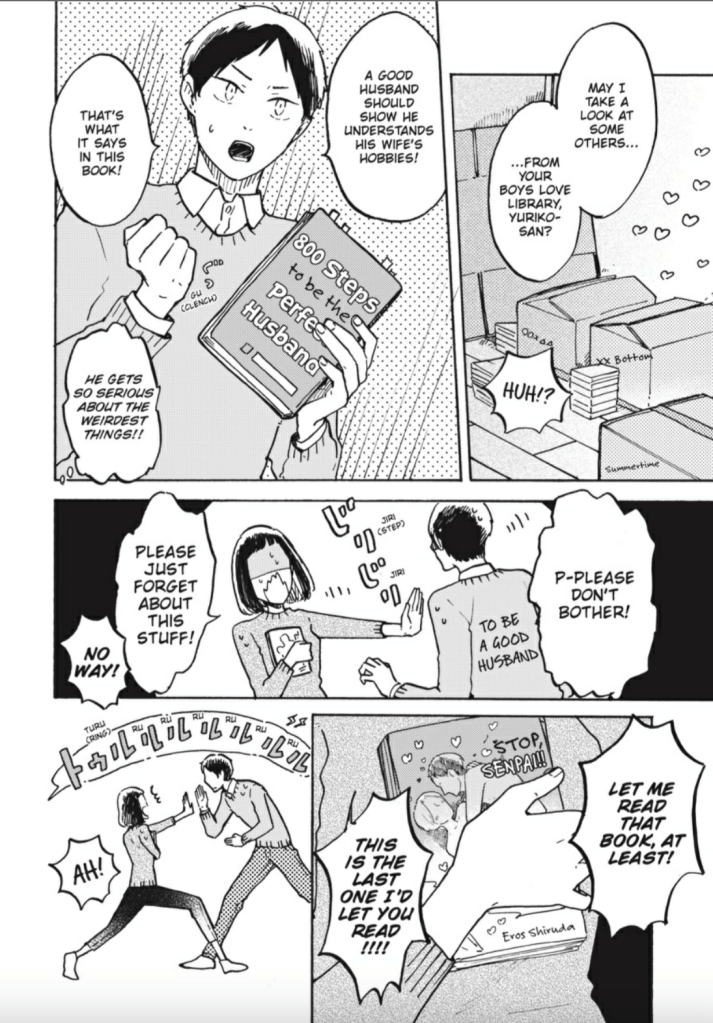
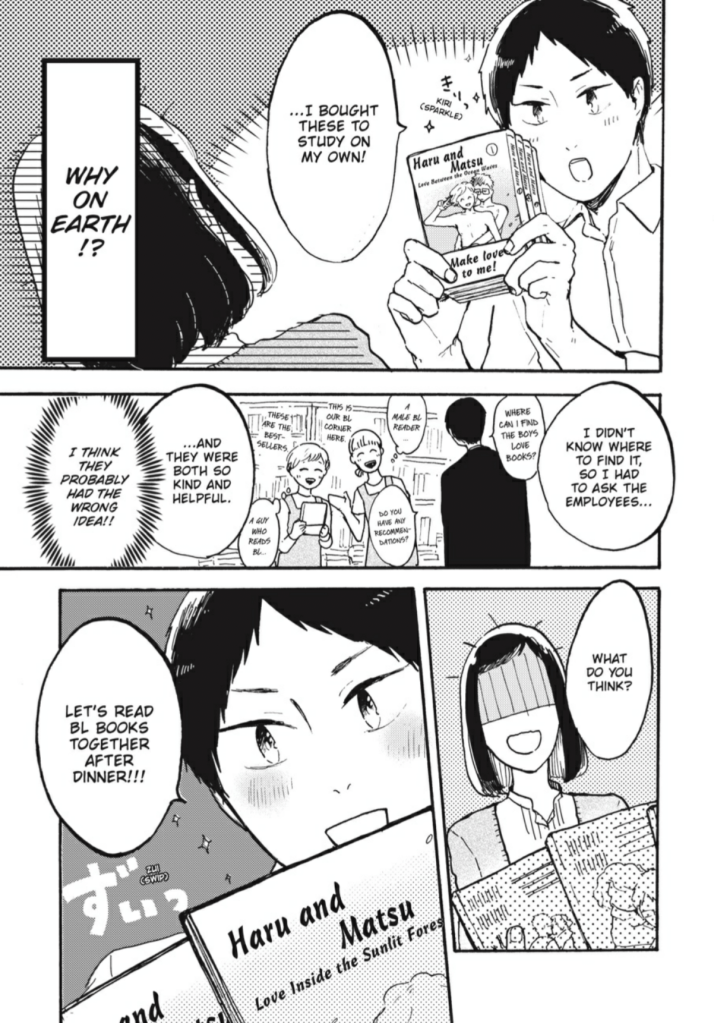
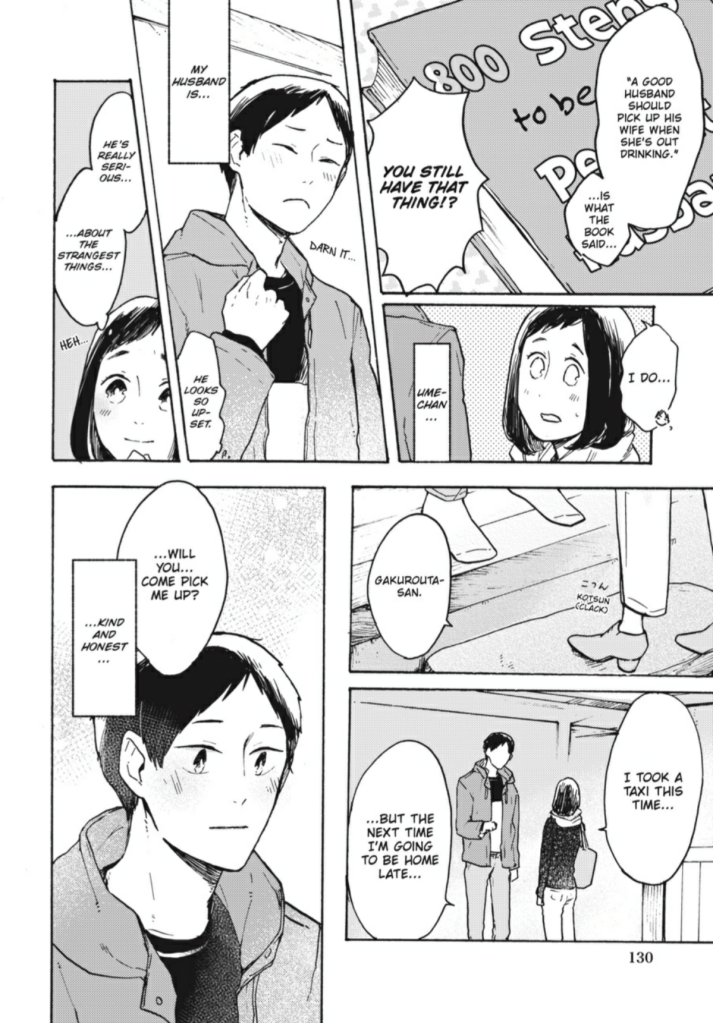
Both of these people know that they are different in a way that the outside world doesn’t accept. A major theme of I Want to Be a Wall is how healing it is to be able to come home to someone who understands what that’s like and doesn’t judge your differences.
This series is also very much concerned with amatonormativity. In the second volume, we learn how Yuriko and Gakurouta first met – at a matchmaking session which neither of them wanted to be at. We see how much pressure their families had put on them to marry because they don’t want them to be alone. Luckily, when they get some time to talk, just the two of them, they discover that the other isn’t interested in marriage either and they have this long conversation, telling each other things they’ve never told other people, thinking they’ll never see each other again. But they do meet again and they have another deep conversation where Gakurouta tells Yuriko about his unrequited love for his childhood friend. They start spending more time together and eventually decide to get married – in name only.
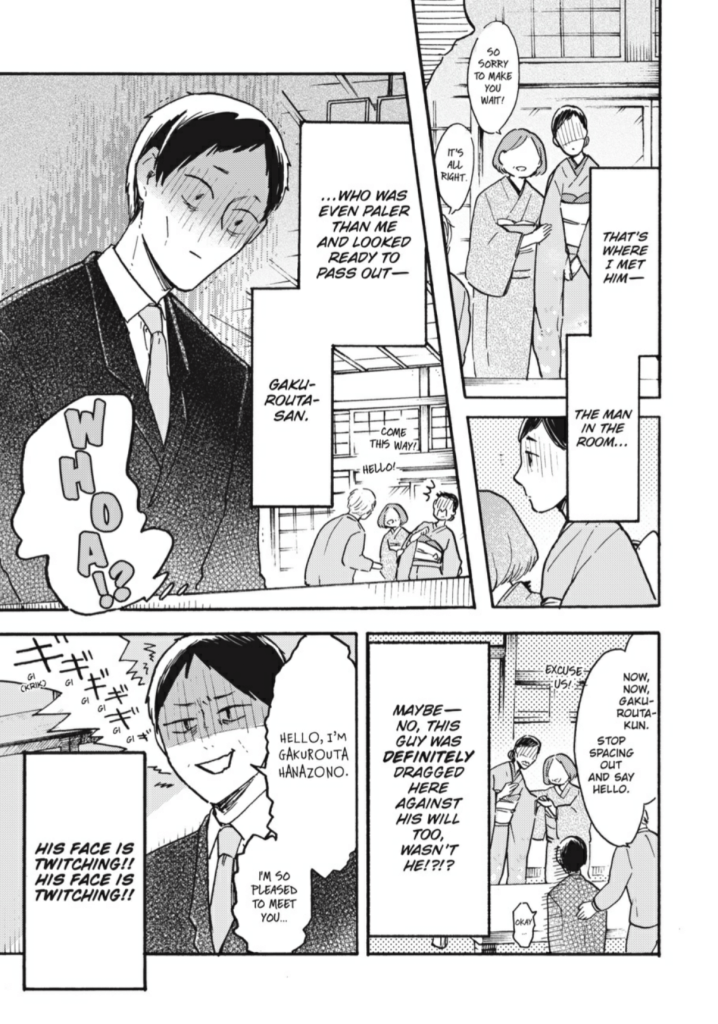
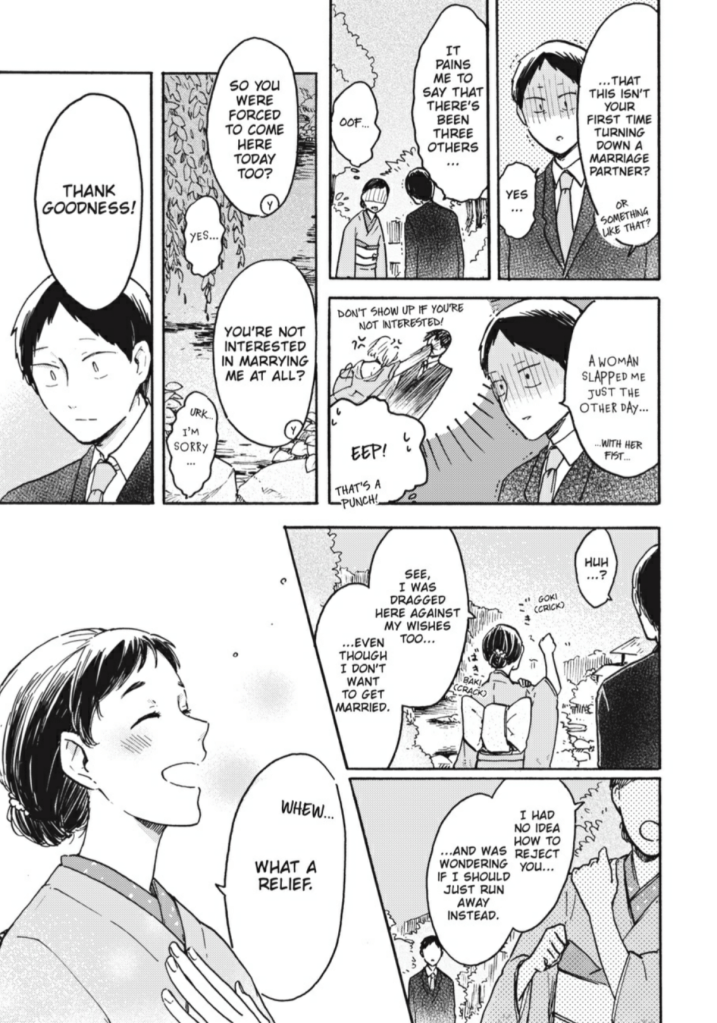
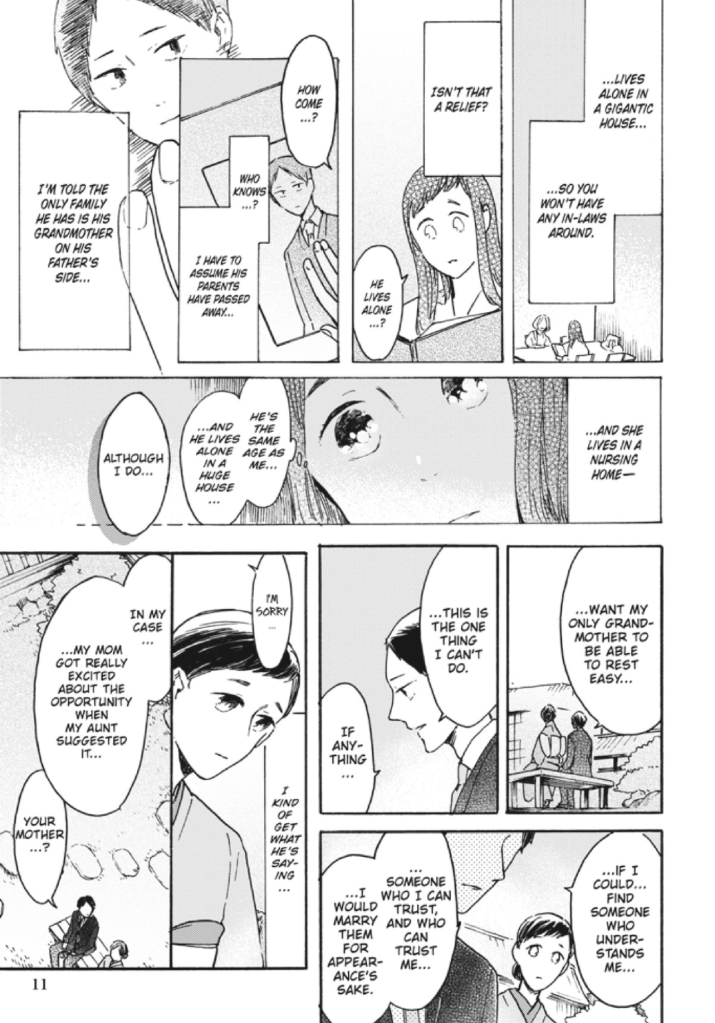
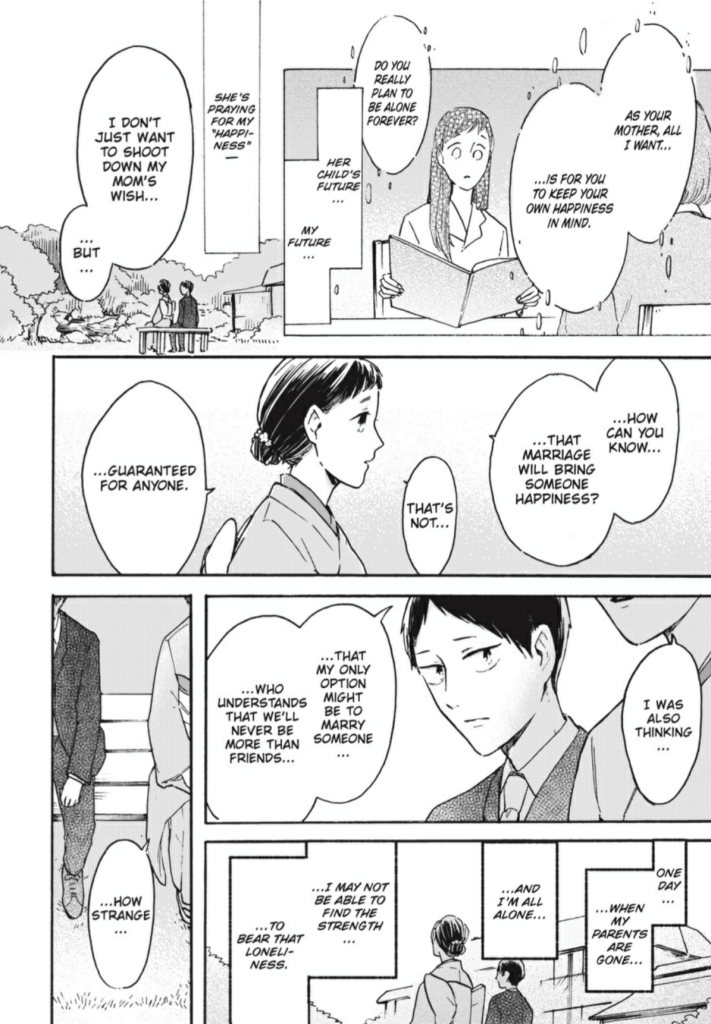
I Want to Be a Wall also depicts the isolation you can feel when you don’t know the words for your experience and when you don’t have people who understand you. We see flashbacks to Yuriko’s high school years, when she felt overwhelmed and out of place because it seemed like everyone was only ever talking about dating. And in college, she studied abroad in Seattle, and unfortunately, when her friend tells everyone she’s never been on a date, Yuriko faces scrutiny and ridicule. People say she must be lying, maybe she’s just a lesbian, she hasn’t met “the one” yet, I can be the one to change her mind, it’s a waste for such a cute girl not to be dating anyone. This guy named Gil intervenes and tells everyone to mind their own business, and he’s the one who tells Yuriko about asexuality and how it’s just as natural as any other orientation. Yuriko has always thought something must be wrong with her, but conversations she had with Gil and another friend she made while abroad, Momo, set her free. She considers her friend Momo to be one of her biggest supporters, and hearing about all of this, Gakurouta wants to be one of Yuriko’s biggest supporters too.
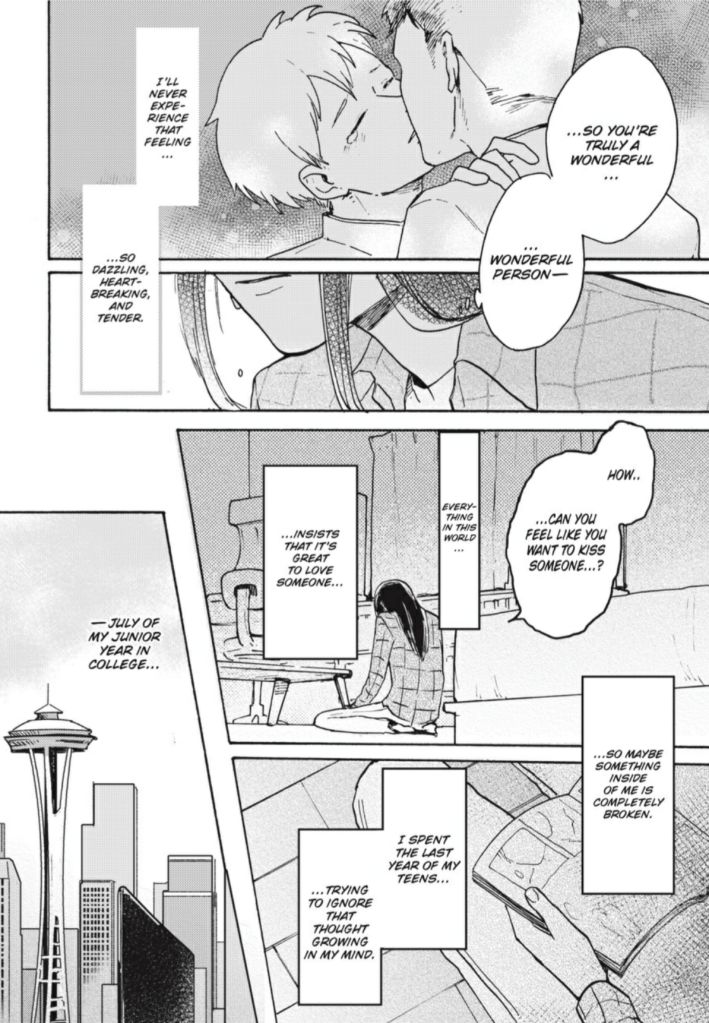
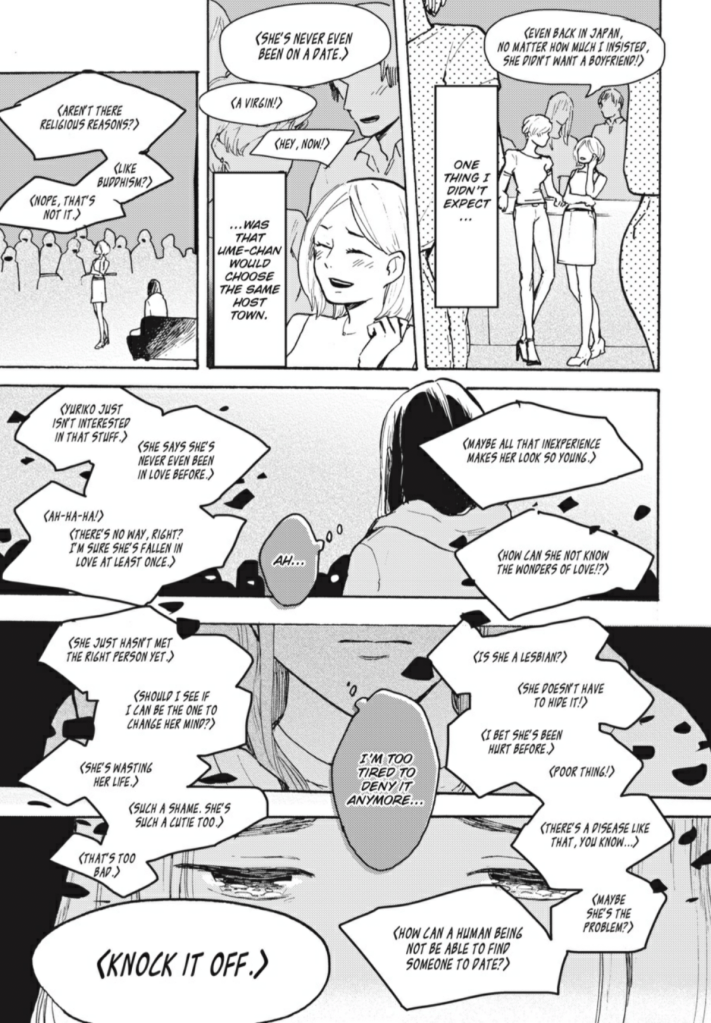
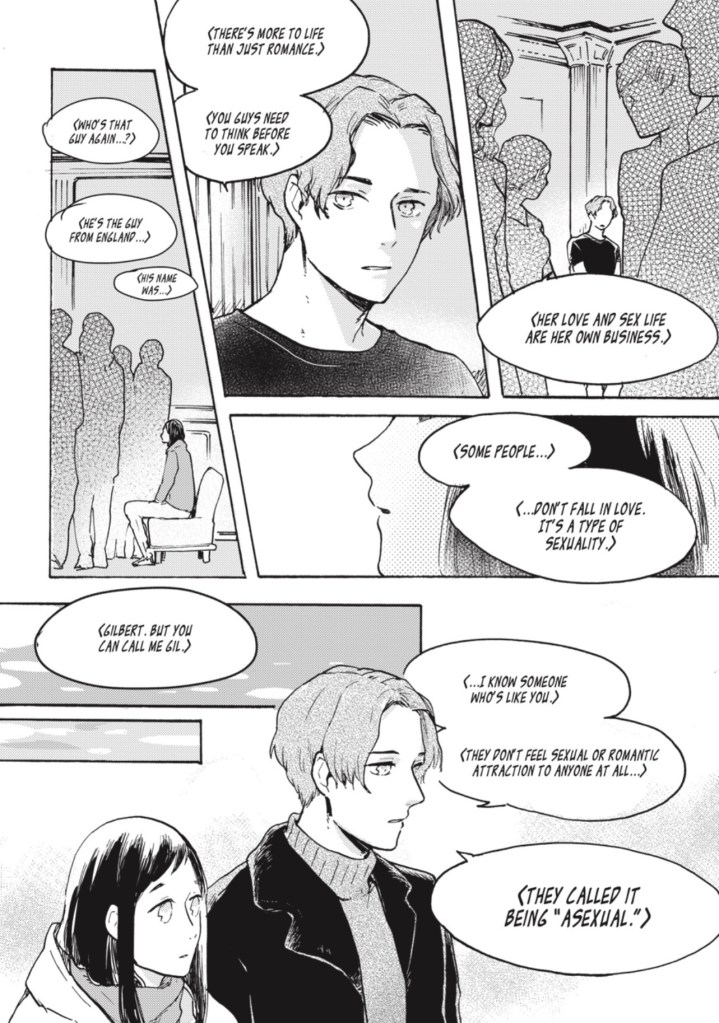
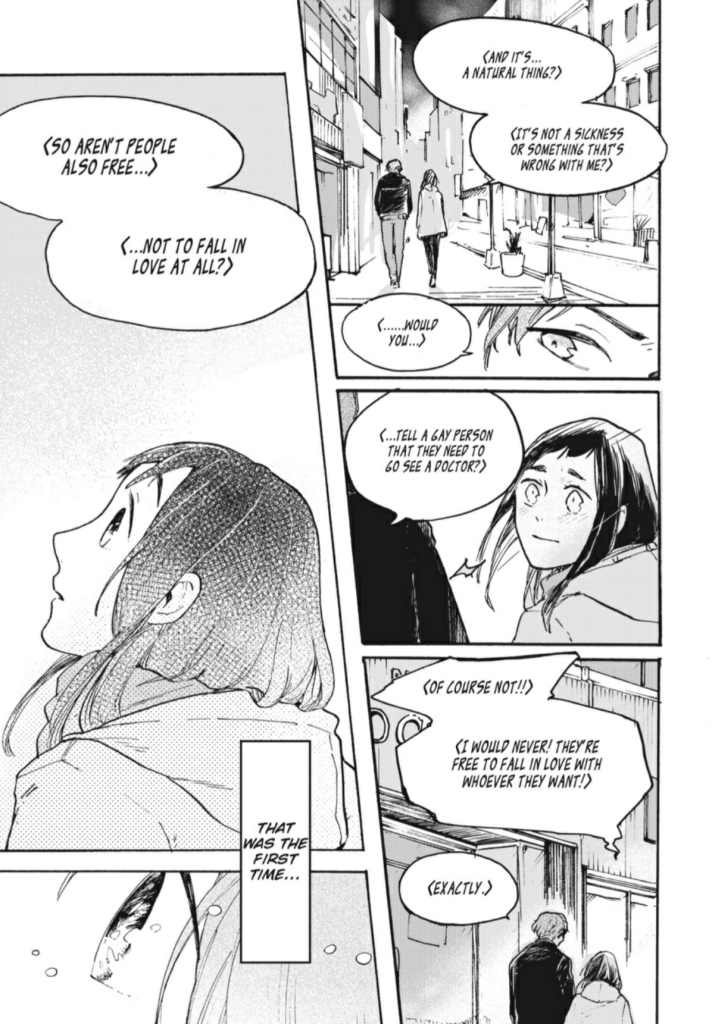
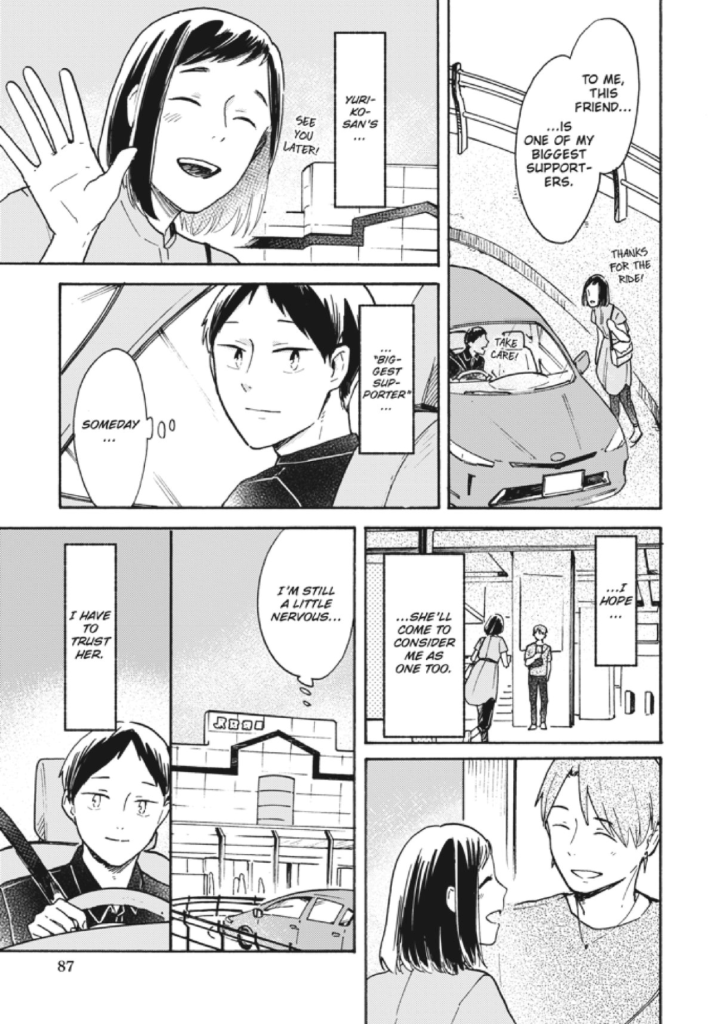
Yuriko is really great aroace representation because we see the adversities she has faced but we also see how knowing other queer people and understanding more about herself has made her life so much better. She is so full of energy and passion, and she has so much love to give. This manga shows, very tenderly, that there are many ways to love and care for others outside of a romantic or sexual relationship.
Mine-kun is Asexual
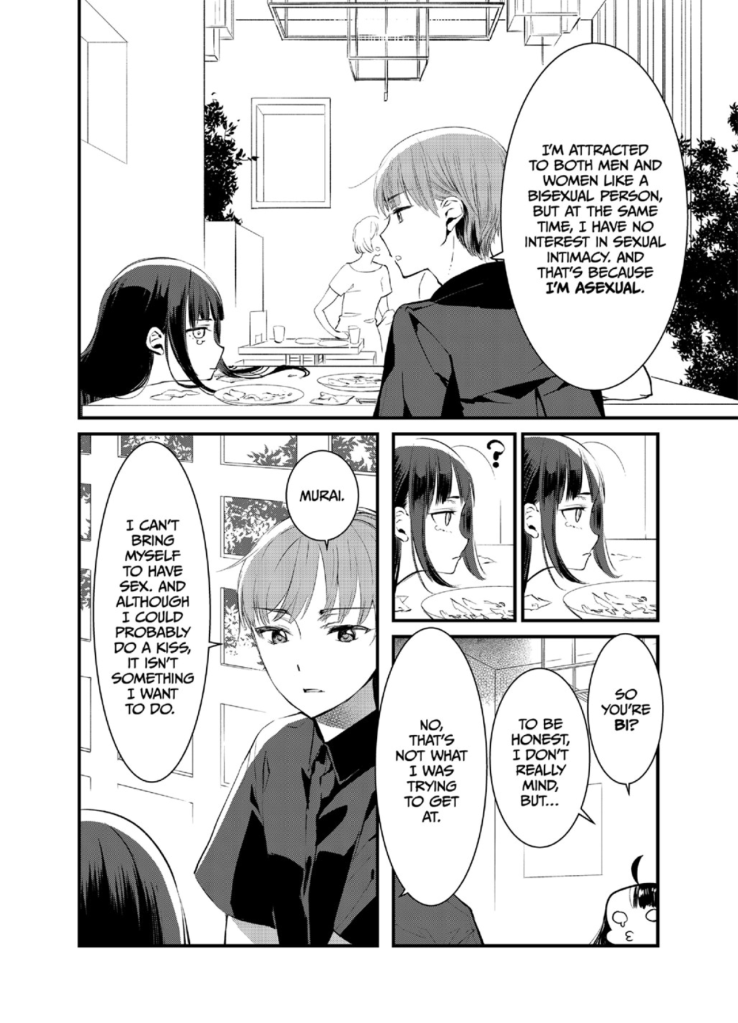
This story is told from the perspective of Tomoe Murai, a college student who confesses her feelings for a boy at her school named Mine-kun. And Mine-kun explains that he’s attracted to men and women, but he’s asexual, so he’s biromantic and asexual. I also think we’re supposed to understand that he is sex-repulsed – he says he can’t bring himself to have sex.
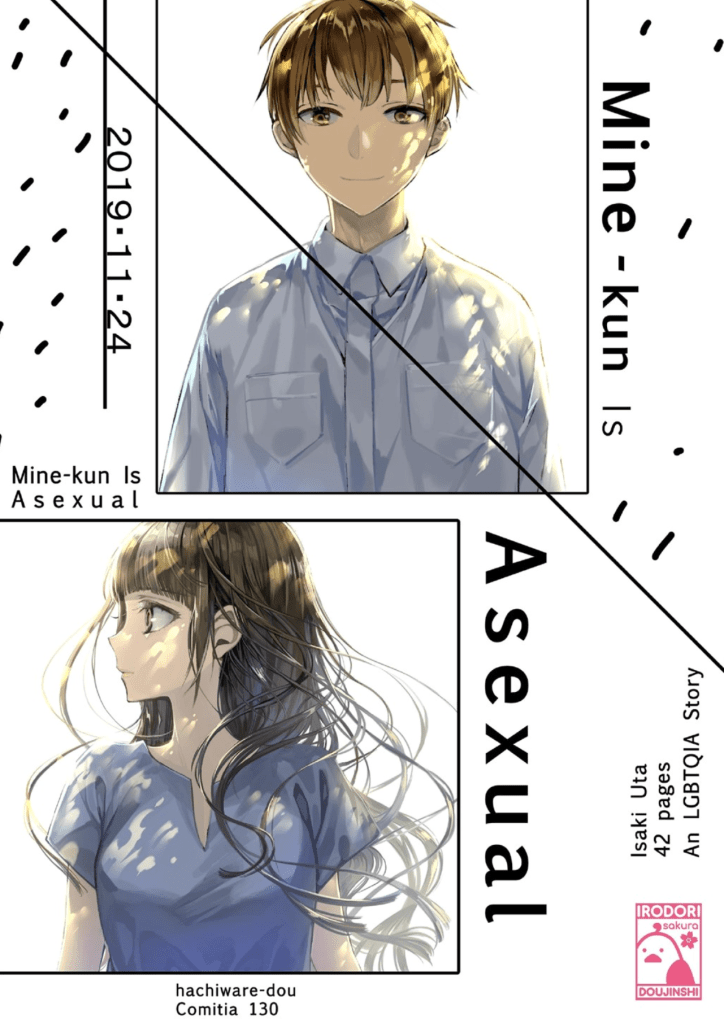
Asexual people’s personal attitudes towards sex vary. While some asexual people are indifferent about having sex and some enjoy sex and seek it out – those people might call themselves sex-favorable – others might be repulsed by the thought of participating in sexual activity. It seems like that’s what Mine-kun might’ve been communicating. He also says he probably could do a kiss, although kissing is not really something he wants to do either. But he says if that’s all fine with Murai, they can go out. And we watch their relationship develop.
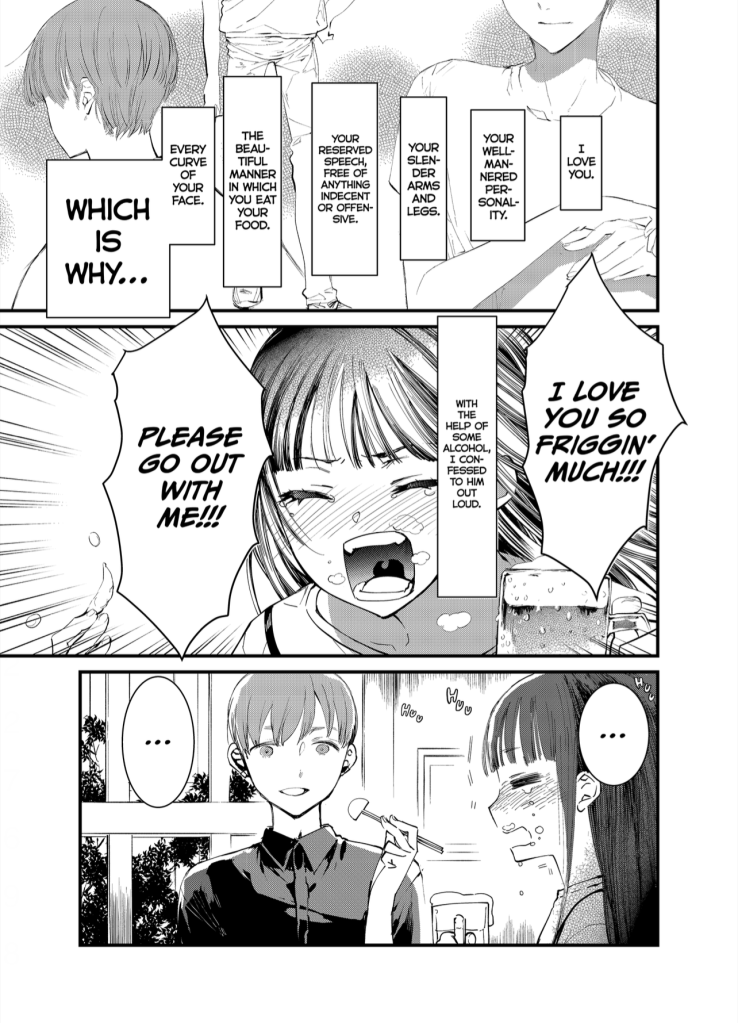
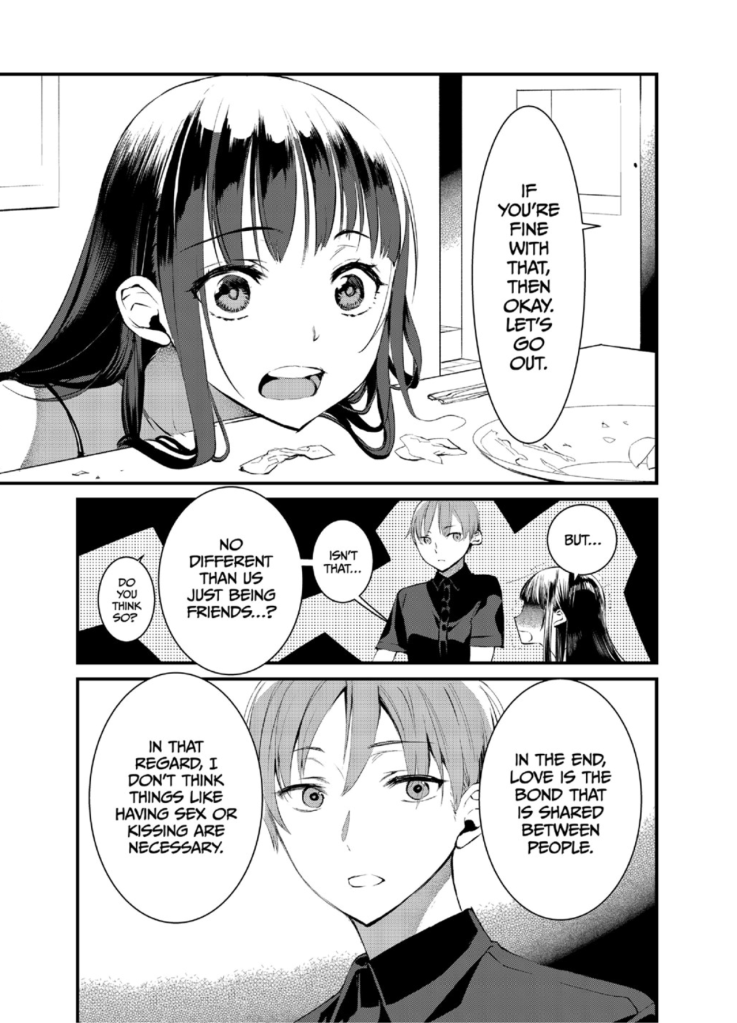
We see them go out shopping, they stay up watching movies together all hours of the night, he bakes her bread ~
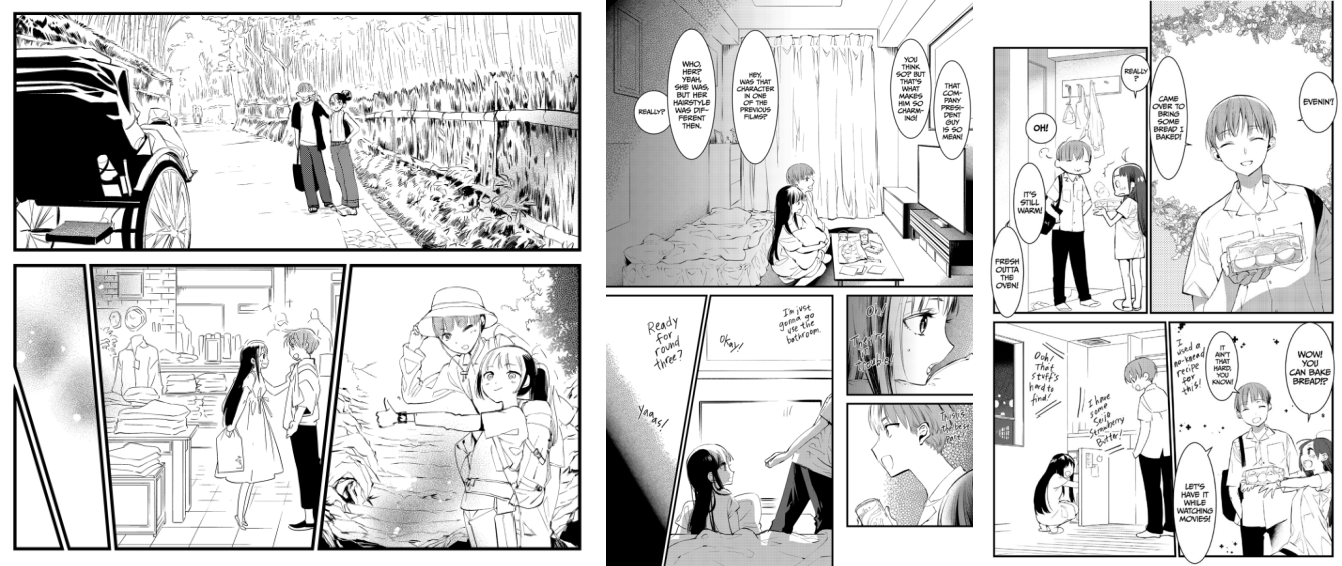
And despite the fact that they’re having fun together, the relationship is hard for Murai. She feels lonely. She wants to show her affection physically, she’s very touchy-feely. But Mine-kun isn’t like that. He doesn’t like the public displays of affection. Or the private displays of affection.
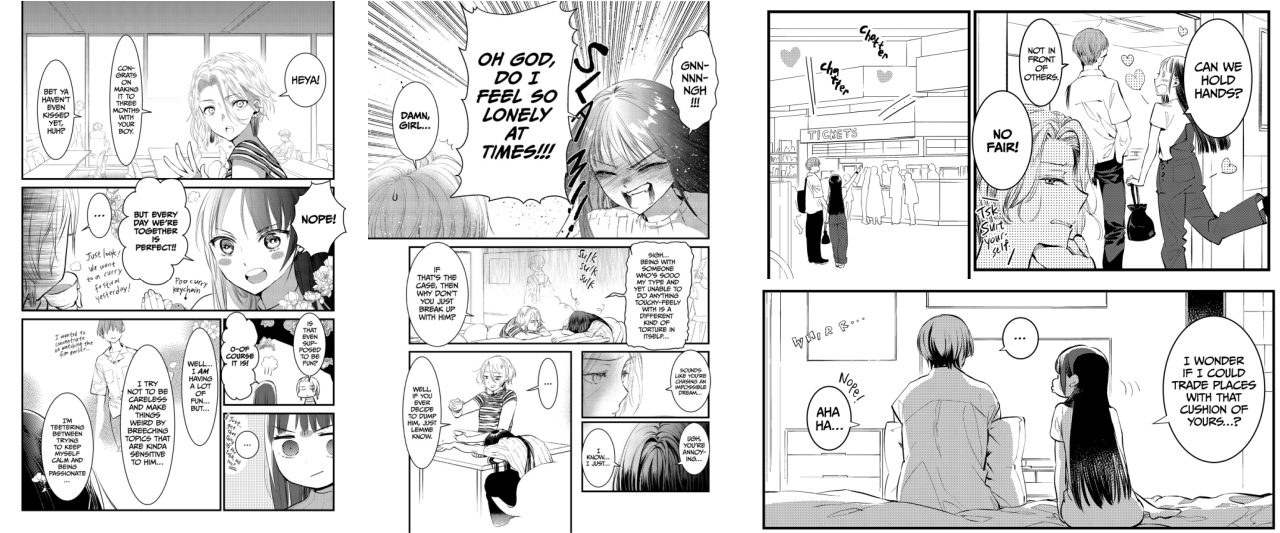
One day while they’re watching movies, like they do, Mine-kun turns to Murai and says she can break up with him whenever she likes. Because he doesn’t think he can give her what she wants. And that’s how it ends, they go their separate ways.
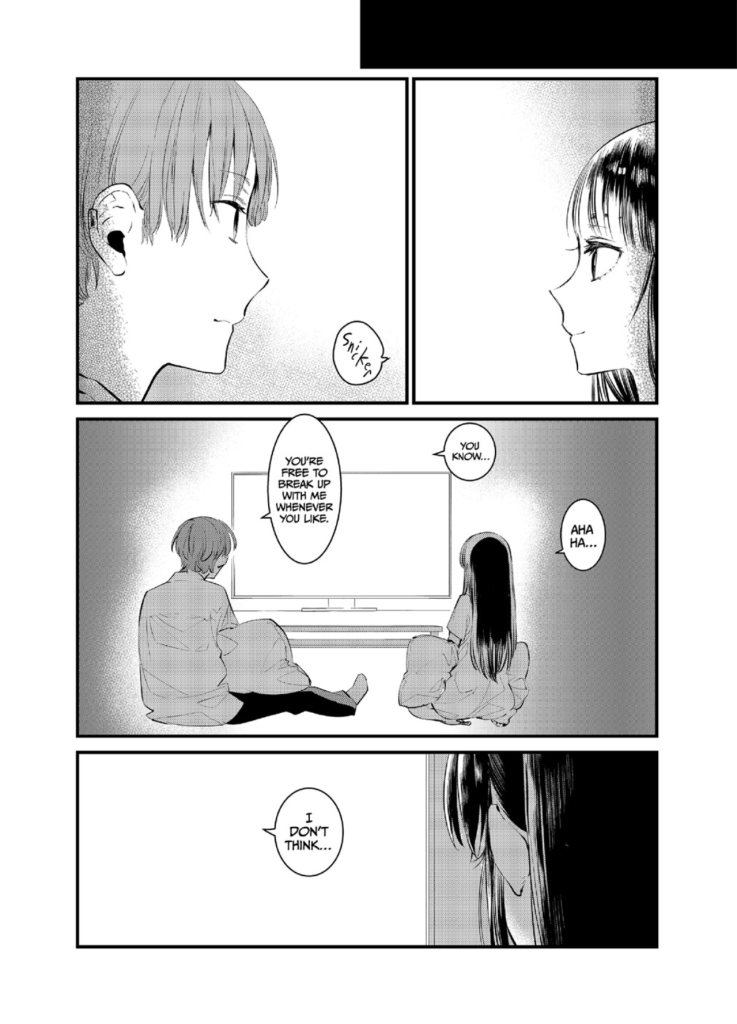
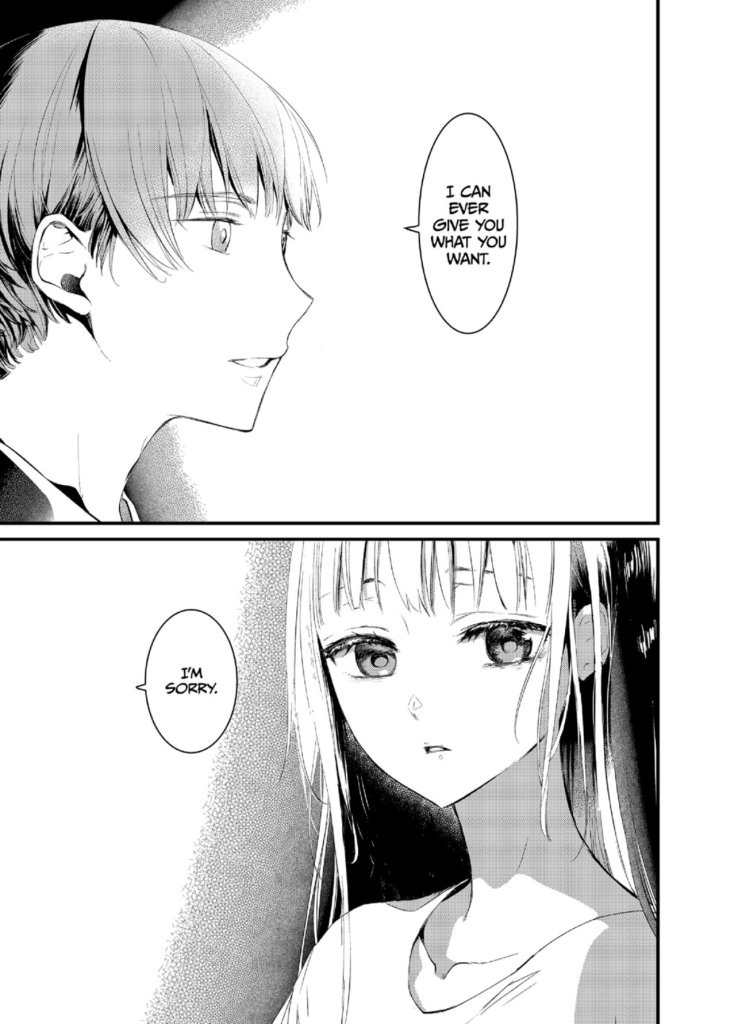
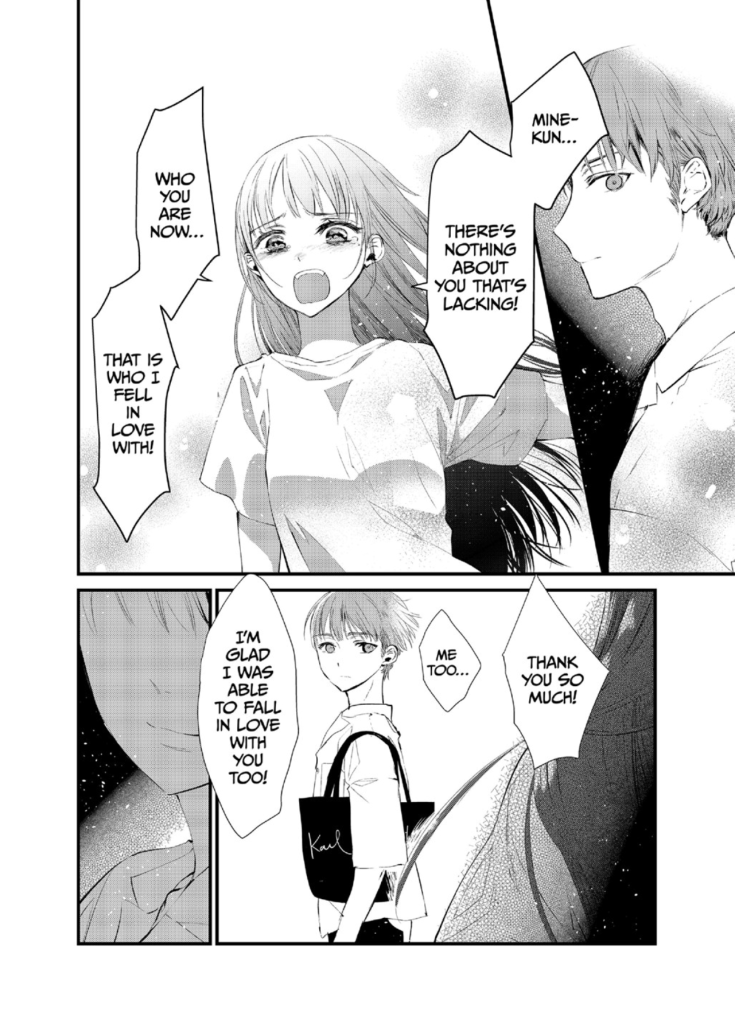
And I really admire that ending. At the beginning of the relationship at least, Murai did not really understand or respect the boundaries Mine-kun had set. When he stays the night for the first time because they were marathoning a movie series he liked, she’s upset that nothing happened and curses herself for not being more aggressive and making the first move. When he told you what it was! He said he might not even be comfortable kissing!
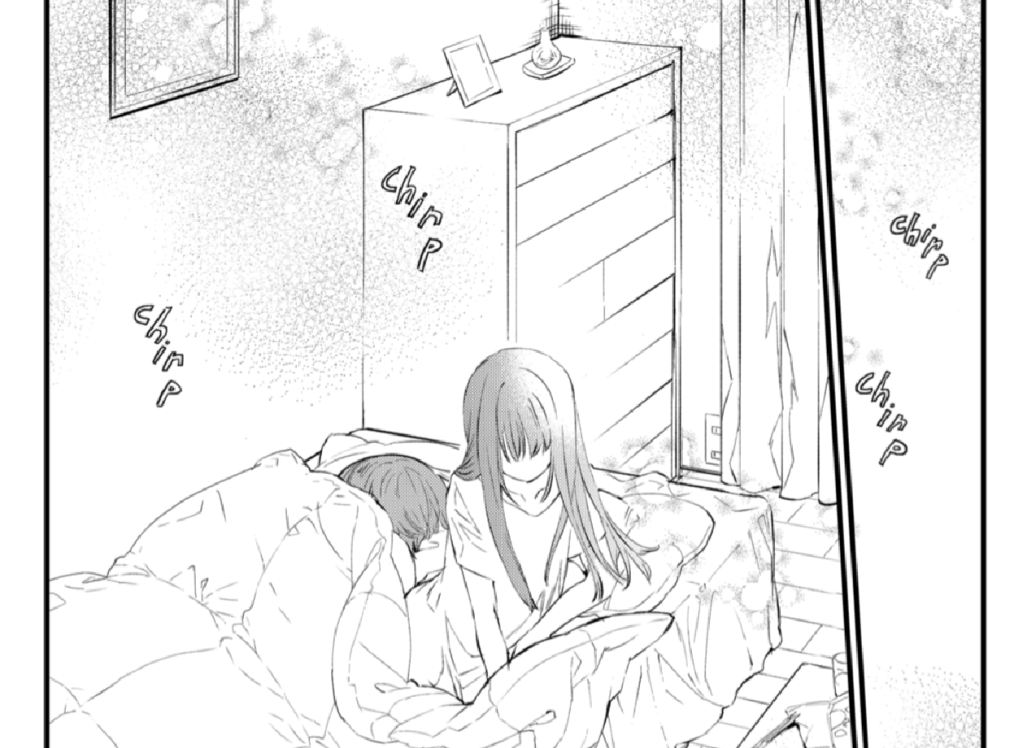
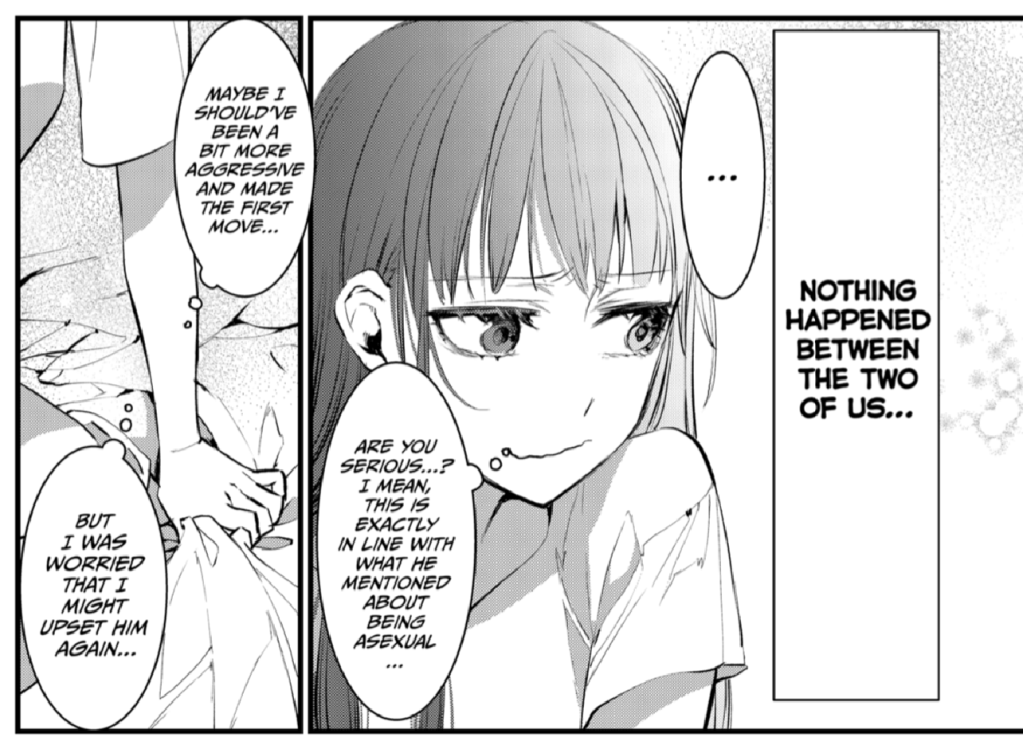
Not every ace-allo relationship is gonna work. And so many of the success stories about this specific kind of mixed-orientation relationship involve the ace partner being the only one compromising. So I appreciate a story that shows there was real love here, but these people were incompatible, so it was best for them to break up. There is a little ~where are they now~ at the end, and Mine-kun has a boyfriend he met at an ace meet-up and Murai is married, so it all worked out.
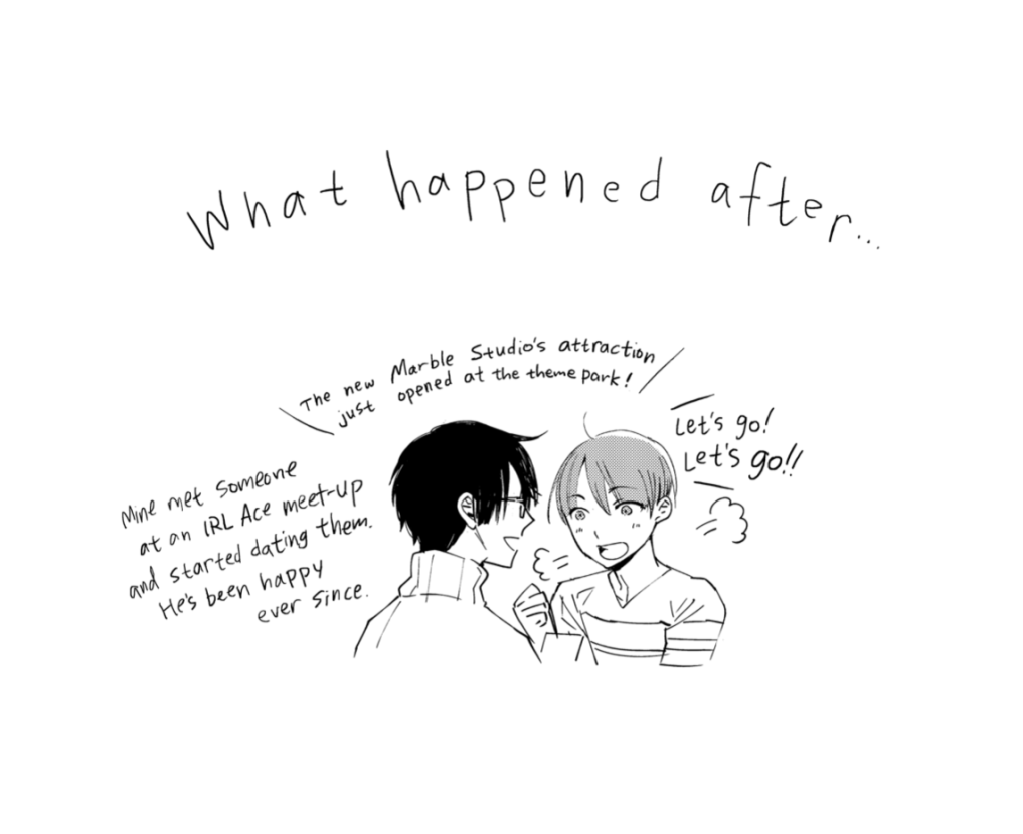
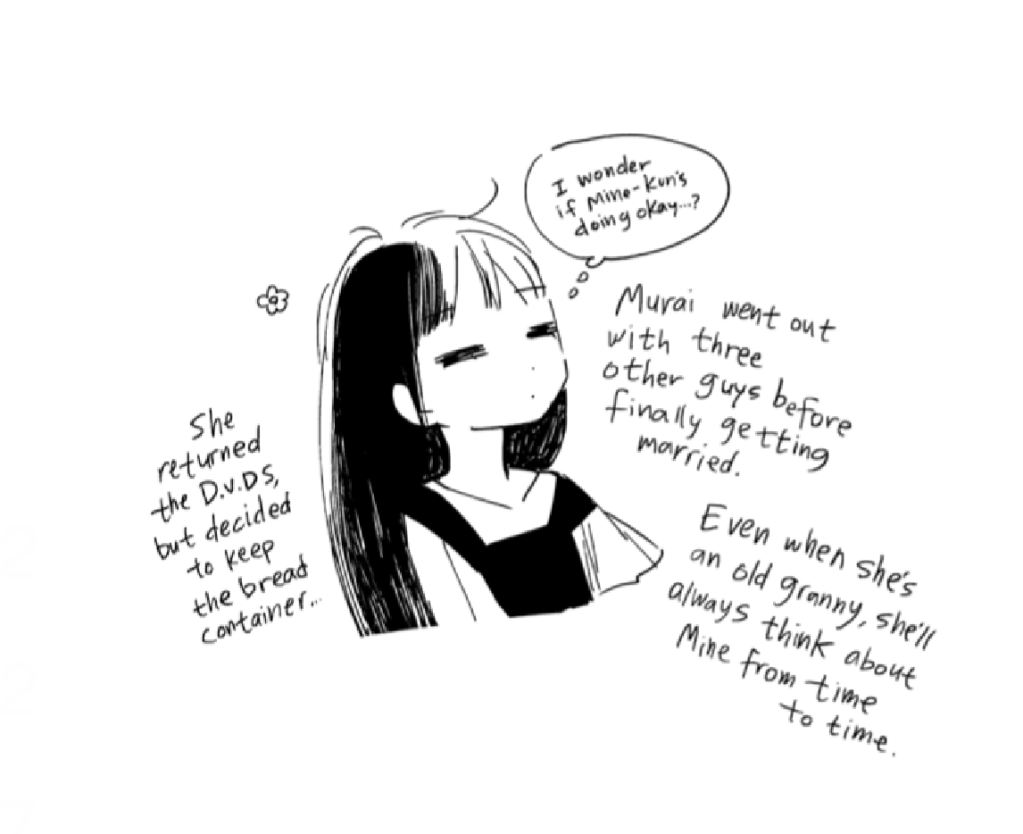
Mine-kun is Asexual is a doujinshi, which refers to any self-published work by a manga artist. They tend to be shorter than a full-length manga – this one is just 42 pages. The English translation is currently published by Irodori Comics, which specifically sells self-published comics from Japan translated into English. Because it is a doujinshi, it was hard for me to find a way to read this. I was able to check it out on Hoopla a few months ago when I read it, but that is no longer the case, so I was leaning towards making this an honorable mention based on how difficult it was to access it. However, it has recently become available for purchase on Kobo and Barnes & Noble. So it has definitely become more easily accessible. I would buy it directly from Irodori, though. I recently bought it on sale for half the price, which saved me like $3, but Lord knows every penny counts. I think their website is 18+ though, so be aware of that.
Is Love the Answer?
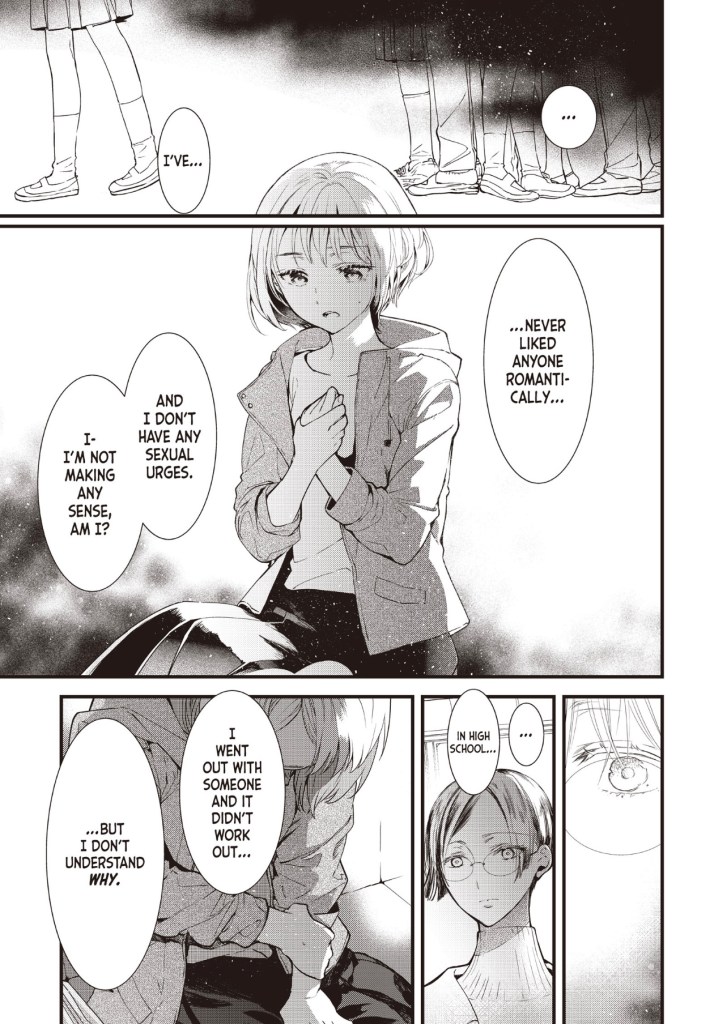
Is Love the Answer? is a story told in a single volume. At the start, our protagonist Chika is in high school and she’s dating this boy, but she doesn’t really understand what it feels like to “like” someone. Unfortunately, they break up because she doesn’t want to have sex with him. I would warn you that that first few pages might be triggering.
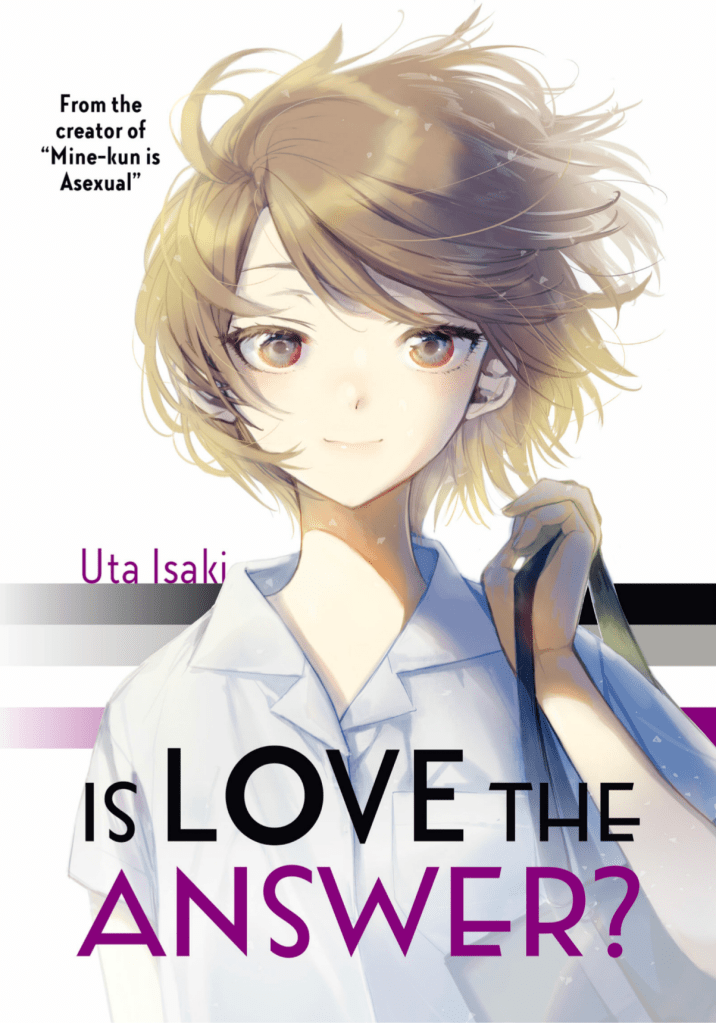
But Chika feels like an alien. Everyone else seems to get it, and she tries to make herself like this really nice guy that her classmates introduce her to, but she just can’t.
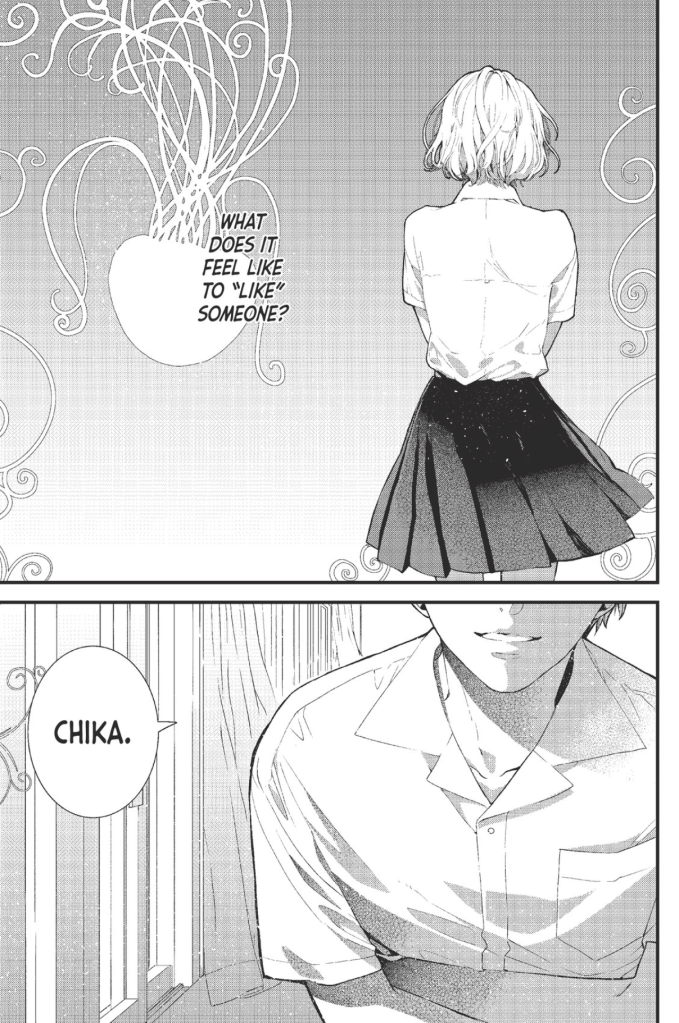
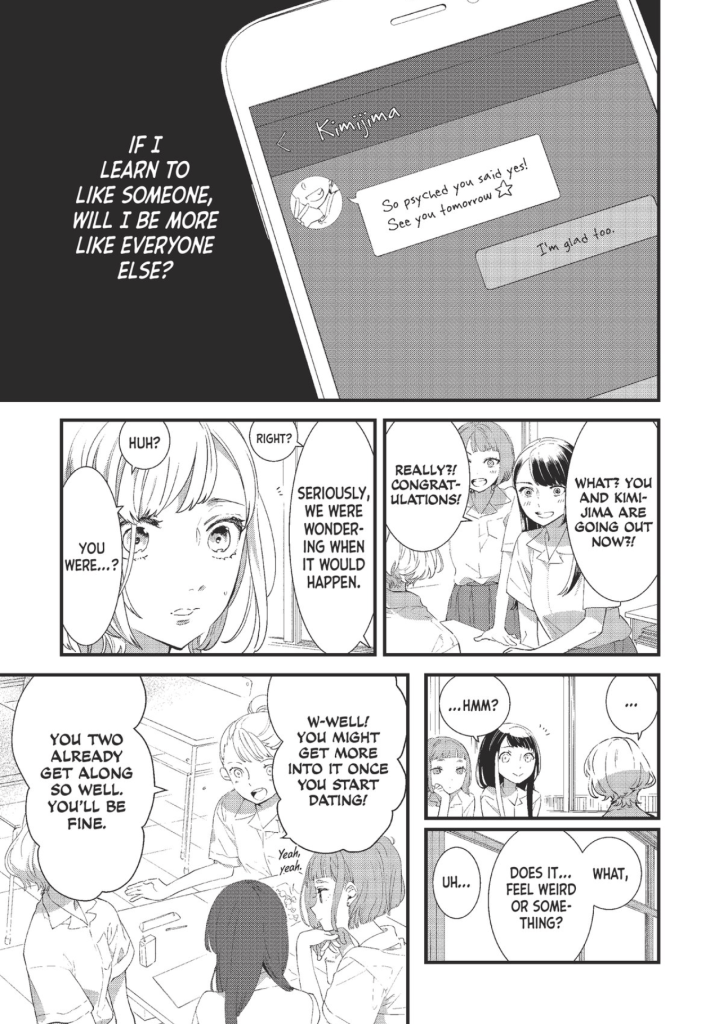
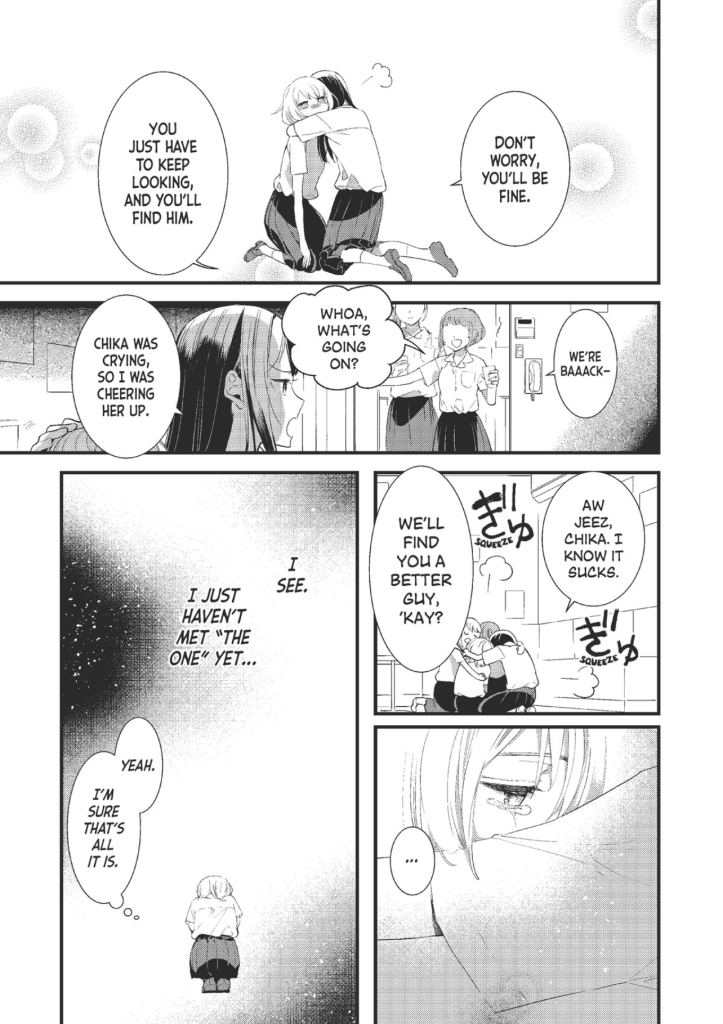
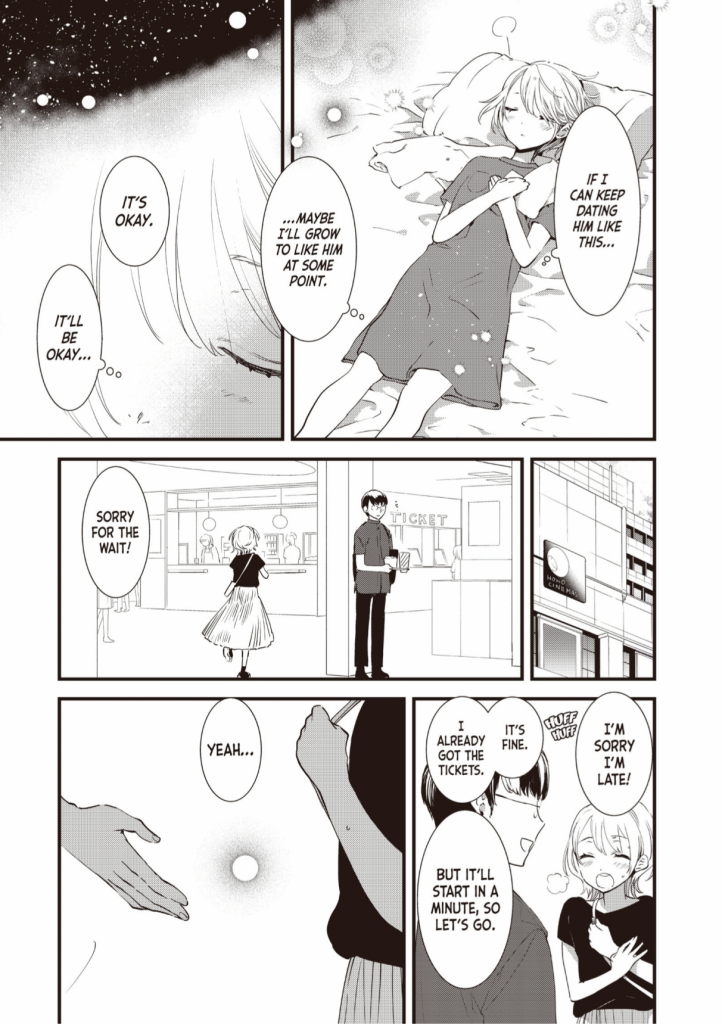
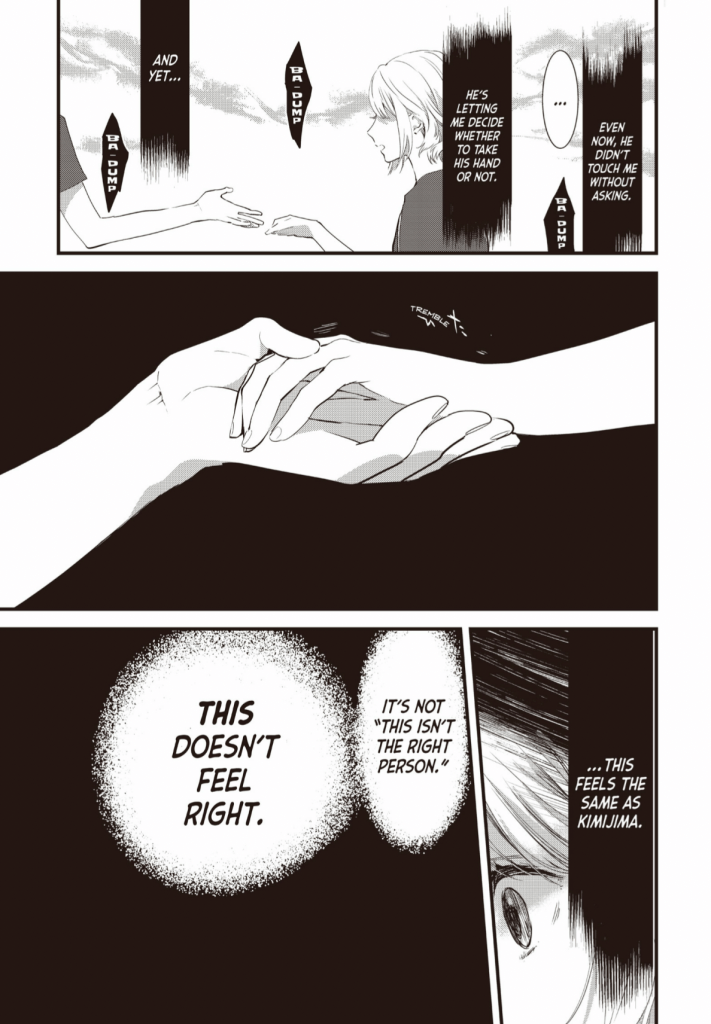
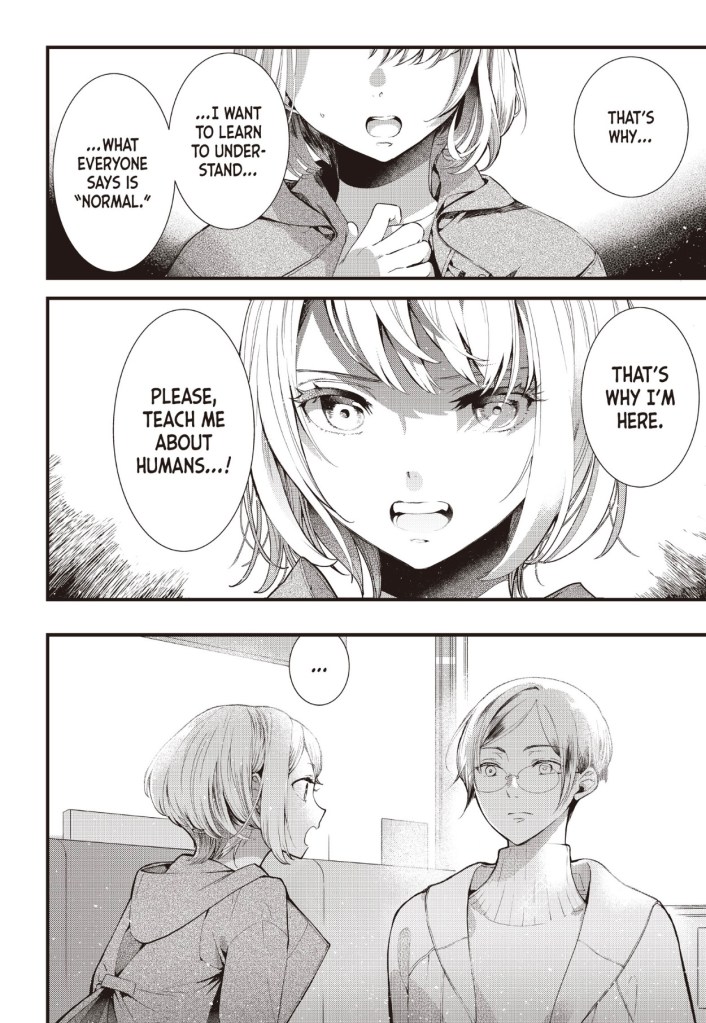
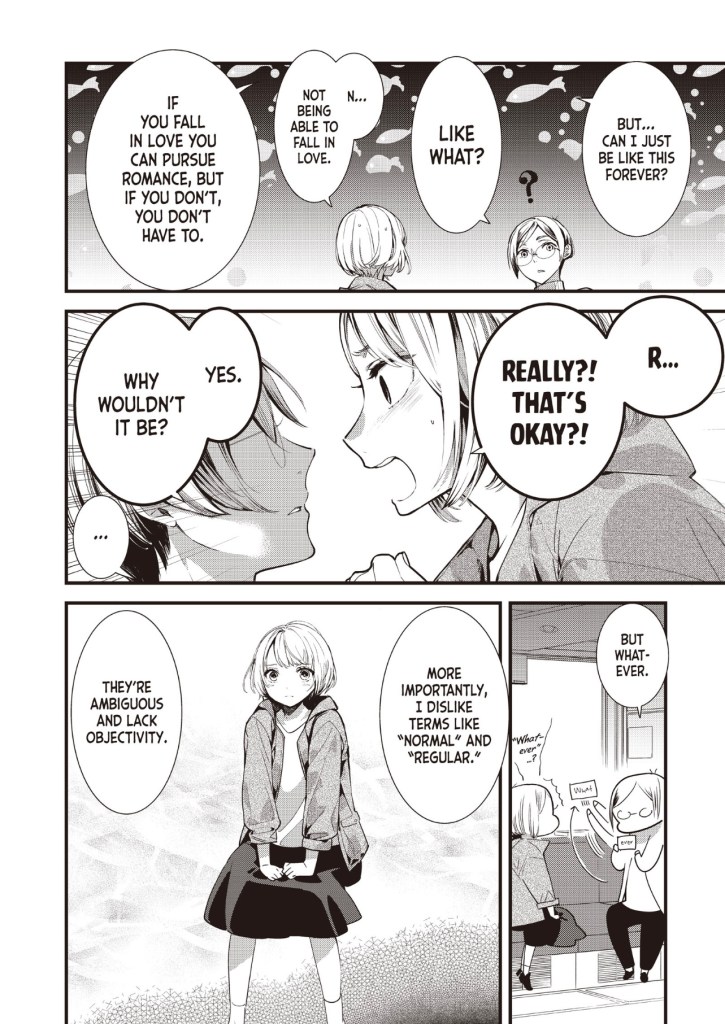
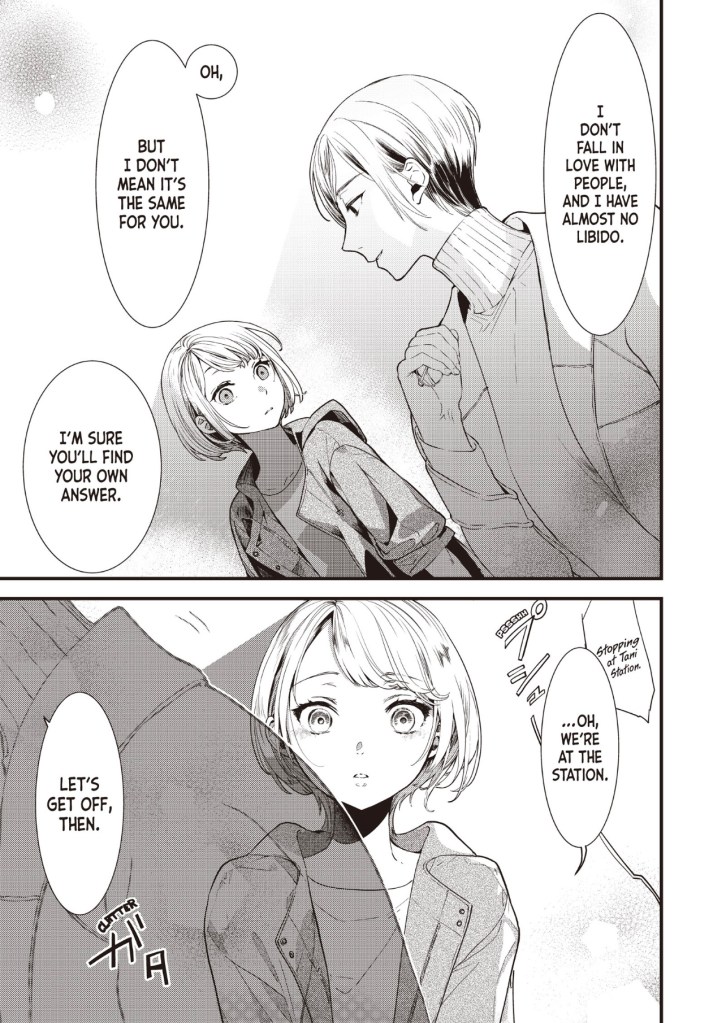
When Chika starts college, she meets this psychology professor whose work she really admires, Professor Ishii, and she tells the professor that she wants to study psychology and learn about what everybody else considers to be “normal.” Professor Ishii affirms Chika, who seems very stressed out about not feeling romantic or sexual urges, and tells her that they don’t fall in love either. So the professor takes her under their wing. Chika winds up living in shared housing with the Professor and a student named Ume-chan.
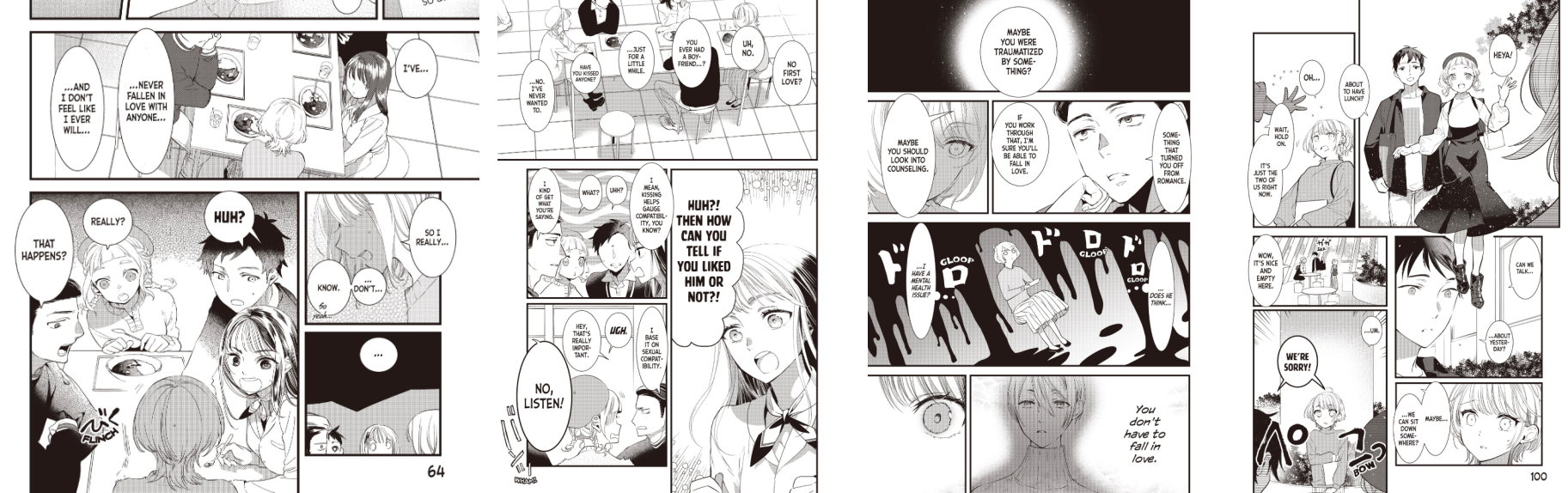
Upon meeting a handful of other students in her program, Chika has an encounter not unlike ones she had in high school. She says she’s never fallen in love and doesn’t know if she ever will, and they tell her she hasn’t tried hard enough and you need to kiss someone to know if you really like them. This one guy says maybe she was traumatized by something and should seek counseling. Which is just awful. Why would you say that?! But two of the people in that group end up apologizing to Chika for not standing up for her, and they become her close friends.
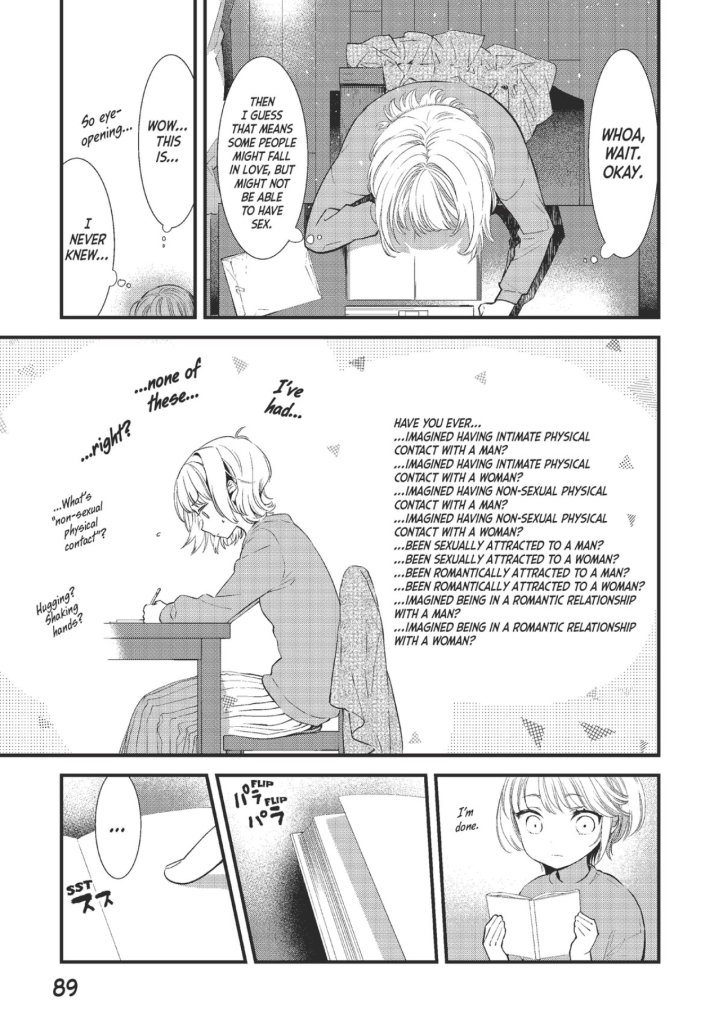
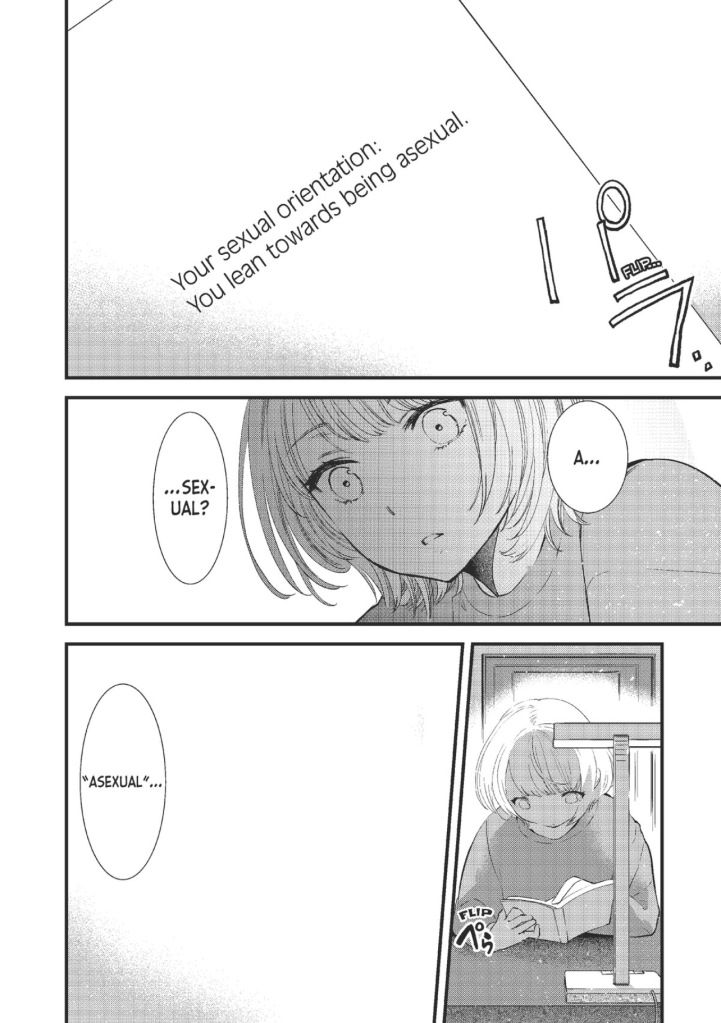
This volume chronicles Chika’s journey of discovering that she’s asexual and learning about love and romance and her relationship or lack of a relationship to those things.
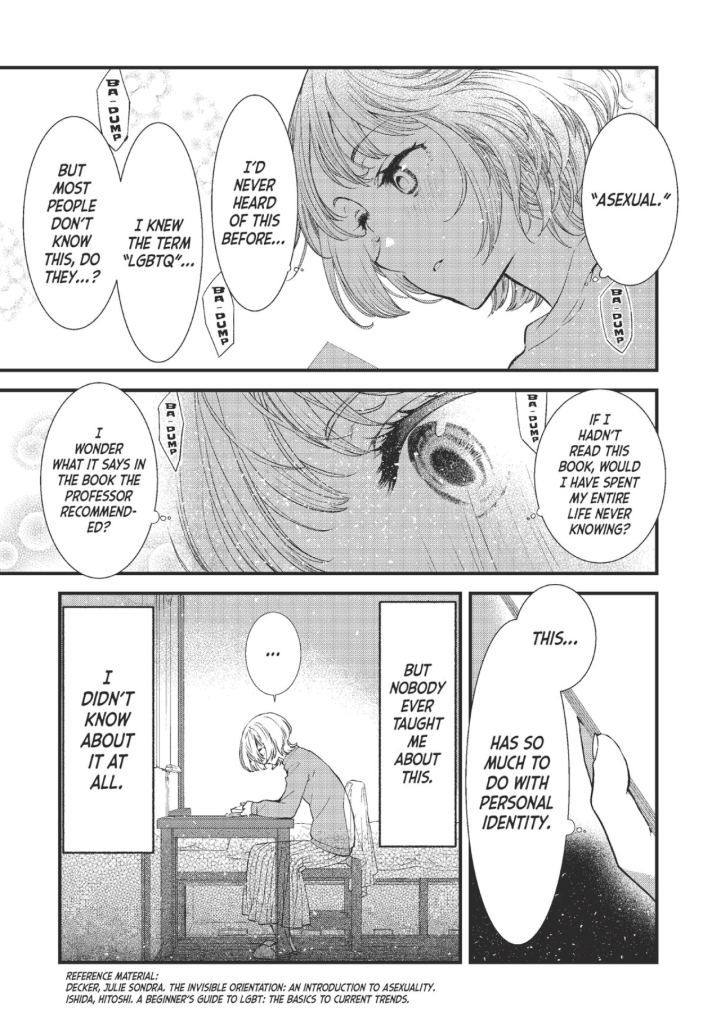
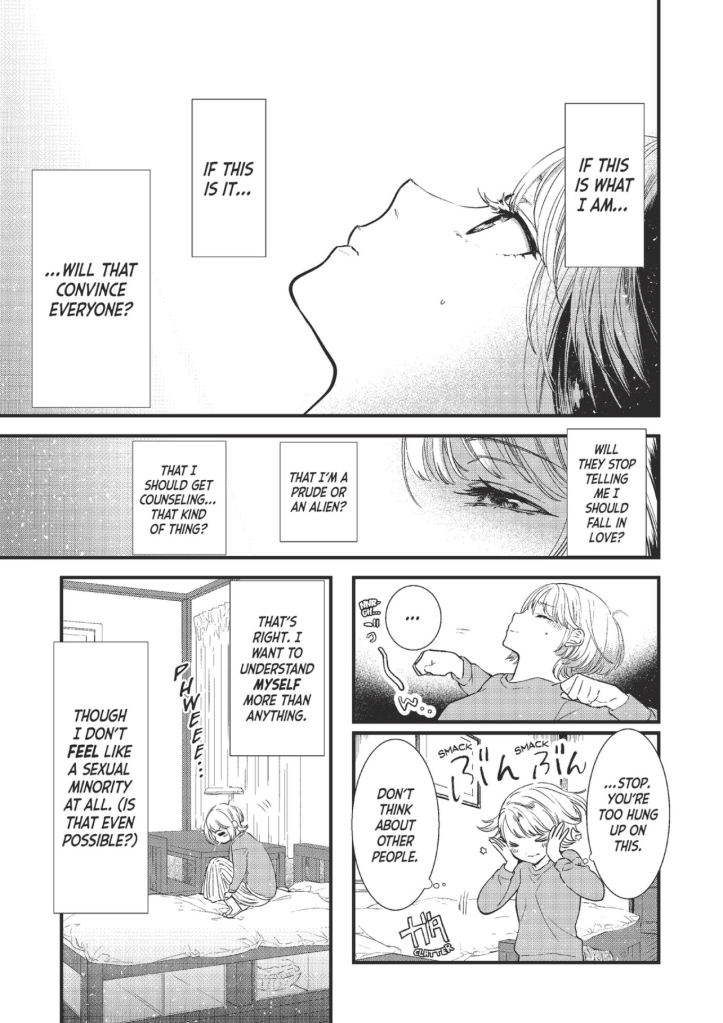
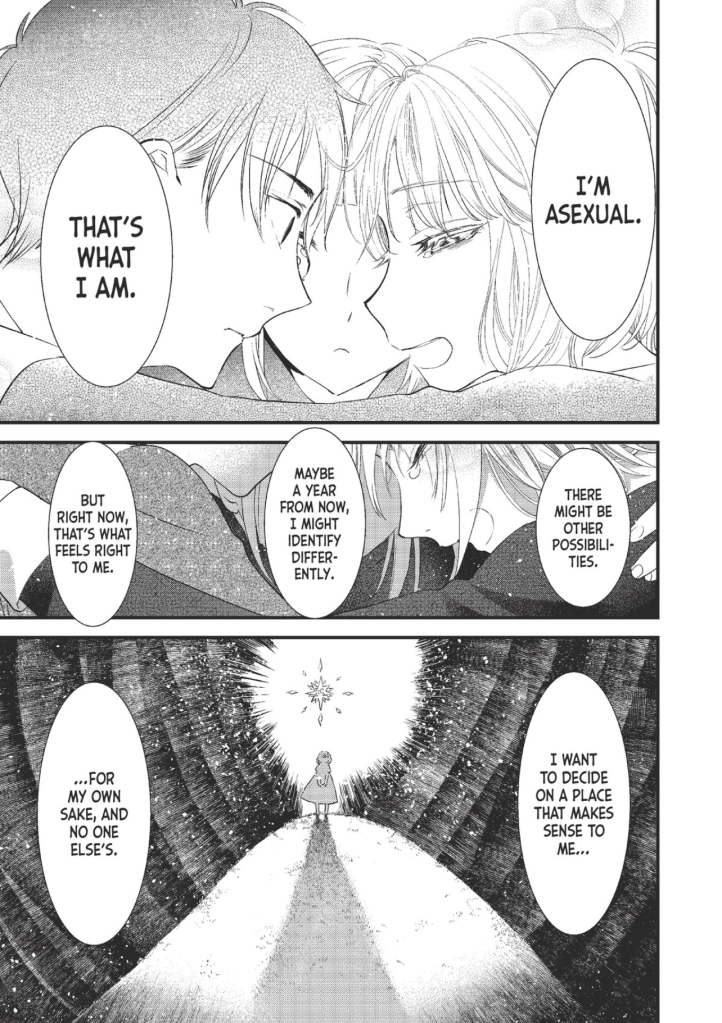
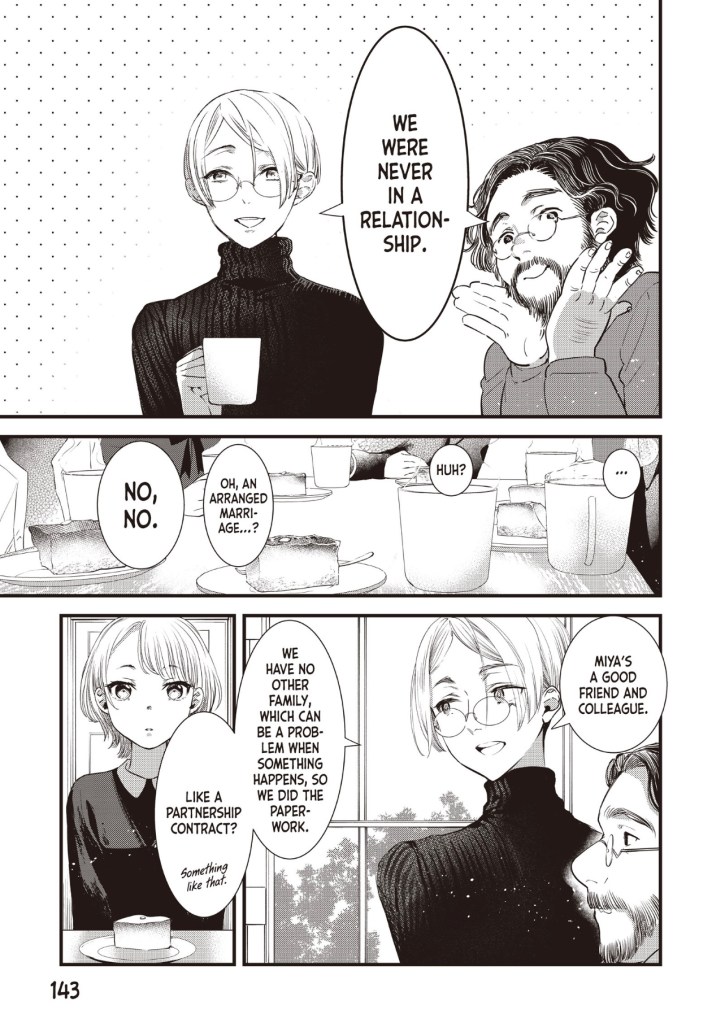
This is a really unique work in that we have three asexual characters. Like I mentioned, Professor Ishii experiences no sexual or romantic attraction. They’re also agender. And they have a husband. Professor Ishii is married to their friend and colleague Miya because neither of them have any family, so in the case of emergencies, there would be no one who could visit them in the hospital, for example. If you haven’t already, you will soon see that marriages of convenience are a trend in this panel.
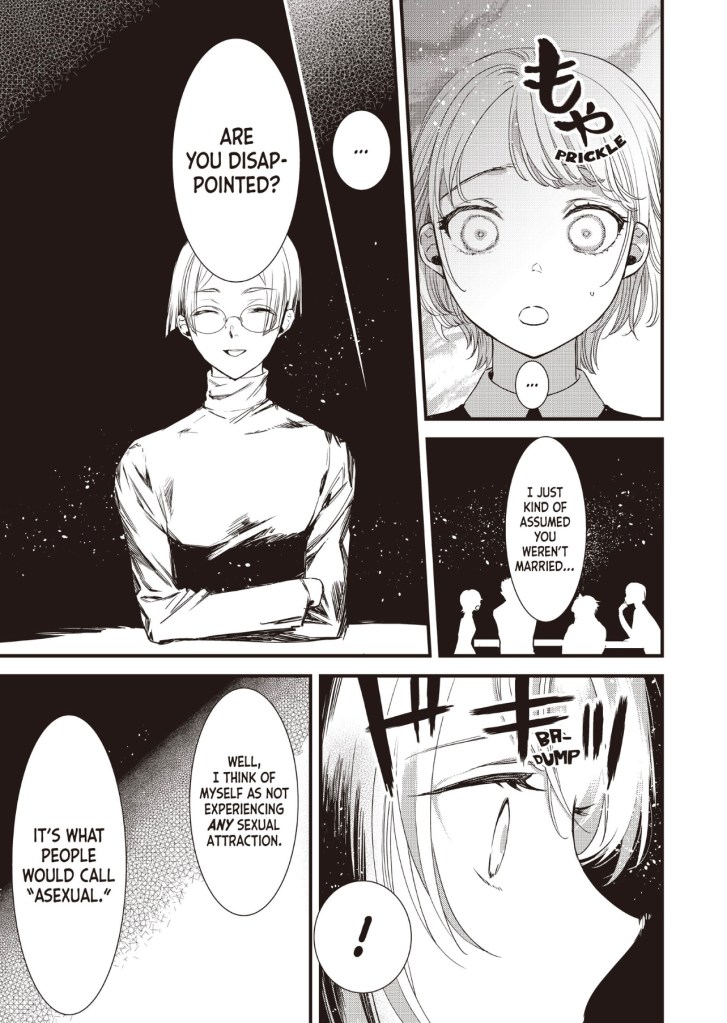
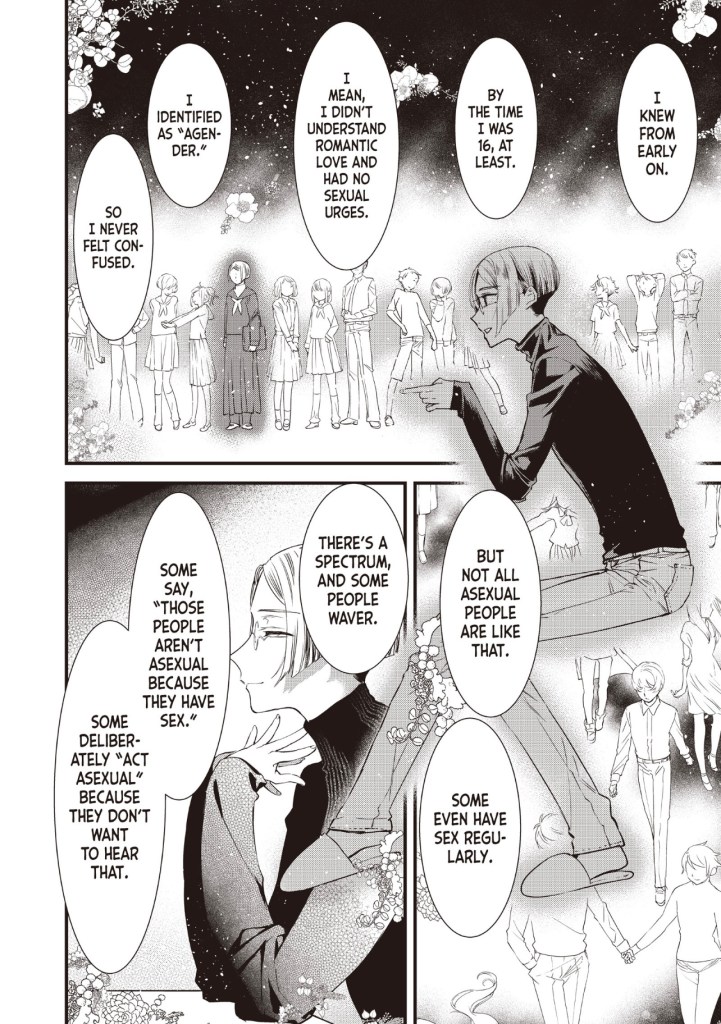
The third ace character is Ume-chan, who is heteroromantic and asexual. When he started dating, he thought he was just like any other straight guy and that he would eventually want to have sex with someone. Because of comments from his peers and his own desire to live up to societal expectations that men want to have sex and they should take the lead in romantic and sexual situations, Ume forces himself to have sexual relationships that cause him psychological harm and even make him physically sick. His reputation suffers, and his partners are in the dark about what’s going on with him.
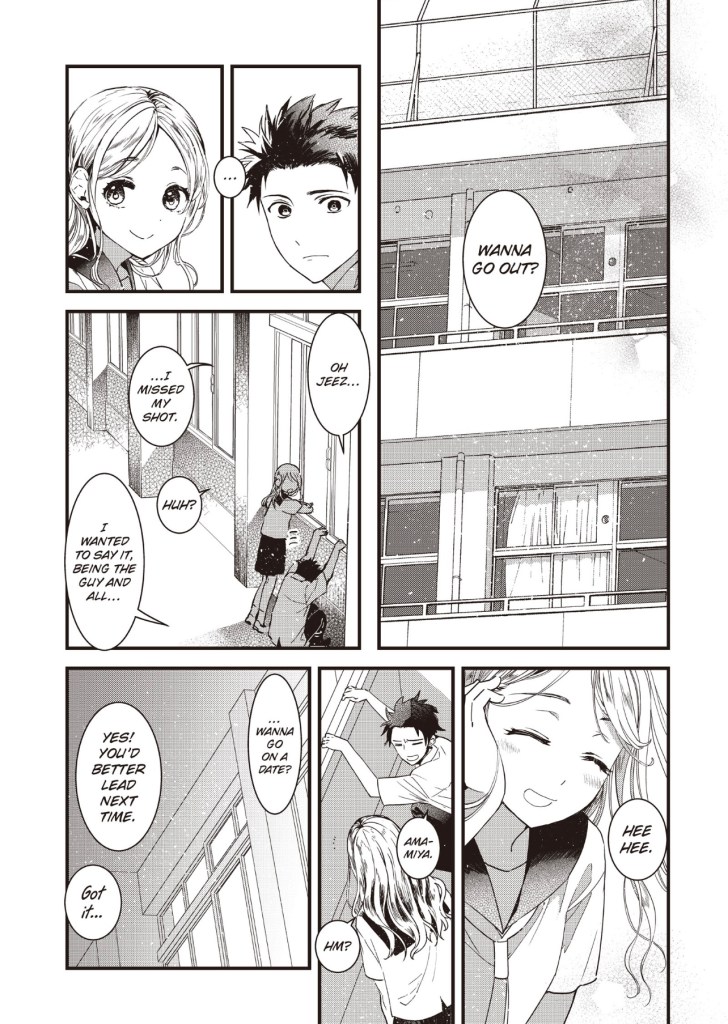
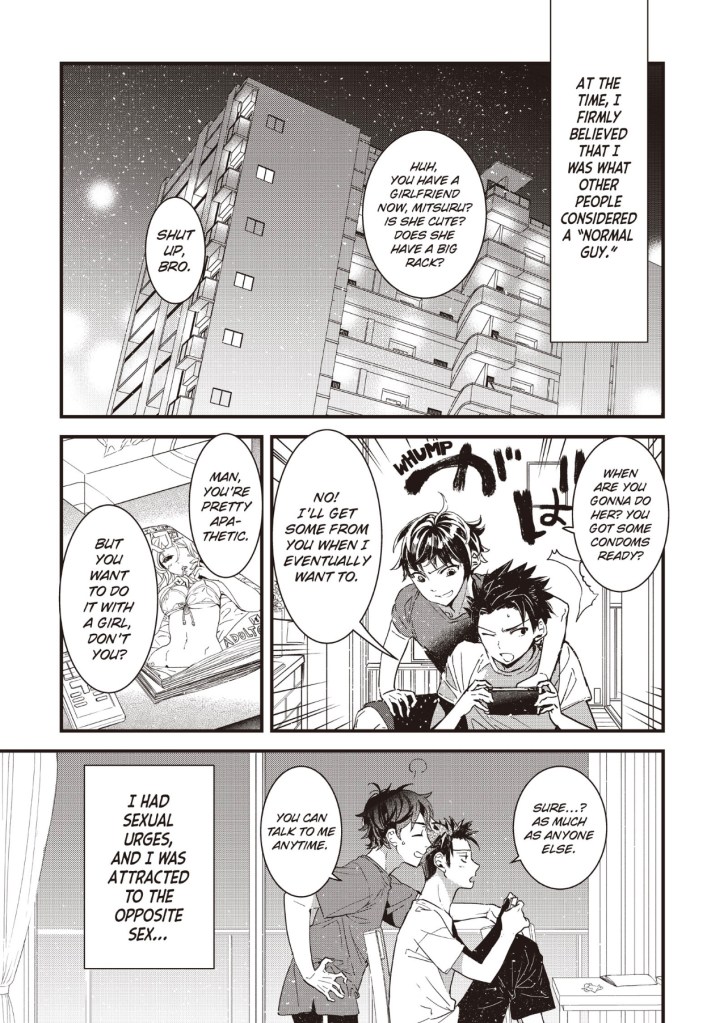
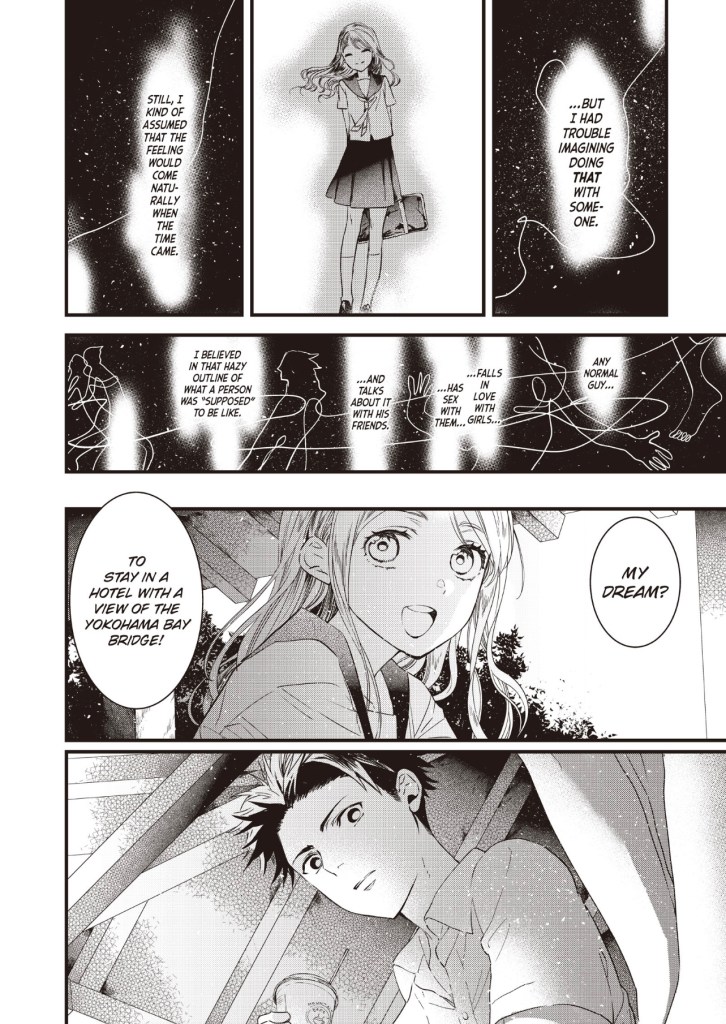
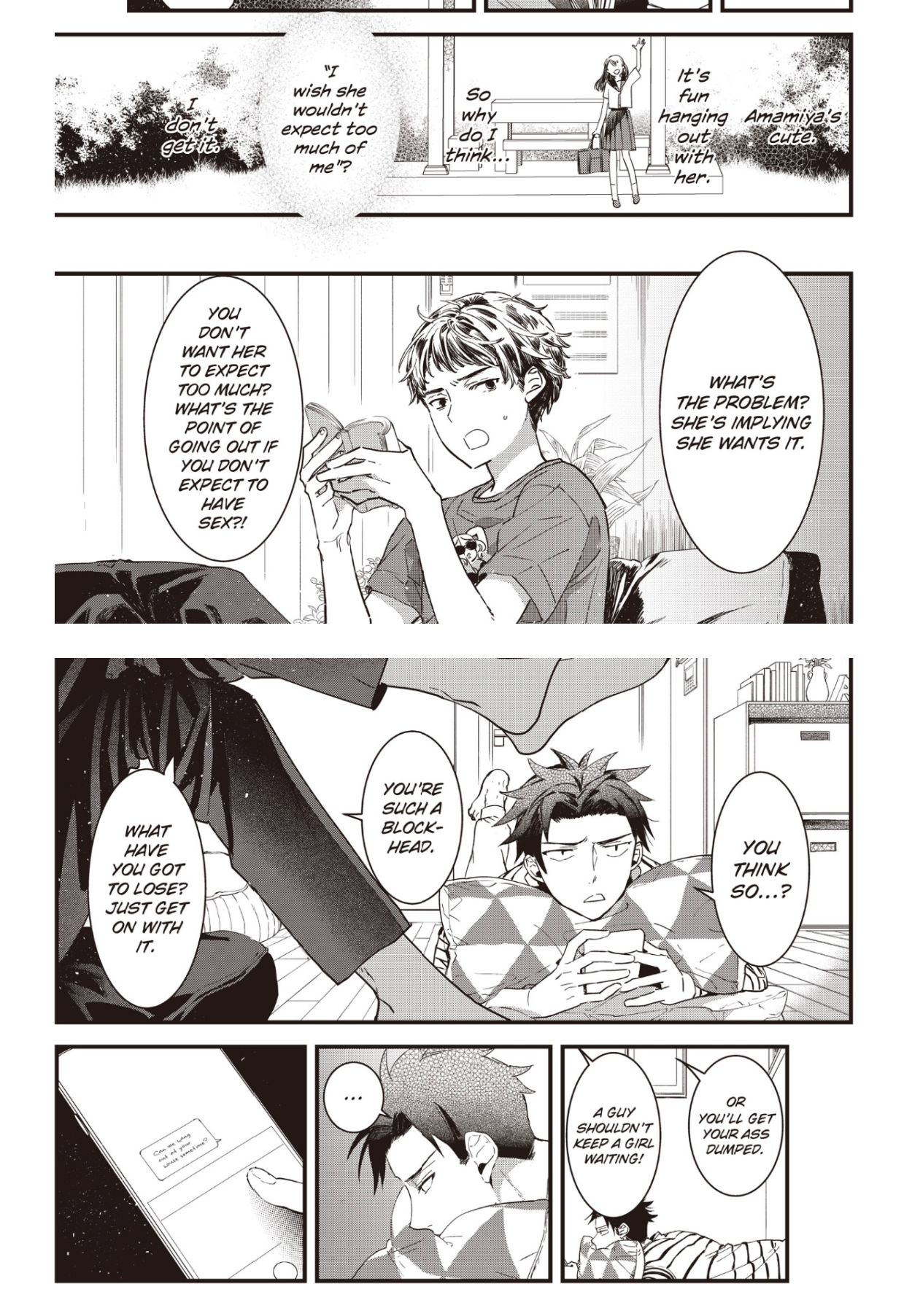
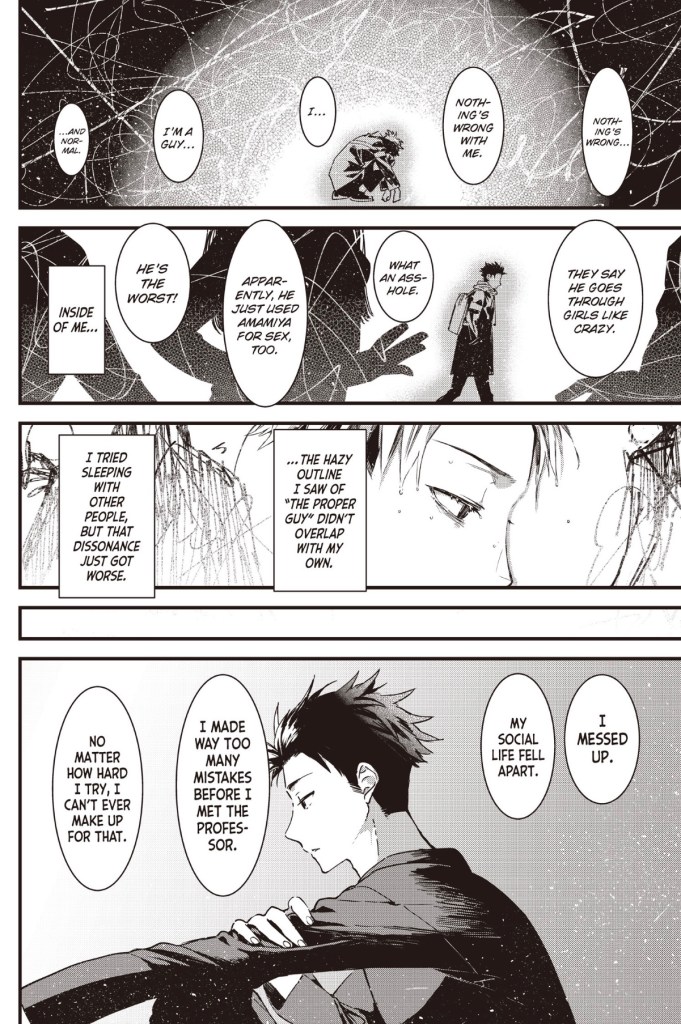
The belief that men are hypersexual, they never say no to sex, and they want it all the time is damaging for men. Ume-chan’s character is a case study in the ways allonormativity interacts with that belief to harm ace men specifically. Even though the part of his life before he knew about asexuality was traumatic for Ume-chan, his story was an element of Is Love the Answer? that really stood out to me as a triumph. And he’s just a great character overall, he’s very easily annoyed in his interactions with Chika – he still begrudgingly helps her on her journey, but he’s just kind of surly and blunt, and that really endeared him to me. We need more mean asexuals in media.
Is Love the Answer? was written by Isaki Uta, who also wrote Mine-kun is Asexual, and thank goodness they made these while exploring asexuality. Both are, in my view, very important contributions.
The Case Files of Jeweler Richard
The Case Files of Jeweler Richard is a series of light novels that have been adapted into a manga and anime. The sense I get is that the light novel readers don’t care for the anime because it cuts a lot out. But it’s very pretty!
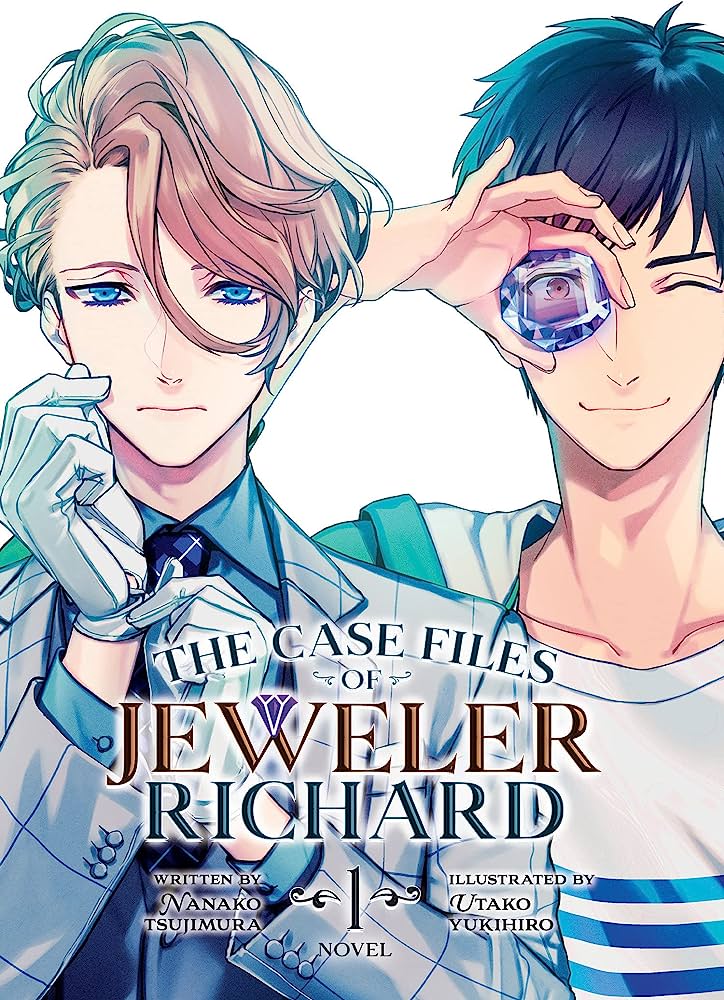
Second-year economics major Nakata Seigi has a ring that was given to him by his late grandmother. He’s wanted to have it appraised for a while, so when he has a chance encounter with a jeweler named Richard, he takes the opportunity and has the stone valuated, which uncovers its storied past, one which Richard had also been invested in. After this, Richard offers Seigi a job in his jewelry shop, and with each client they see, they are thrust into a new character’s personal life. Very queer!
The second episode is about a client who wants to know if a ruby she’s been given by her fiancé was heated or not. And the fiancé shows up at the jeweler’s thinking Richard is someone she’s having an affair with because he hired a PI!! It’s revealed that she gave Richard a fake name, and her fiancé says she’s lost weight and stopped smiling but won’t tell him what’s wrong. And what we learn in the end is that she’s been ill, unable to eat or sleep, because she’s so stressed about her impending wedding to a man when there was a woman she was in love with who she left but cannot stop thinking about. She had been raised not to draw attention to herself and wanted nothing more than to just be normal, have a traditional marriage and an easy life. But she can’t bring herself to. A theme this series engages with is the beauty of individuality, you know, people are one-of-a-kind just like gemstones. And another is how agonizing it is to try to conform to social norms that don’t work for you. However, operating within social norms to your own advantage is also something that is examined in this series.
Seigi has a friend named Tanimoto Shouko, who studies education at his college. She was the president of her high school’s mineralogy club, so she knows a lot about minerals and gemstones, and she advises Seigi when he has questions. Seigi has a little bit of a crush on Tanimoto, but in the third light novel (or episode 8 of the anime), she confides in him that she doesn’t understand romantic love.
“I don’t understand love. I’ve been on this Earth for twenty years now, but stuff like love and romance and dating just…none of it makes any sense to me at all. Not men or women. To me, it all just feels like something that happens on TV. It’s not even that I’m not interested in it; it’s more like…like I can’t even imagine it having anything to do with me in the first place.
I don’t think there’s anything wrong with being single your whole life. Even my parents said they’d be okay with that, too, but I don’t know how many times I’ve had people I thought were my friends tell me they’re in love with me and want me to go out with them. It’s always really painful. I don’t understand love. I always have to distance myself from them when that happens…but if I get married, I could just say, ‘Sorry, I’m married, so I can’t go out with you,’ you know? That’s what I’ve always wanted, and that’s why I want to hurry up and get married.”
The Case Files of Jeweler Richard Vol. 3, Case 4: Angelic Aquamarine
Tanimoto is such a cool character, and I think the struggle she speaks about, of having people you thought of as friends try to date you and being uncomfortable with that, wanting a guaranteed way to let people down easy, is very relatable.
This is a fun series. I love all the gemstone metaphors. Richard lives such an aspirational life… He gets to look at precious gems all day while a man with big brown eyes cooks, cleans, and brews tea for him. And Seigi is *constantly* talking about how pretty Richard is, like Richard is kind of living my dream. And he STAYS having a fancy dessert. Good for him!
Our Dreams at Dusk
Tenth grader Kaname Tasuku recently moved to Onomichi and transferred to Shimanami High School. The story starts with him being outed as gay at school. And he thinks his life is over, he doesn’t know if he can live through this. While he is in the midst of a downward spiral, he sees someone off in the distance jump out a window.
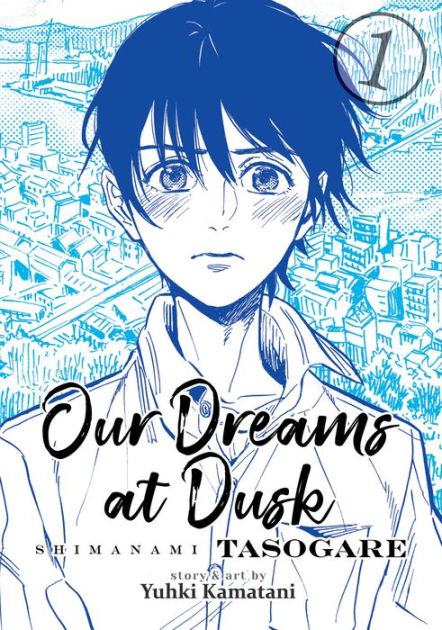
So he’s freaking out, yelling for someone to help, and he runs after them. And Tasuku finds himself at a drop-in center where a group of queer people hang out. It’s actually owned by the person he saw jumping out of a window that’s a typical Monday for Someone-san. And the people at the drop-in center welcome Tasuku, they invite him to help with vacant house renovations they do through a non-profit called Cat Clutter. And as Tasuku gets to know these people of various identities, it becomes easier for him to accept himself.
Something I really love about this manga series is that it features queer characters of many different ages. So we have Tasuku, who’s in high school, but there are also two younger kids who come to the drop-in center, a few young adults, and Tchaiko-san who I believe is in his 50s or 60s.
I also appreciate its commentary on the inevitability of hurting others. There’s a line in volume 3 about how it is near impossible to be in community with other people and not hurt one another. That’s real.
I think this manga has really important things to say about allyship as well. The idea that queer people have a responsibility to make our experiences and orientations legible to others is explored, and the conclusion that multiple characters come to is that they don’t need to be understood if it comes at the cost of their comfort. Even well-meaning allies who want to learn can cause queer people pain. Queer people who identify differently can cause each other pain. And I like that the message was that it’s okay not to understand everything or be fully understood. There are some people who have a calling for education, but it should not be the job of the average queer person to teach every ally who wants to know the intricacies of their queer identity. We can just tell the people we want to tell, accept the people we love even if we don’t understand everything about them, and count on those loved ones to do the same for us.
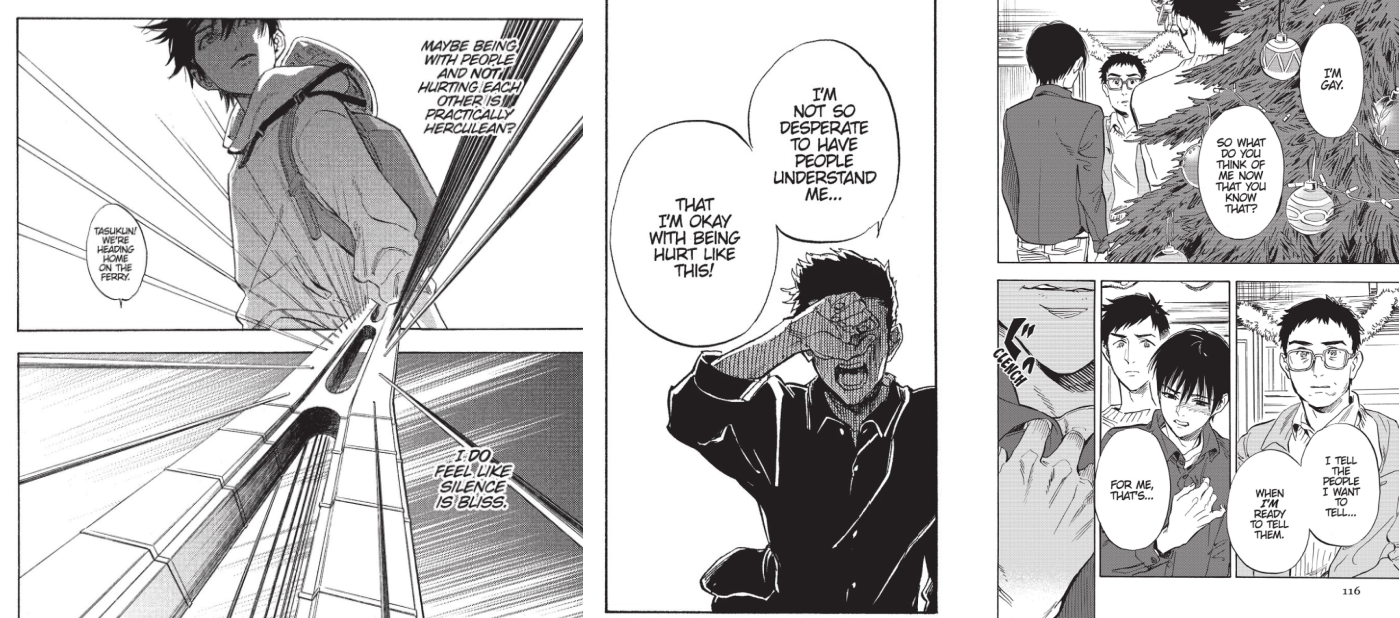
Our Dreams at Dusk is so beautiful and dreamlike. The medium is really used. The external environment bends to the emotional state of the protagonists. There are some really poignant visual metaphors that made this such a unique reading experience.
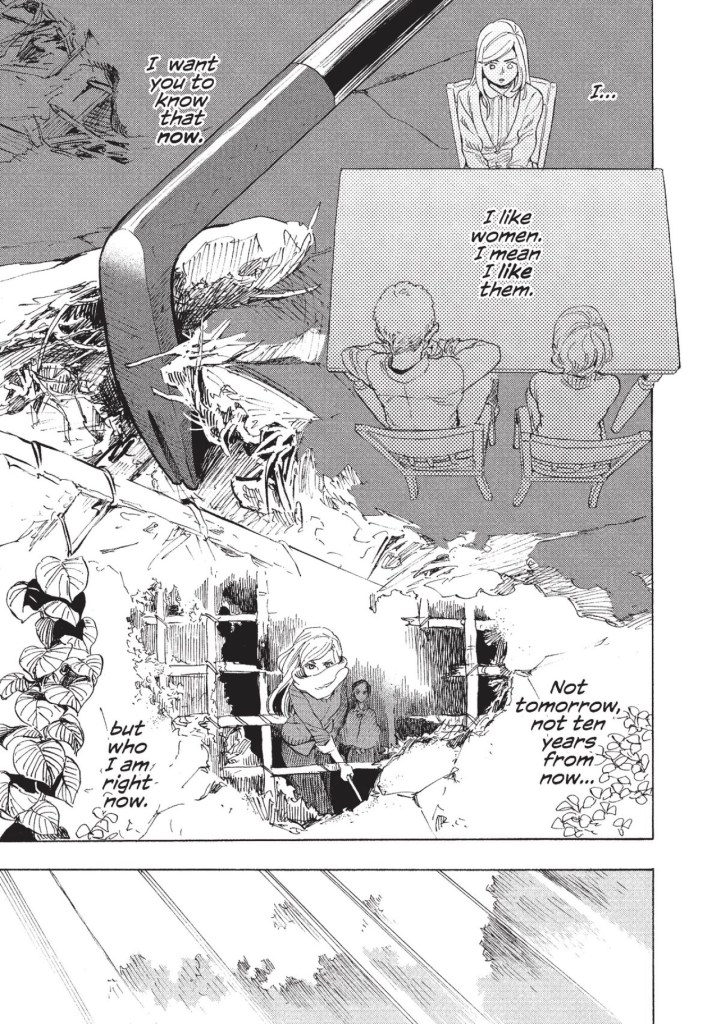
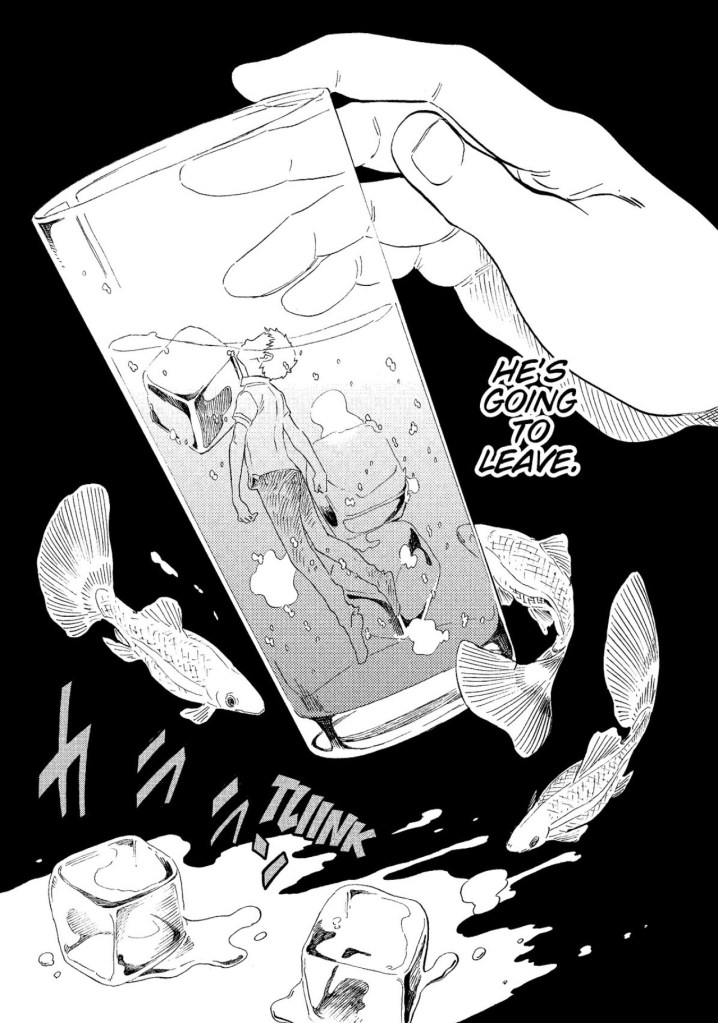
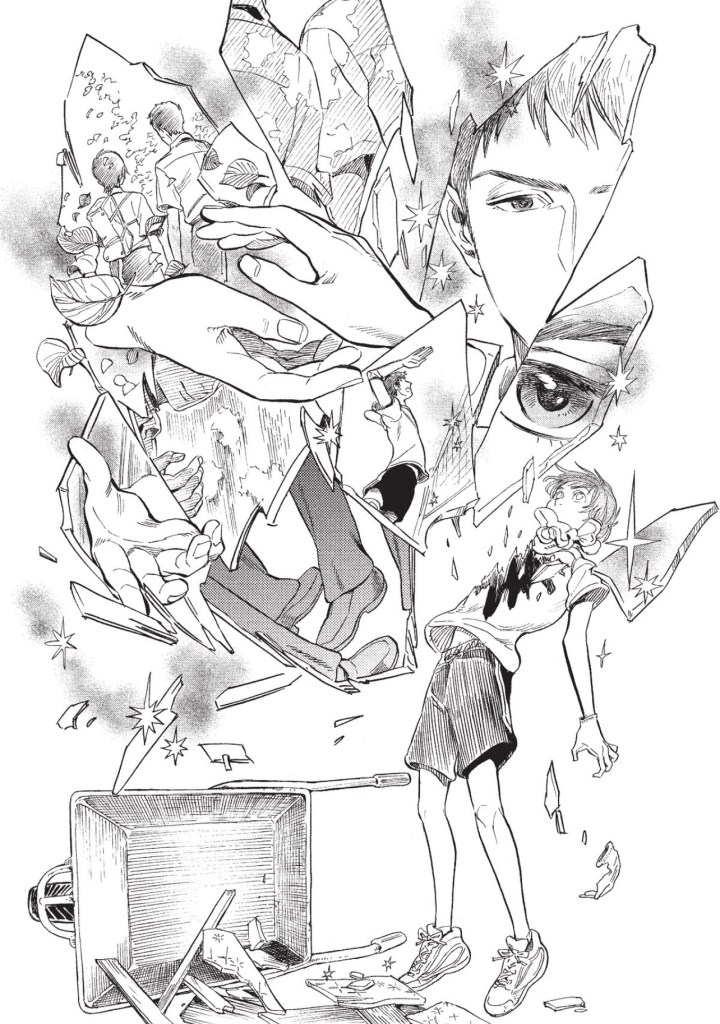
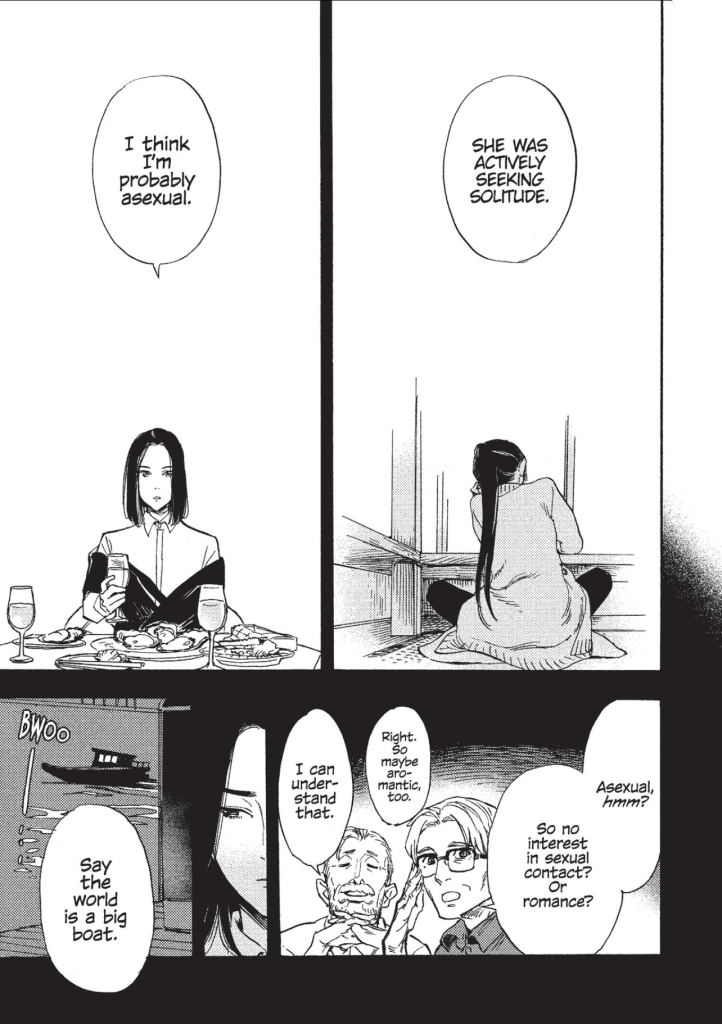
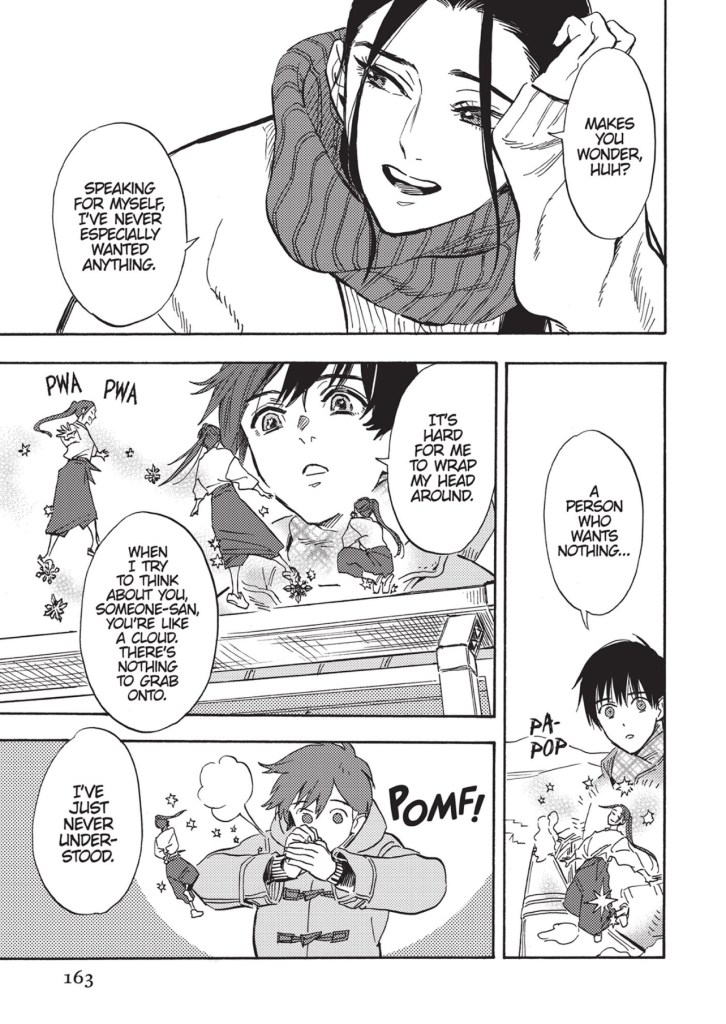
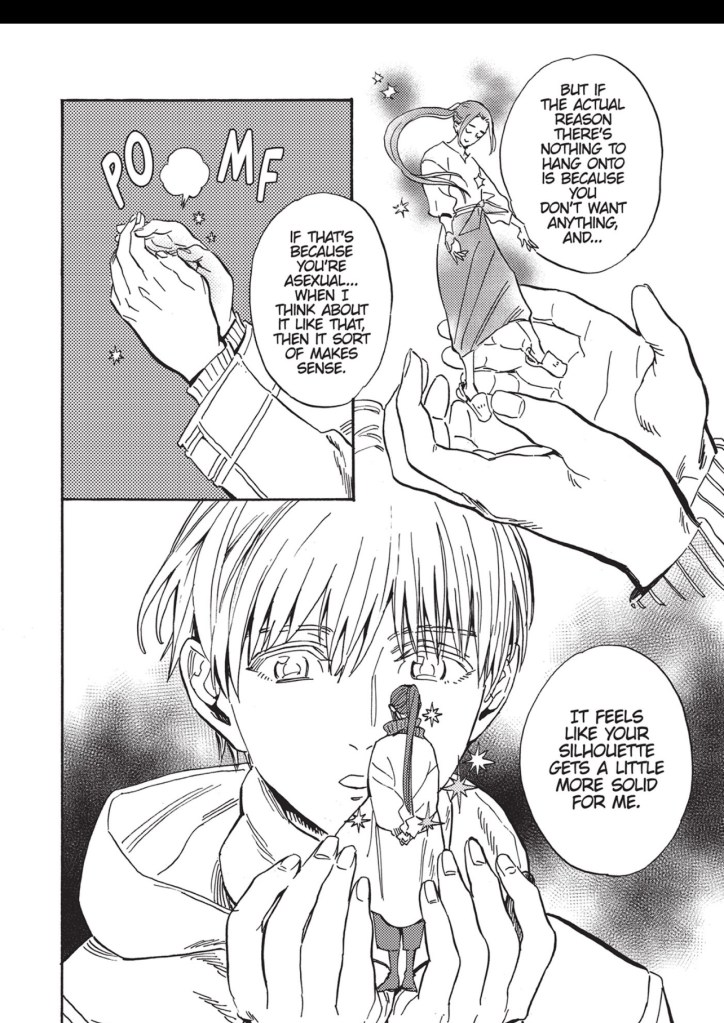
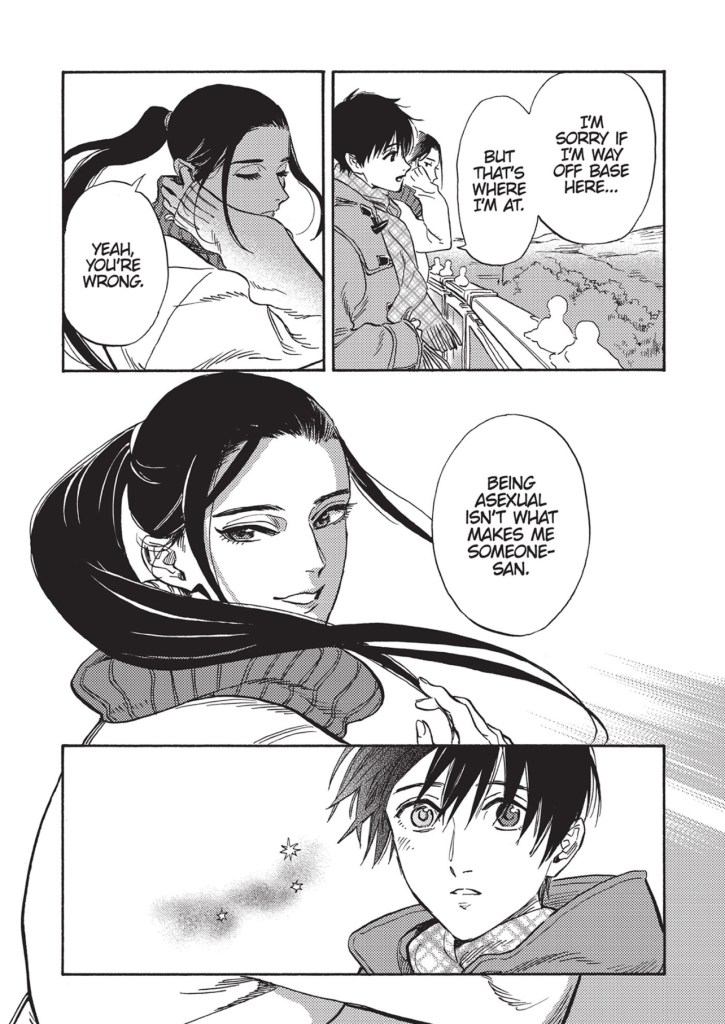
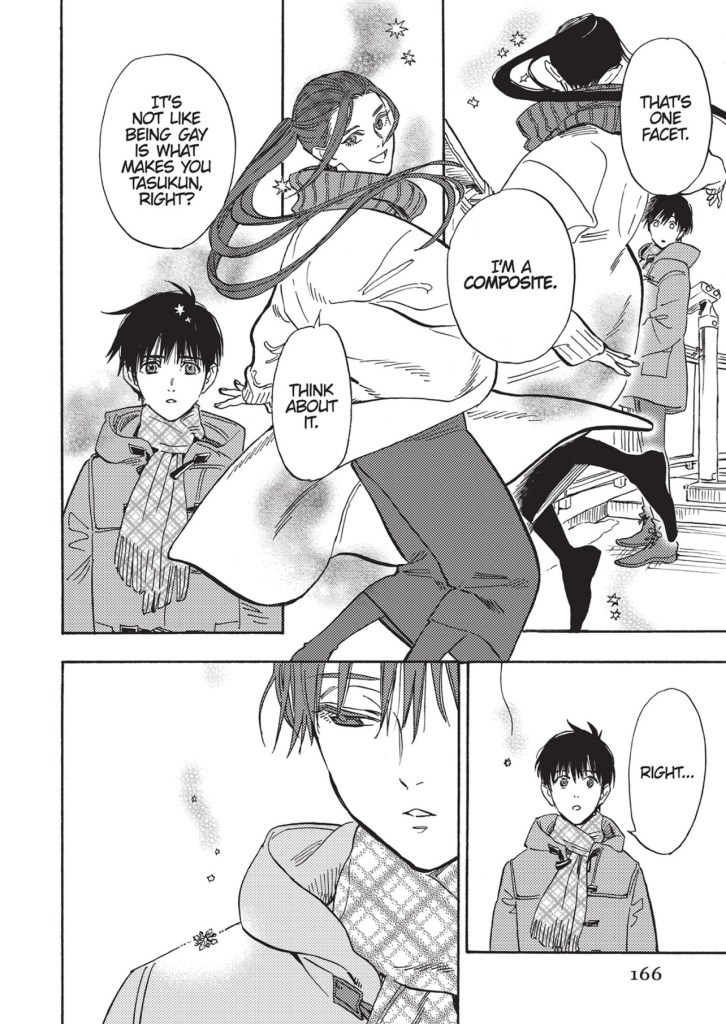
Asexuality and aromanticism are mentioned by name in volume 4. Someone-san describes themself as asexual and maybe aromantic. Because Someone-san as a character is meant to be a mystery – they literally defy the laws of physics throughout – there isn’t much discussion of asexuality and aromanticism, but when Tasuku asks if Someone-san is the way they are, intangible and enigmatic, because they’re asexual, Someone-san says being asexual isn’t what makes them who they are. It’s only one facet.
Honorable Mentions
These are titles that might have a-spec-coded characters that aren’t canon (yet anyway). These can also be things that are difficult to get your hands on for one reason or another, but I still wanna talk about them a little.
The Disastrous Life of Saiki K
This is a manga and anime series about a high schooler named Kusuo Saiki, or Saiki K, who has psychic powers. He has telepathy, the ability to alter other people’s memories, clairvoyance, invisibility, super strength, he can teleport – among other psychic abilities. This series is an episodic slice-of-life comedy that follows this all-powerful being as he endures the banality that is high school.
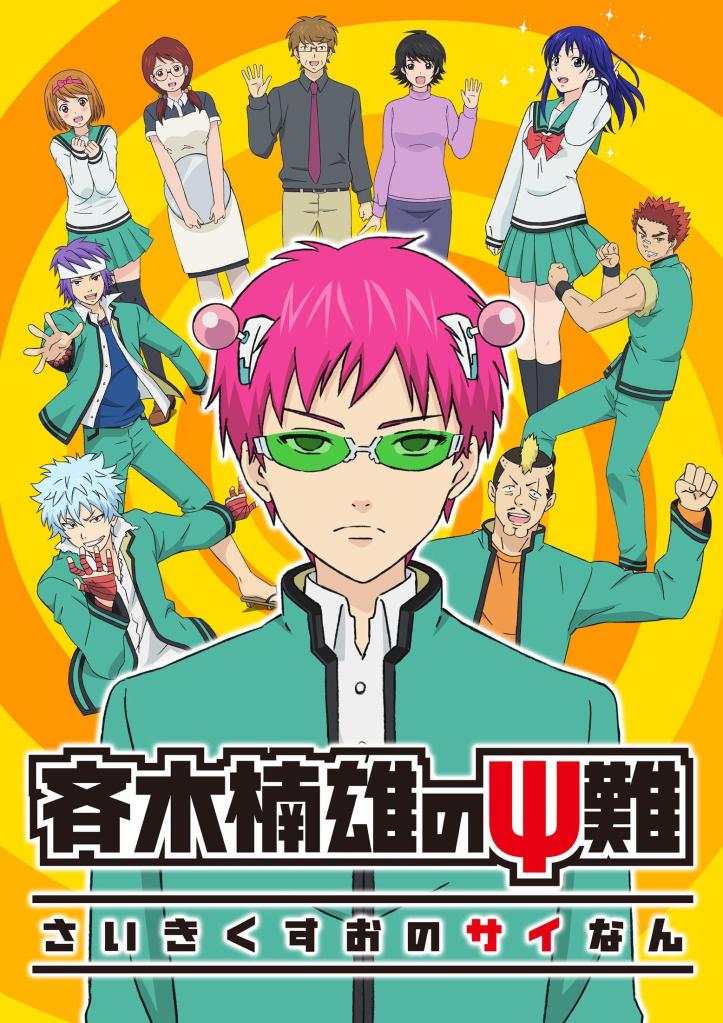
And of any anime character, this is probably the one I see headcanoned as aroace most frequently. Some people contest this by saying that the only reason Saiki doesn’t experience romantic and sexual attraction is because of his ability to hear people’s thoughts and see through their skin. And I’m not super interested in that line of argumentation. It is very obvious why people headcanon Saiki as aroace. He says plainly that romantic feelings elude him and that he’ll “probably never wanna be in a relationship.” He is shown to be constantly dodging the advances of girls who have crushes on him.
Saiki also has another feature that is commonly discussed in specifically asexual spaces, and that is a passion for food. Saiki has an affinity for coffee jelly. And food has become a part of ace culture, with cake being a symbol for asexuality, which comes from the practice of marketing cakes but also desserts in general as “better than sex.” For some asexuals, that is literally true, so cake has become a part of asexual iconography. And Saiki loves coffee jelly and talks about it in a way that is very similar to how some people in the asexual community talk about cake.

If you’re interested in this series, I can only speak to the anime. Each episode adapts 4 or 5 chapters from the manga, so it’s pretty fast-paced. If you like absurdist comedy, you might enjoy this.
I do think this might fall into the trope of unfeeling/inhuman characters being perceived as a-spec. His psychic powers and general all-knowing monotone make Saiki come across as robotic or kind of alien. And those are the characters that will be headcanoned as a-spec a lot of the time. I don’t think it’s a problem to headcanon characters like that as a-spec, especially if they say they’re not interested in romance like Saiki has. This is only a problem when these are the only kind of characters people will perceive to be a-spec or the only representation for a-spec people.
And, while I’m being critical, if you are thinking about checking this one out, I will warn you, it is far from perfect. The design of some darker skinned characters leaves **much** to be desired, and there’s also this really fatphobic arc with Yumehara where she is demonized and made into the butt of the joke for gaining weight and she becomes obsessed with losing it. So, honorable mention, but proceed with caution for sure.
Kiryuu-sensei wa Renai ga Wakaranai
The title directly translates to Kiryuu-sensei Doesn’t Understand Love, and the French localization is called Aromantic (Love) Story.
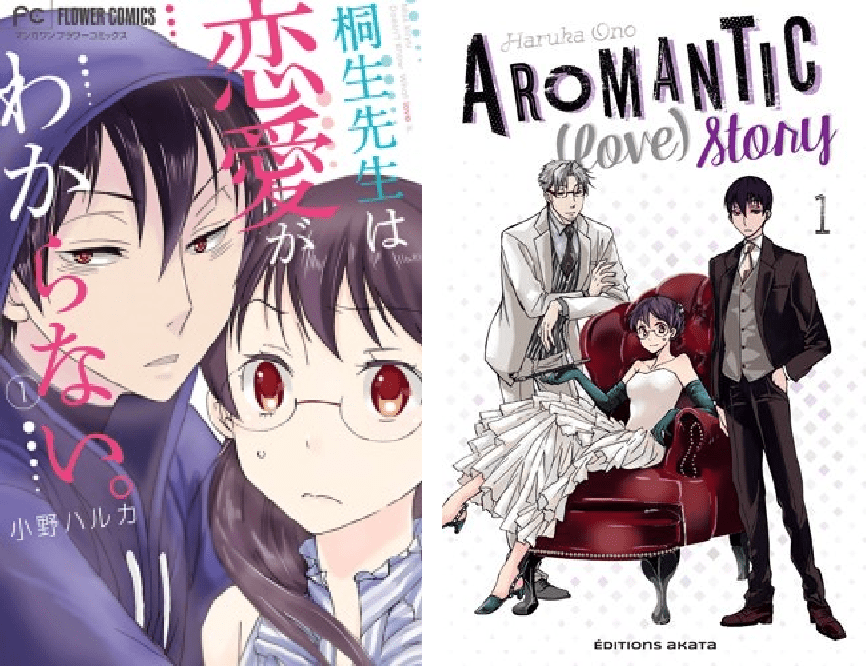
32-year-old Futaba Kiryuu is a manga artist who is really passionate about writing shonen manga that touch on social issues. However, her works in that genre are not selling particularly well. So her editor says, “That stuff is too heavy. How about you write a romantic comedy? I know that’s not your preferred genre, but all women like romance, right?”
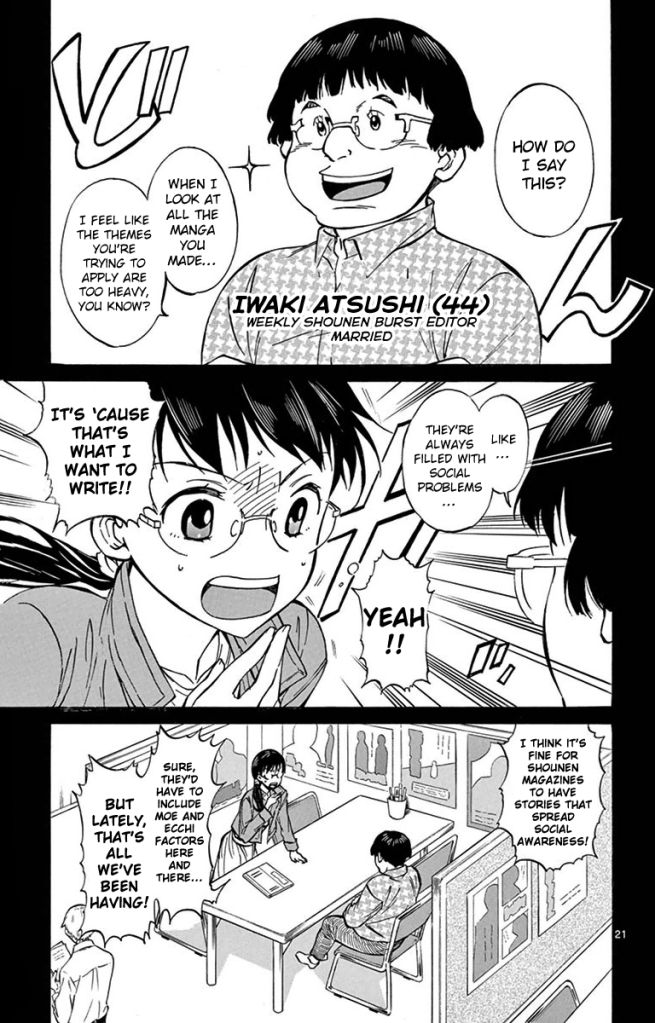
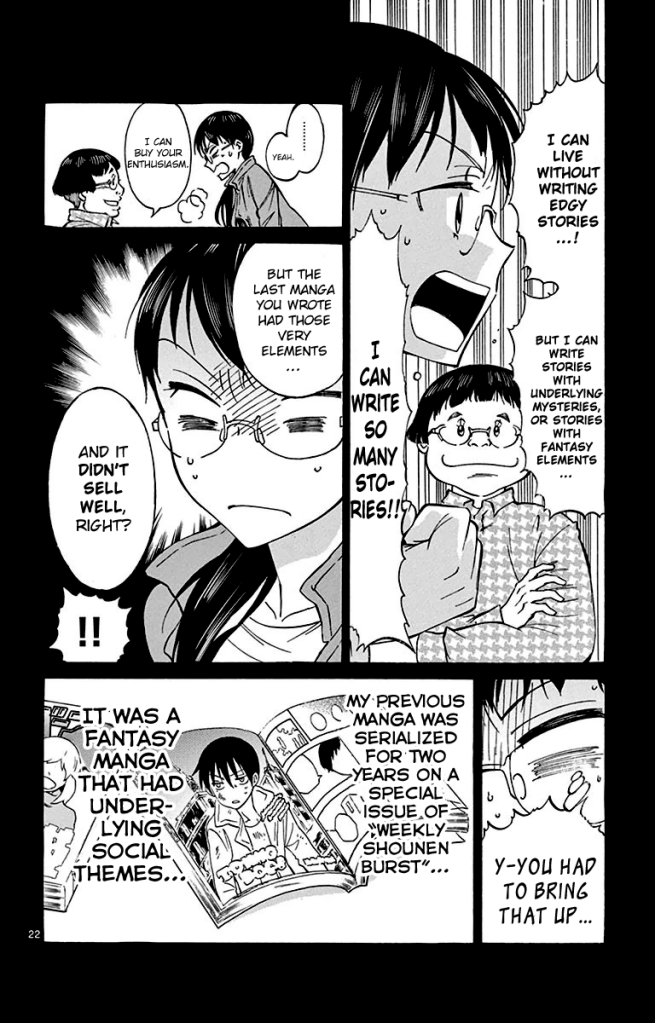
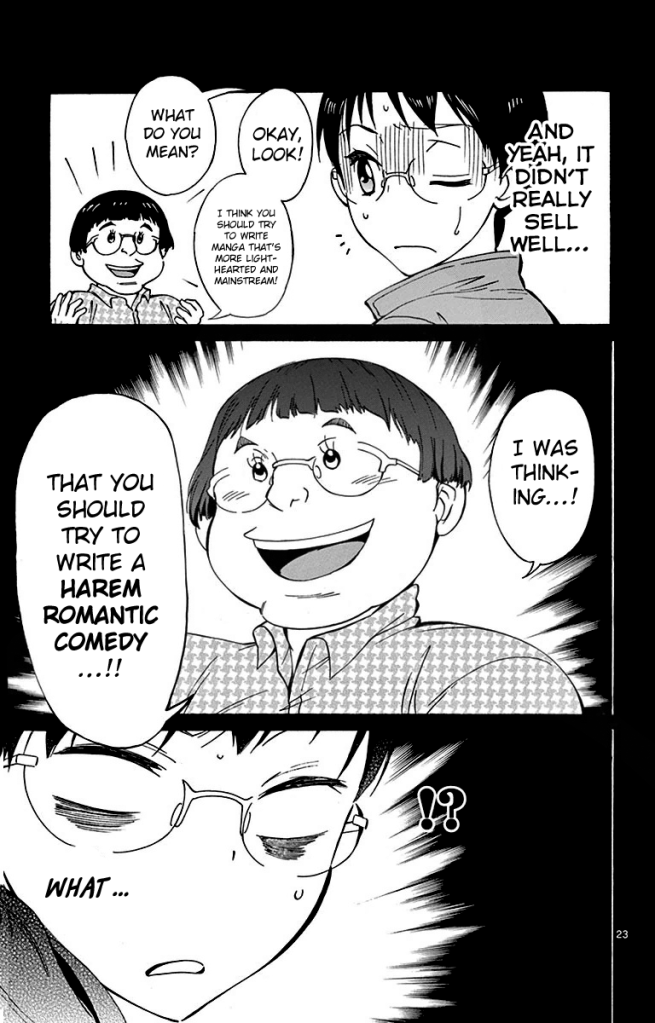
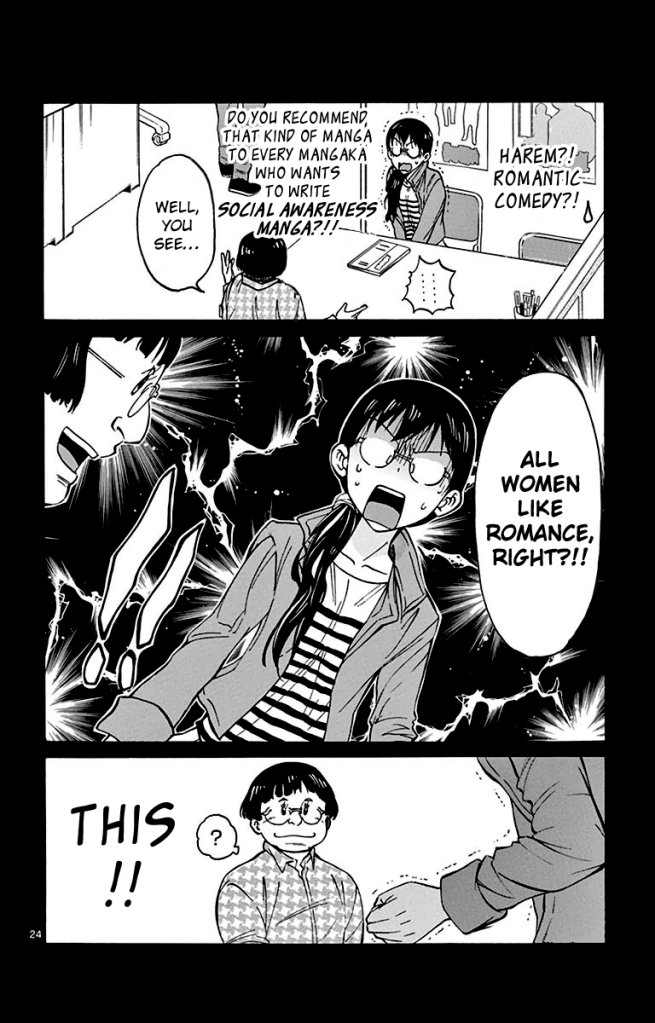
WRONG! Kiryuu has never fallen in love. The closest she has felt to romantic love was her childhood crush on a manga character who she admired because he was cool and strong and *she* wanted to be cool and strong. She takes umbrage with the assertion that all women must be interested in romance and calls out the fact that women are so invested in romance because of the way we bring them up and the expectations we have of them. She also points out that there are women who want sex but not romance or romance but not sex. She really doesn’t want to make a romance manga.
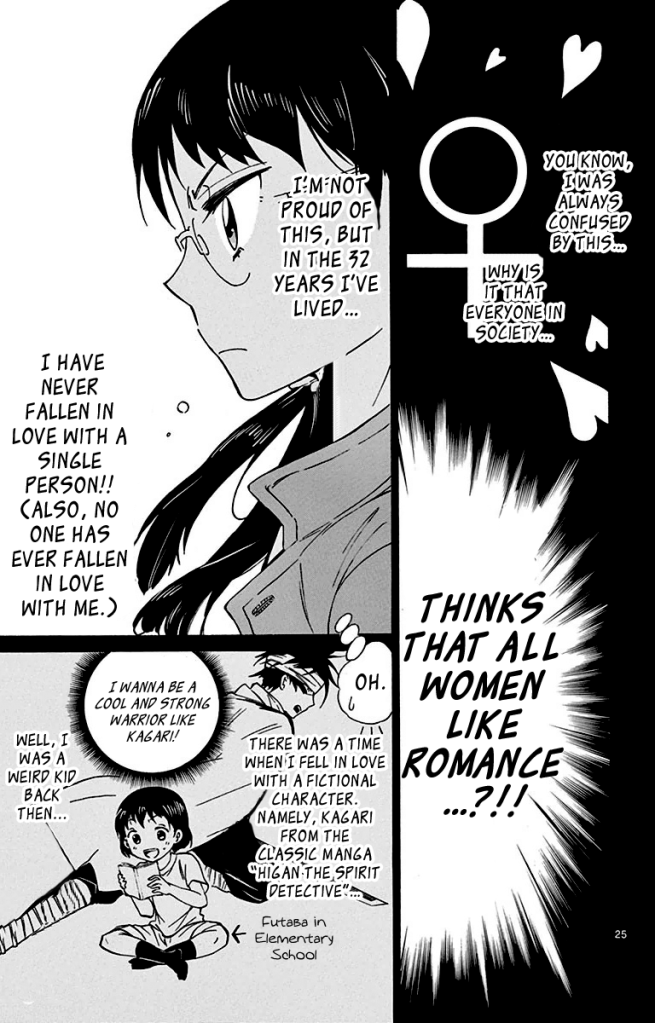
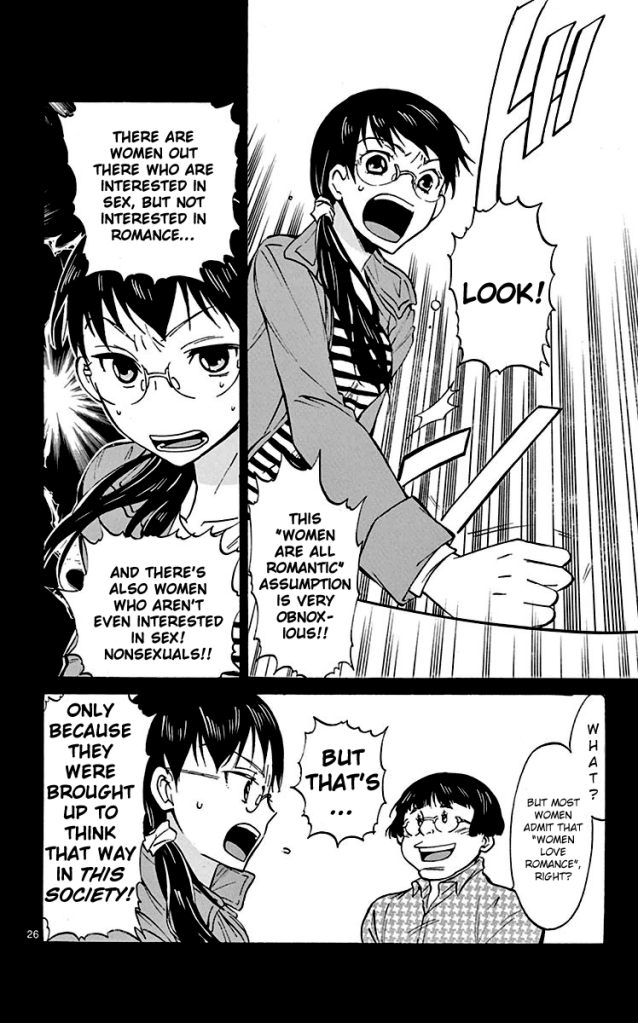
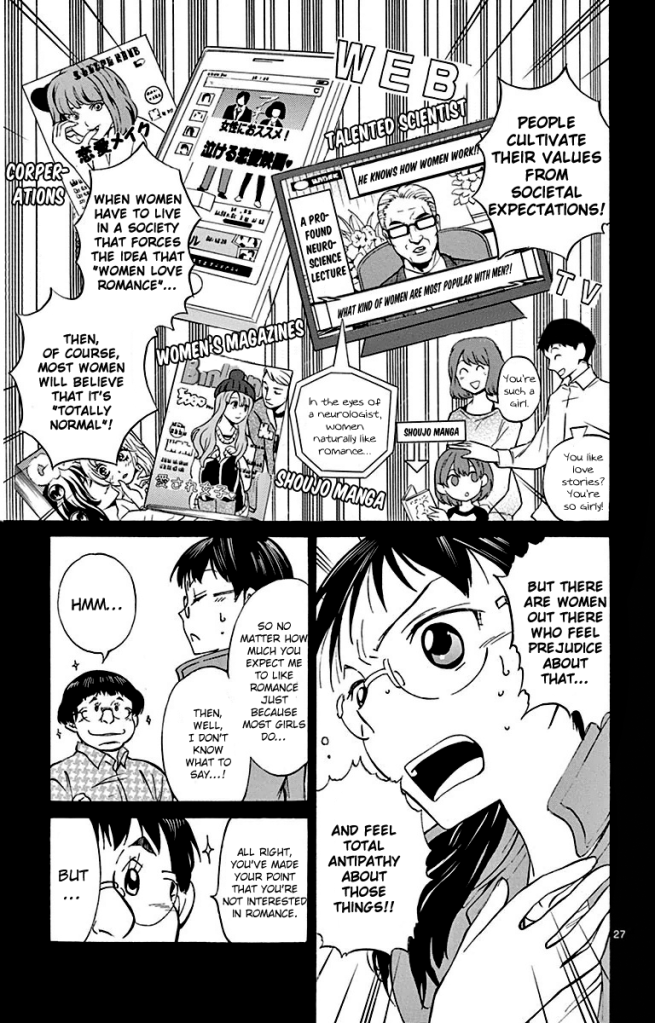
But her editor says a good mangaka can write about things that they haven’t personally experienced. And she gives Kiryuu an out, she’s like, “Well, if you really CAN’T DO IT…” but, not one to admit defeat, Kiryuu takes the bait and writes the manga.
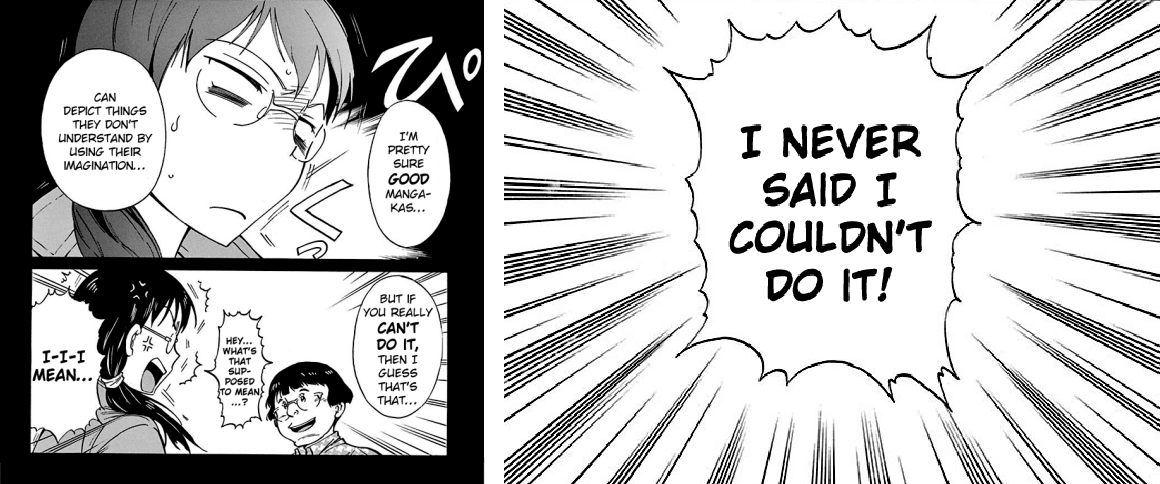
Of course once she writes this romantic comedy series, it takes off and gets an anime adaptation.
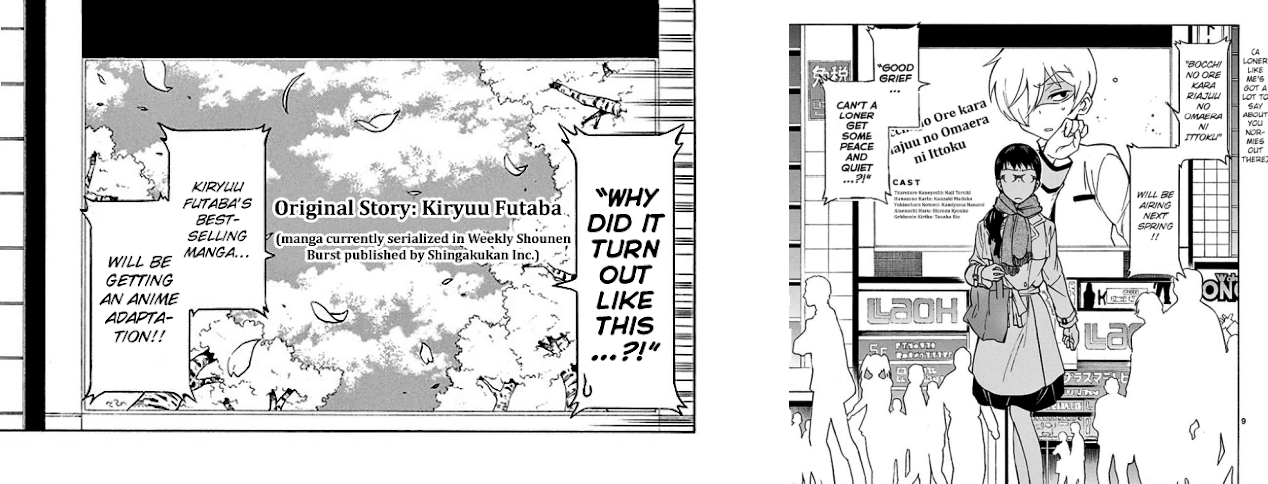
And Kiryuu resents this because she doesn’t like what she’s written. She thinks it’s superficial, and because she doesn’t understand romance, she doesn’t really understand her own manga. She’s just kind of taken observations she’s made about romance and romance tropes and put them all together.
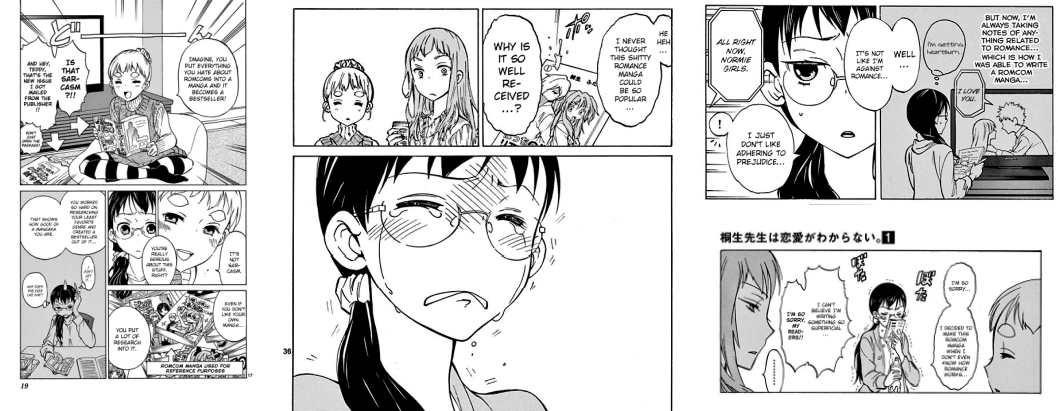
While she is continuing to work on this manga and she has the anime adaptation in the works, two men, who she knows in a professional capacity, start to pursue her. This asexual aromantic mangaka who’s writing an extremely shallow, tropey romance series finds herself in a love triangle. It seems like a lot of fun, this series!
I haven’t read it – I would like to! The reason I haven’t read it and the reason it’s an honorable mention (since it seems like Kiryuu is very clearly a-spec) is that this manga is not available in English. I really hope it gets an official English translation soon because the premise is very funny, we have an outspoken a-spec main character, and there seems to be really good commentary about gender and the societal expectation that women should care about and seek out romance, the assumption that unmarried women must be unhappy. We always need more media pushing back against that.
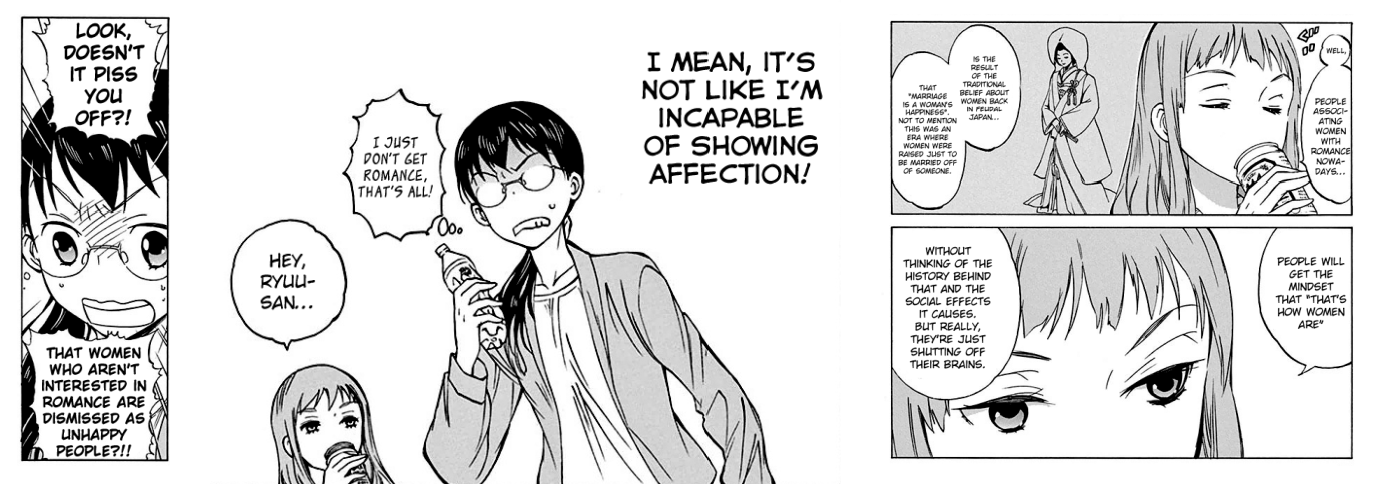
I also love the manga within a manga of this and the insight it offers into manga creation and publishing. Already, in the first chapter, it has a lot to say about which stories are seen as marketable. And I’m sure there are many factors that determine which works get translated, but maybe the fact that this series exploring asexuality and aromanticism has still yet to be translated to English despite its fifth and final volume having been released in 2017 is proof that those insights about which stories sell were right on.
Spy x Family
Hear me out, because they are married, but it’s a marriage of convenience. They get married for professional purposes. And of course they have a child to round out their perfect totally-not-suspicious family.

For those not familiar with this series, it is a manga and anime series that follows Agent Twilight, or Loid Forger, elite spy and master of disguise as he takes on a mission to defend the peace between East and West. His target is Donovan Desmond, head of the National Unity Party, and to stop him from instigating a war, Twilight needs to get close to him. The only way to do this? Assemble a fake family, including a wife and child, train that child to pass the entrance exam and gain admission to the prestigious Eden Academy, and thus access to the Desmond family. To this end, Loid adopts Anya and then works out a mutually beneficial arrangement with a young woman named Yor, who agrees to be his wife.
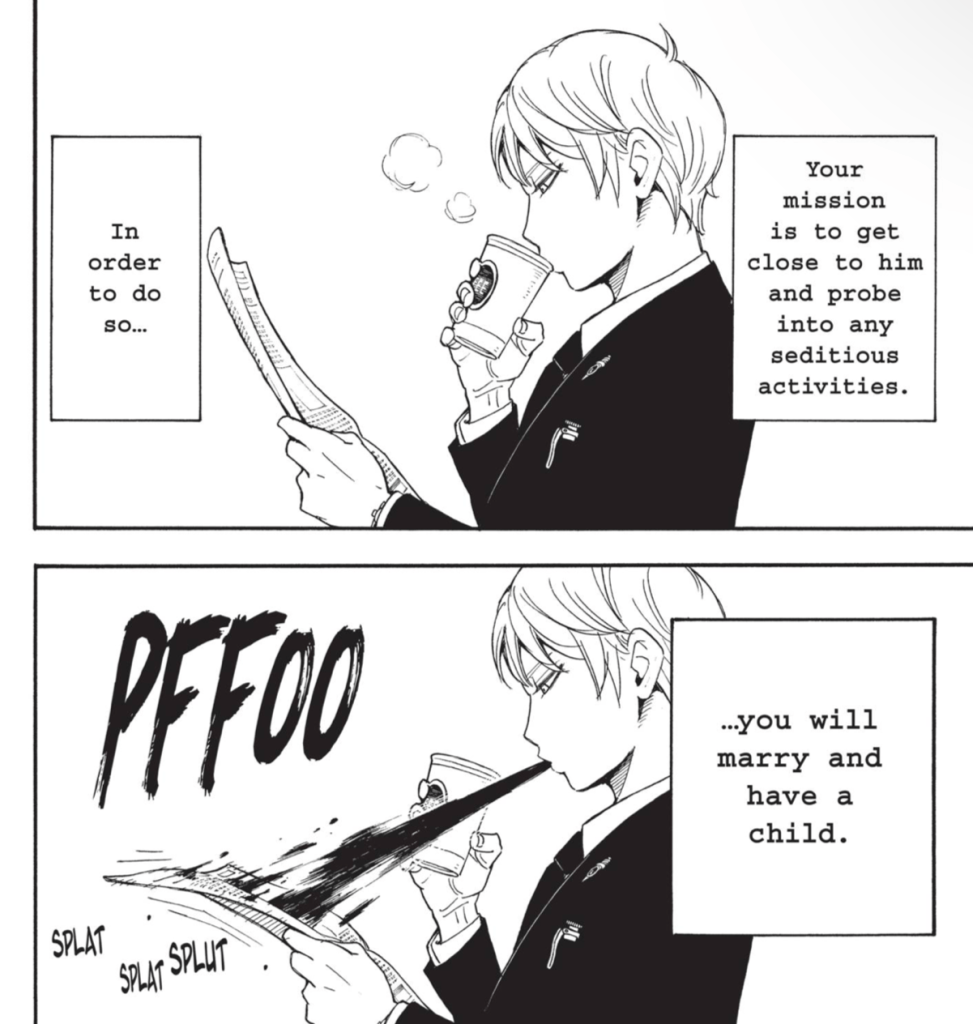
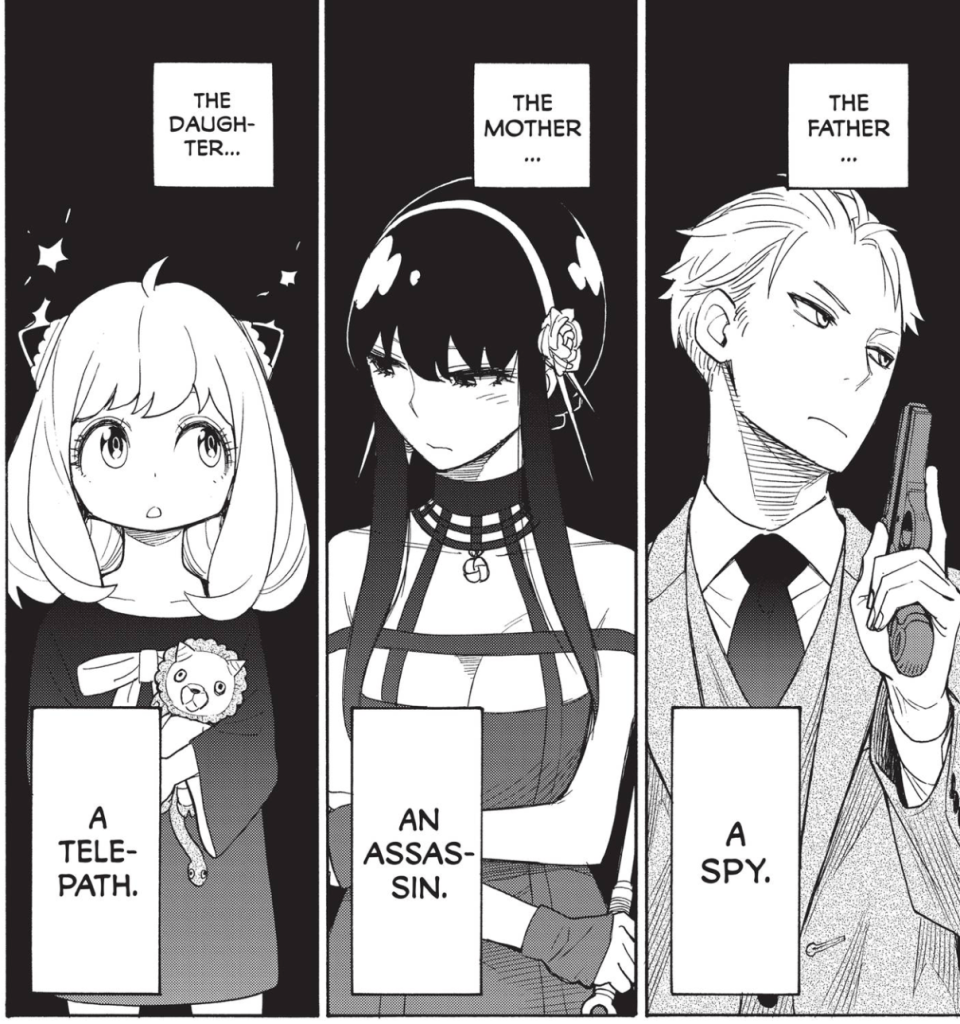
In addition to Loid being a spy, Yor is an assassin, and Anya is a telepath. So there’s an exploration of what it means to be part of a family, to rely on others and to get closer to them while also hiding who you truly are.
I think this series does a really good job of critiquing how single people are viewed, especially single women. We don’t see Loid, or Twilight, express any interest in romance or sex – doesn’t mean it’s not there, however he could definitely be a-spec. But I am more interested in an aromantic reading of Yor Briar.
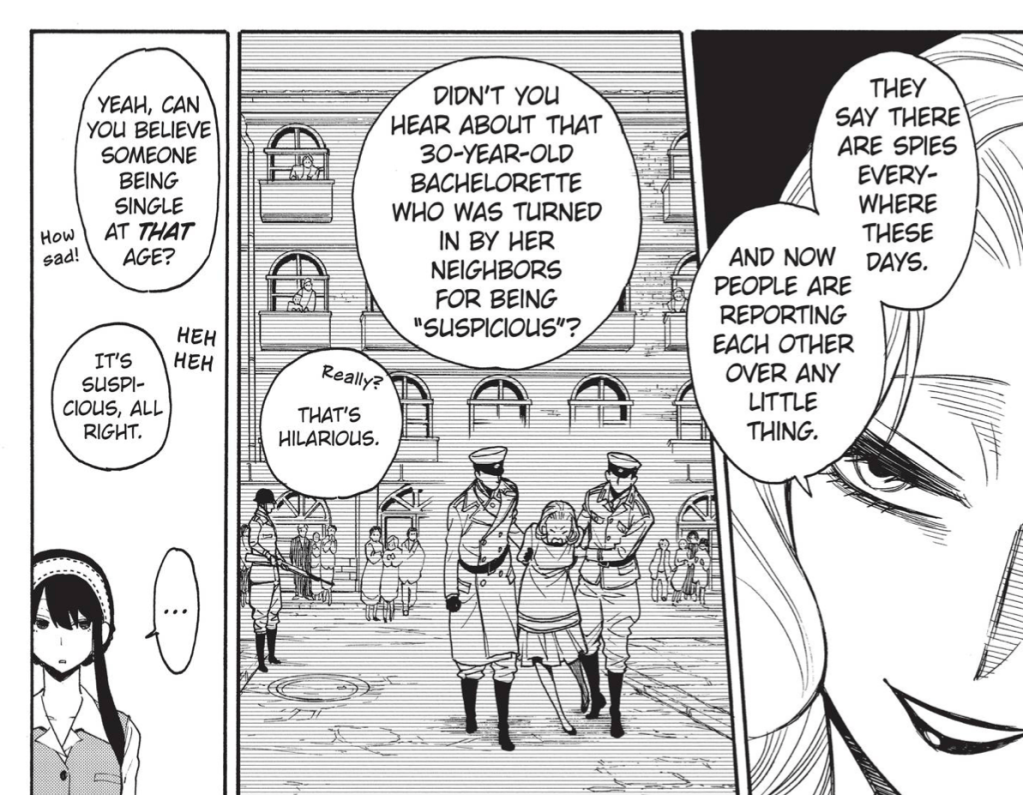
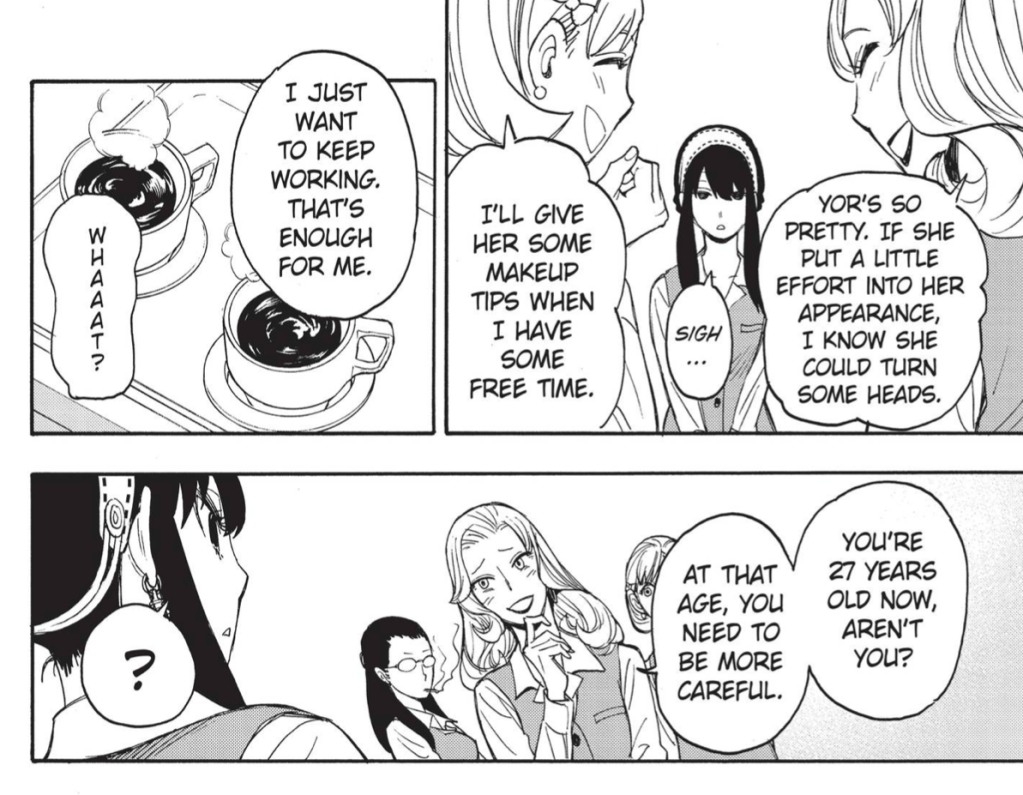
In the chapter where she is introduced, Yor is teased by her coworkers for being single at 27. They tell her about a single 30-year-old woman who was reported by her neighbors and taken away because she was “suspicious.” This example of discrimination against single people is obviously heightened by the prevalence of spies in this universe, but still a sound criticism of how single people are often regarded with suspicion and pity. Then, one of the coworkers, Camilla, invites Yor to a dinner party and tells her to make sure she brings someone, which of course Yor is dreading.
Later that day, she gets a call from her brother, who asks when she’s getting married. He says he’s worried about her and offers to set her up with someone. So she tells him he doesn’t need to do that because she already has a boyfriend and she’s bringing him to Camilla’s dinner party. She’s visibly nervous having that conversation. And she doesn’t actually bring a boyfriend to that dinner party, she and Loid start fake dating and then very soon after get fake married.
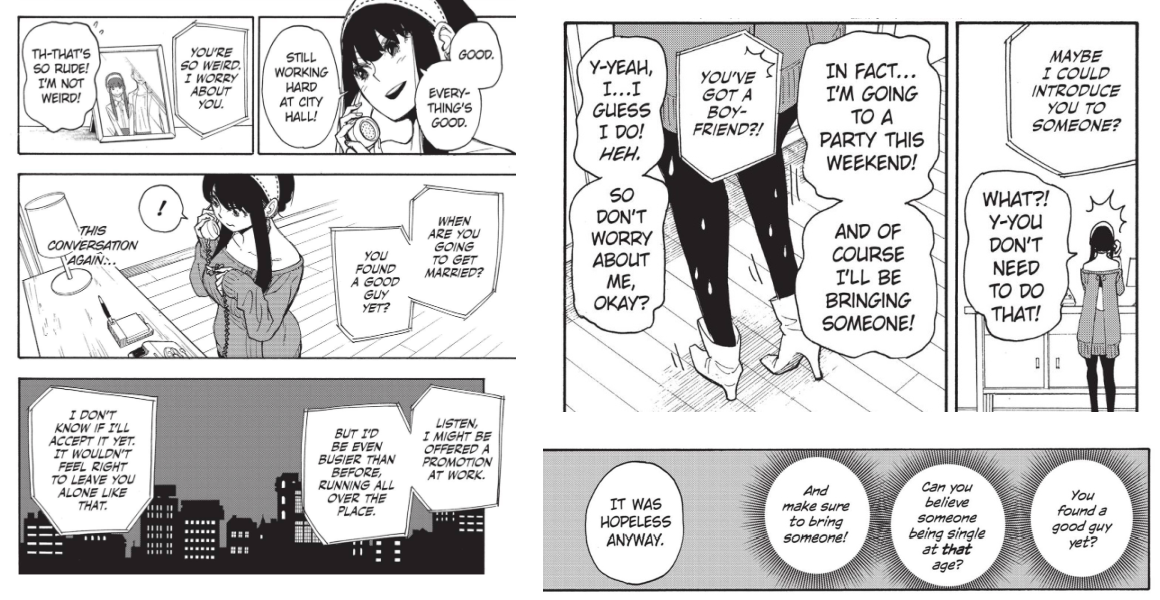
That same night, in fact. The engagement ring being a grenade ring? Kind of everything. But yeah, I think we have an aromantic icon on our hands.
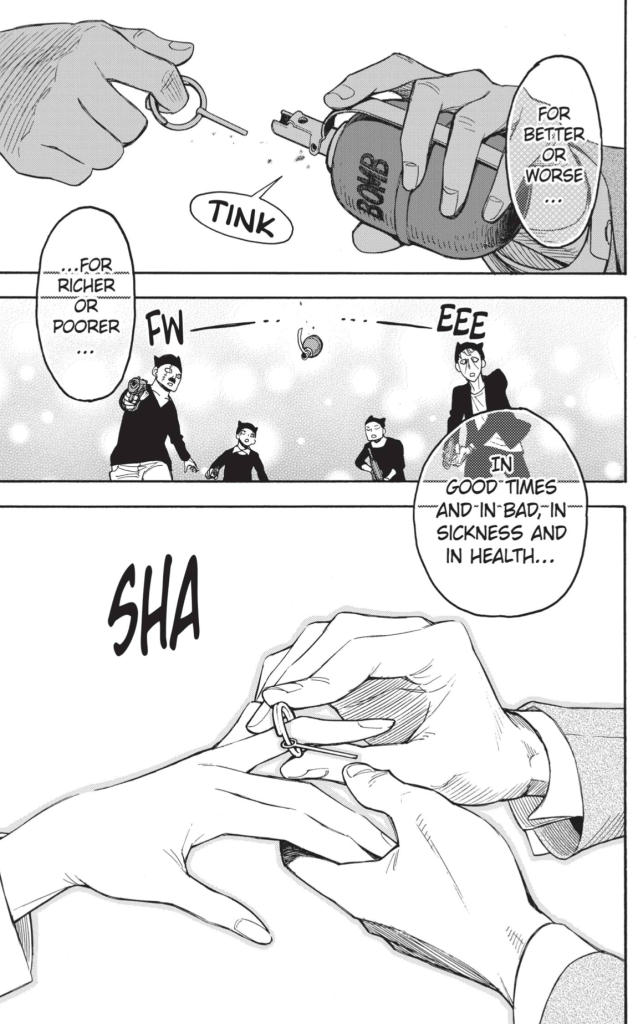

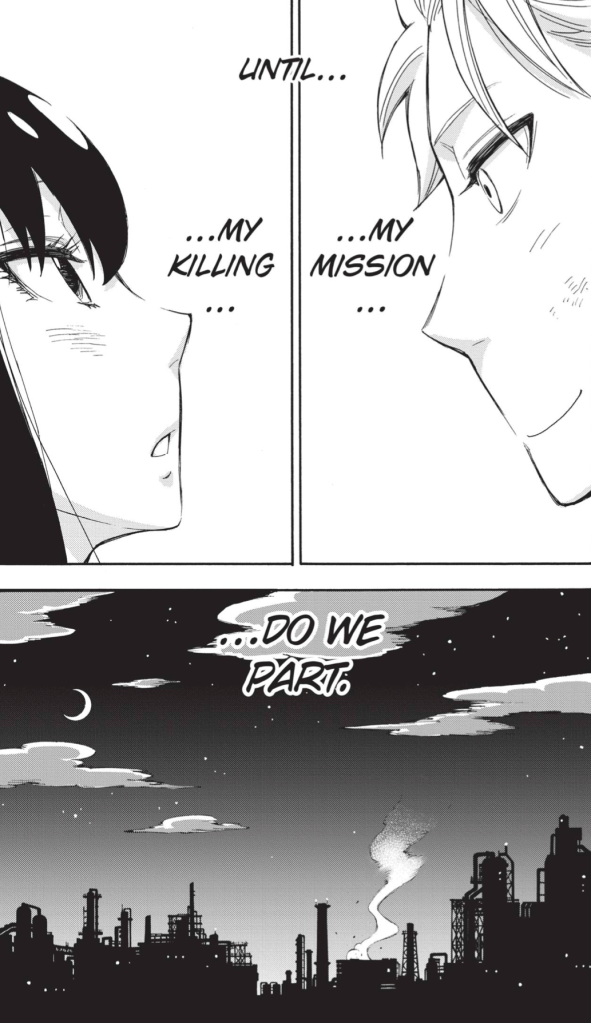
Spy x Family also combats amatonormativity by showing a nontraditional family structure. Yor and Loid are a married couple legally, but functionally, they are two people with a platonic relationship cohabitating and raising a child together.
Maybe the series will end with them being involved romantically, but I still think Spy x Family critiques and challenges amatonormativity, even if the main characters aren’t a-spec.
Romantic Killer
Romantic Killer is a manga and, recently, Netflix original anime series. Our main protagonist is a first-year high school student named Hoshino Anzu who has always been more interested in video games, chocolate, and her cat than she has been in boys.
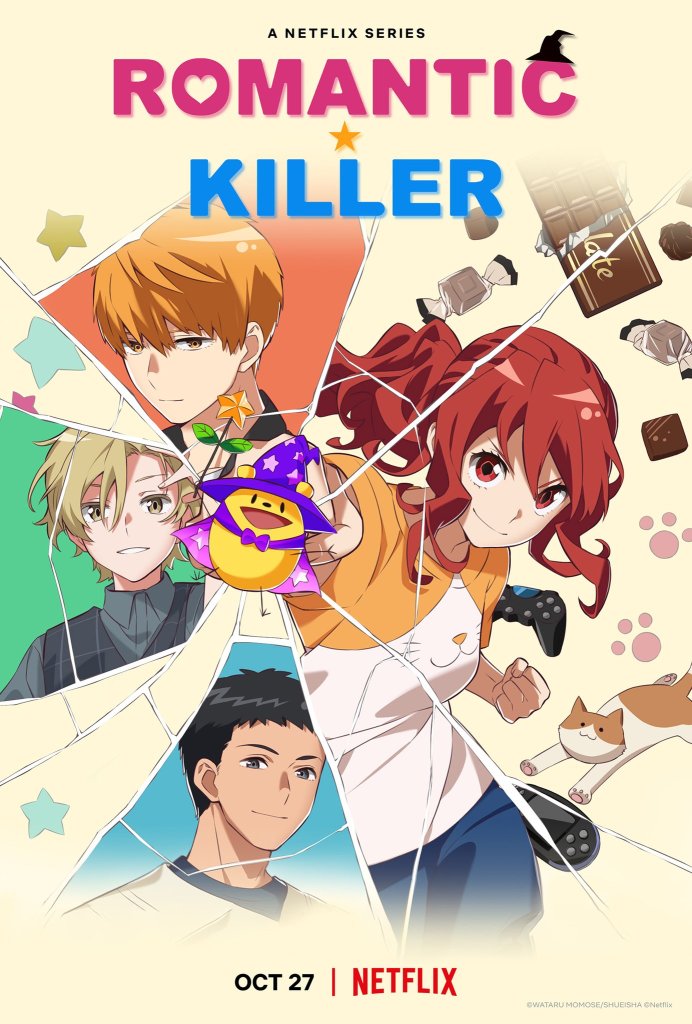
Because of the declining birth rate in Japan, this is of particular interest to this extraterrestrial race of wizards? So this little creature appears and confiscates her games, her chocolates, her cat and also manufactures some way for her parents to be out of the picture – I think they relocate to America for work and leave Anzu alone in the house?? – and then this creature, Riri, puts Anzu in all of these ridiculous dating sim scenarios with these three boys she goes to school with, two of whom move in with her in the first season due to Riri’s scheming.
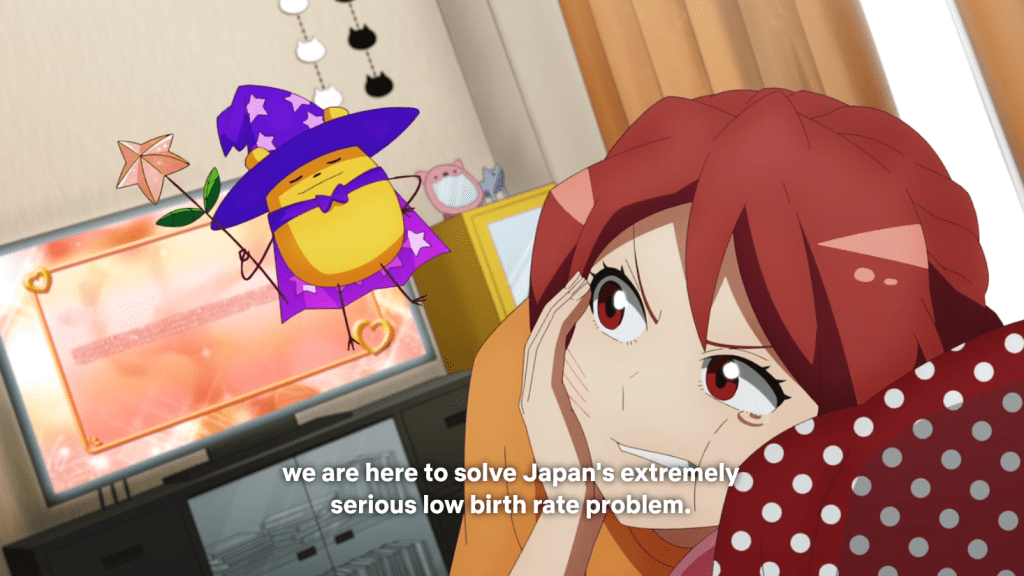
Romantic Killer demonstrates how bizarre it is to expect or demand that people forgo all of their non-romantic loves, their non-romantic interests, and put all of their time and effort into pursuing strictly romantic relationships. This is clearly shown to be very distressing for Anzu, and she adamantly opposes Riri’s plots to get her to date one of these boys.
I have not read the manga, which is complete, but I don’t want to look up spoilers (I think I’ll continue with the anime), so I could be wrong about what I say next, BUT. While it’s cool to have a main character who is secure in her interests, which don’t really include romance, and see her resist the dating sim situations she is put in, I’m sure they’ll eventually pair her up with one of her various love interests. However, if they wanted her to end up partnered, a way they could’ve done that while still challenging amatonormativity is if they did a polyamorous situation. I think that would be nice. If the potentially aro-spec protagonist absolutely *must* have a boyfriend, give her two!
She Loves to Cook, and She Loves to Eat
The mangaka who wrote and illustrated She Loves to Cook, and She Loves to Eat first began releasing this manga on her Twitter and pixiv accounts in 2020, and since 2021, it has been serialized in Comic it, a magazine specifically aimed at adult otaku women who want more than just romance in their stories. She Loves to Cook, and She Loves to Eat has also been adapted into a live-action television drama.
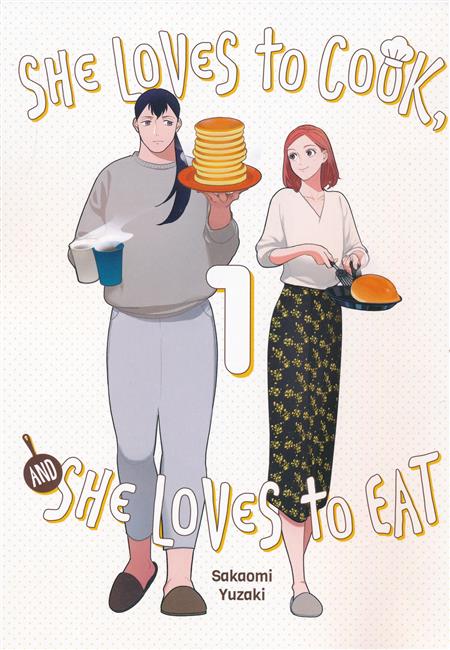
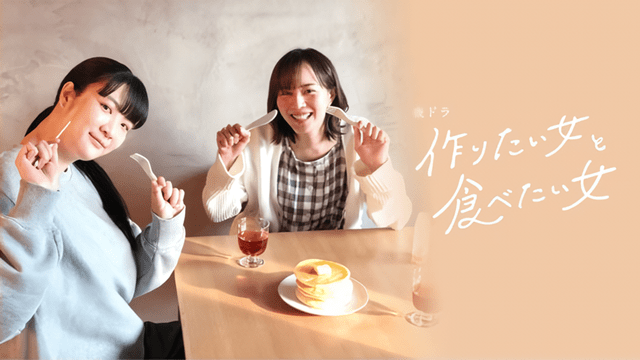
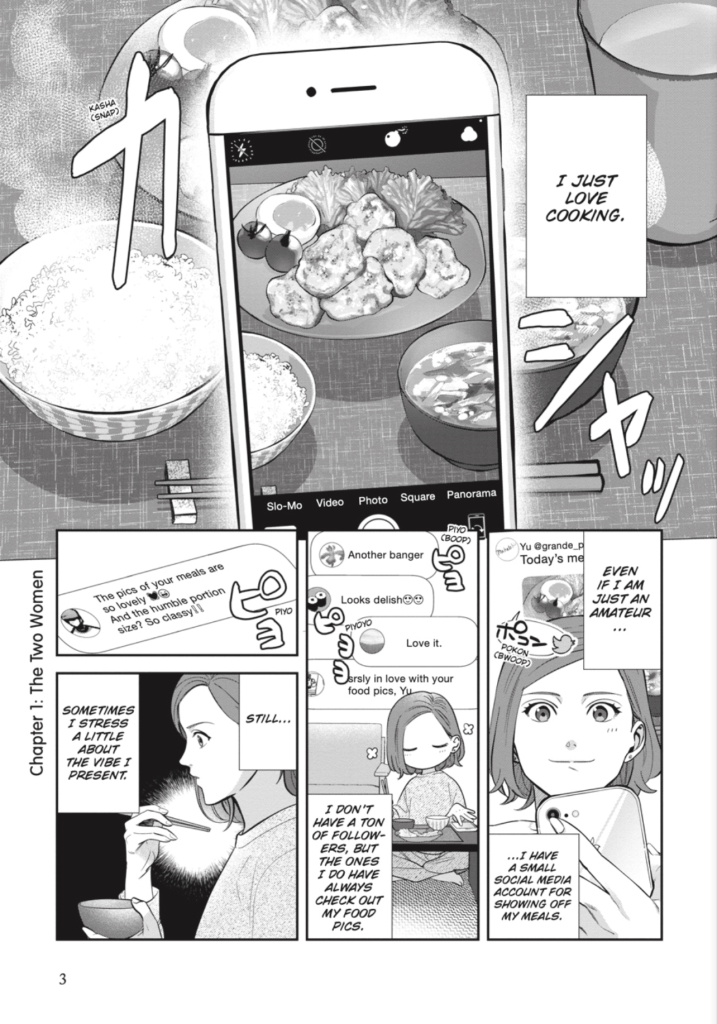
Nomoto is a single working woman, but as her hobby, she likes to cook these big, elaborate meals that she has no hope of finishing by herself.

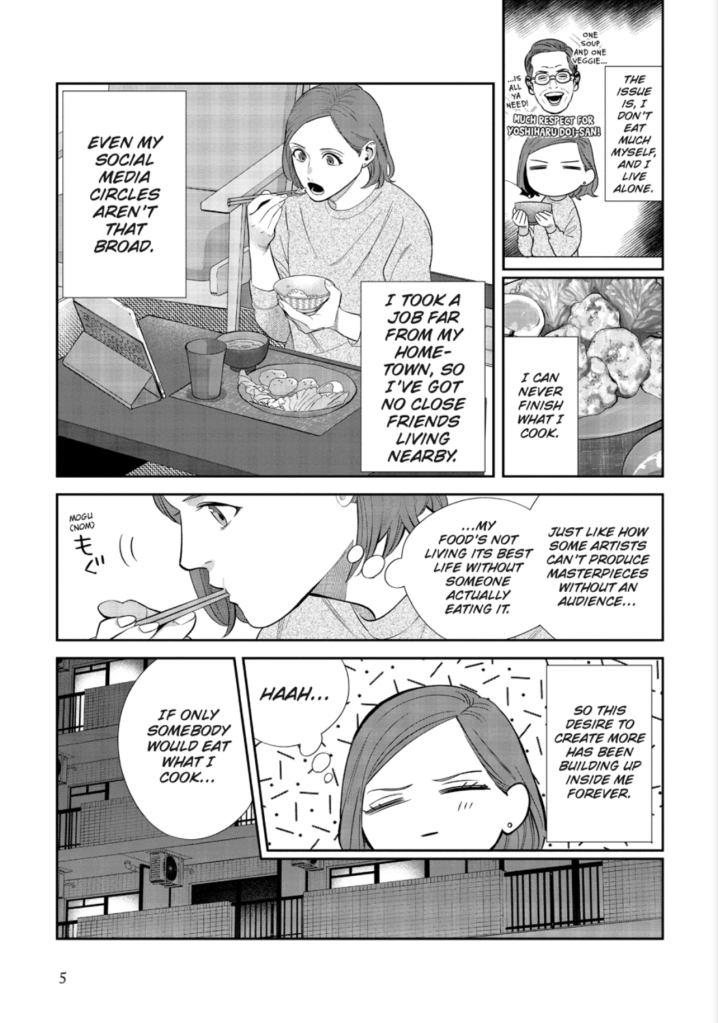
Her neighbor Kasuga, also a single working woman, she can eat. These two start off not knowing each other beyond the fact that they’re neighbors. But one day, Nomoto accidentally makes way more food than she can eat, so she invites Kasuga to have dinner with her. This becomes a regular occurrence and they develop a closer relationship, they go to farmer’s markets together, they plan fun meals they want to try.
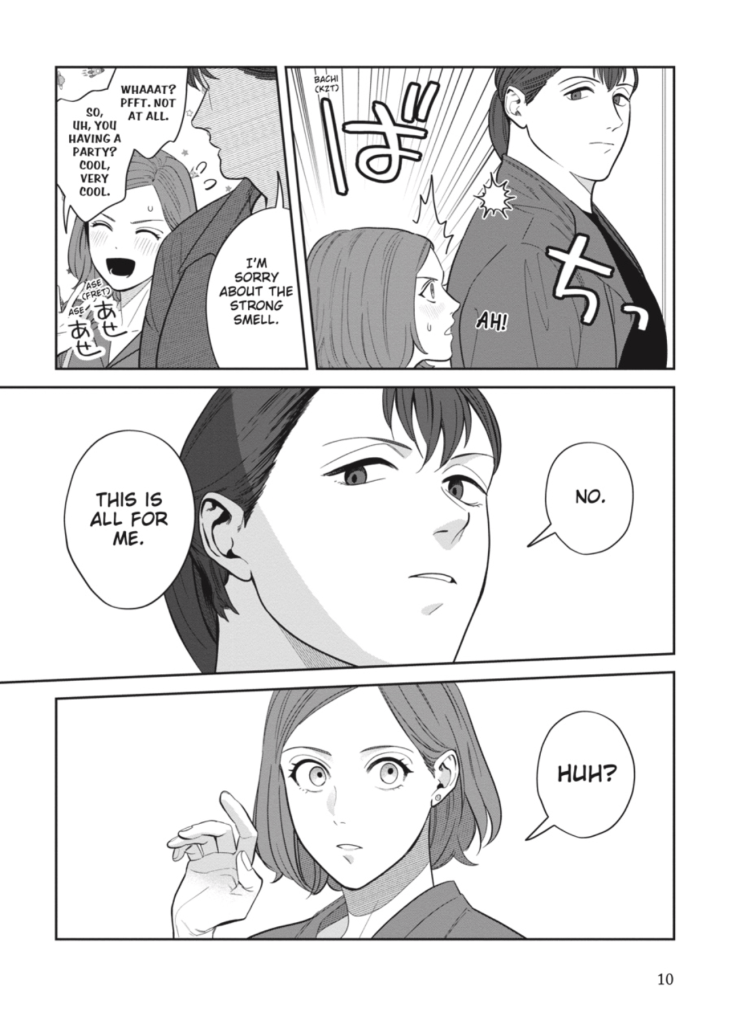
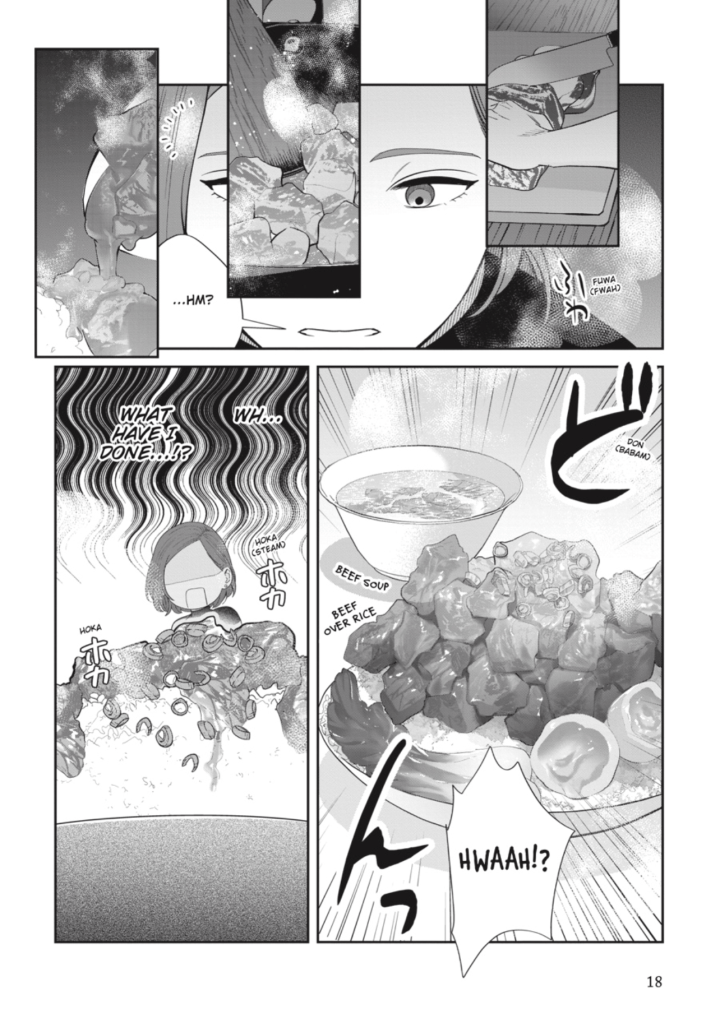
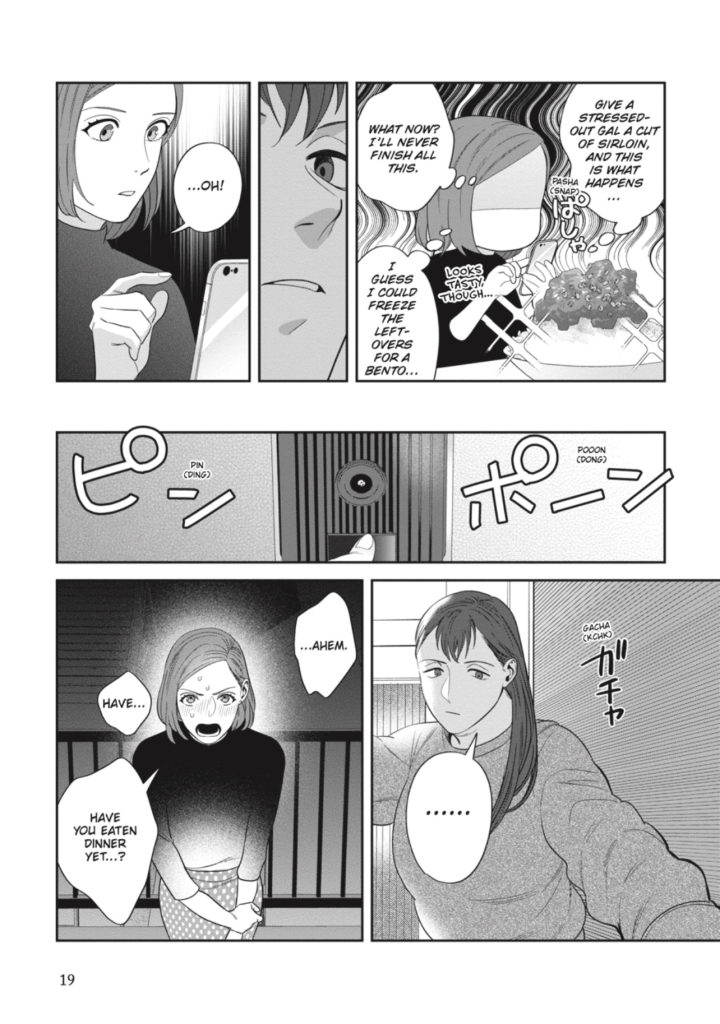
This is such a special series, and it manages to feel overwhelmingly wholesome and positive while contrasting the joy these women have when they cook and eat together with some of the issues that women face related to food.
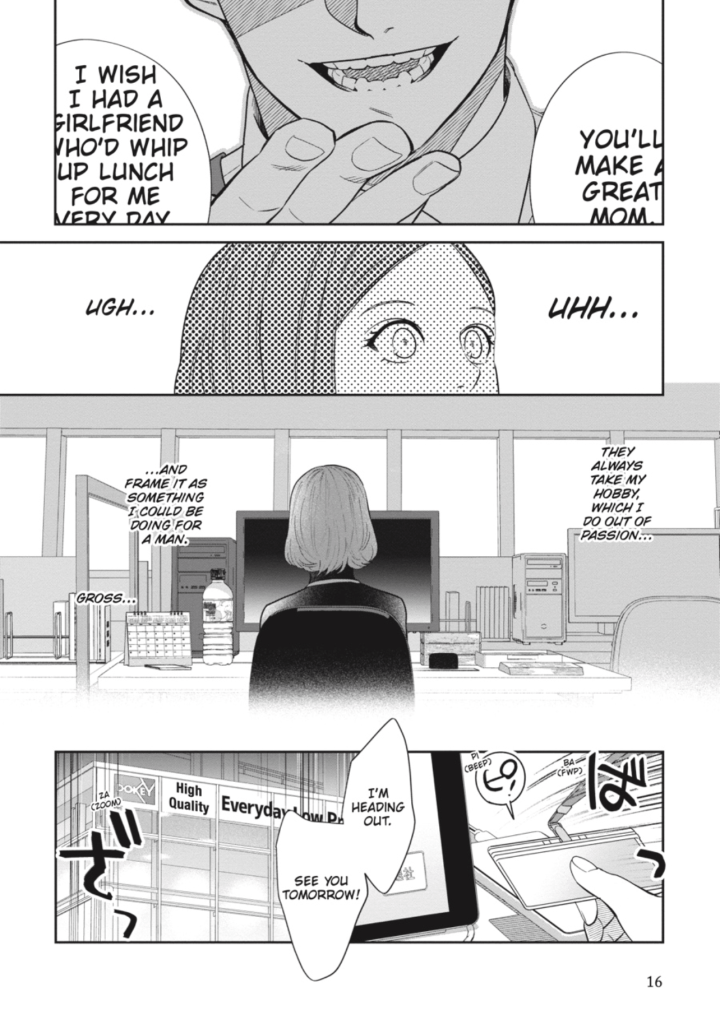
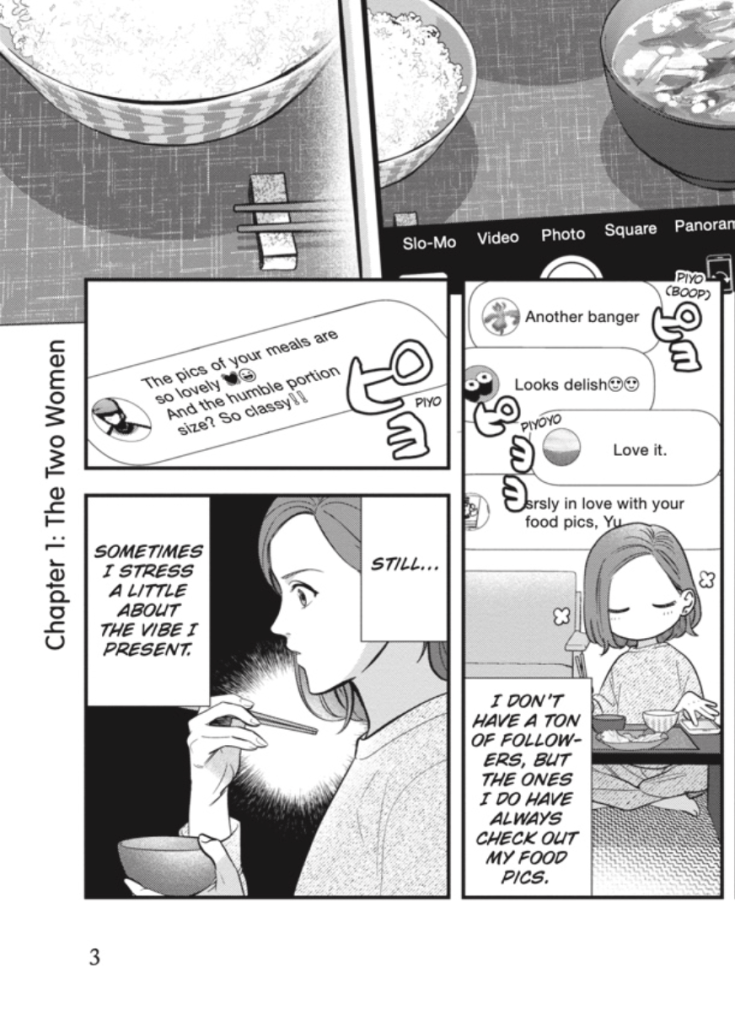
Nomoto brings her homemade lunches to work and also shares photos of the meals she cooks on social media, so we see her receive comments about what a good wife she would be, how happy she’ll make a man someday, how tasteful and classy it is when she posts a picture of a really modest portion of food.
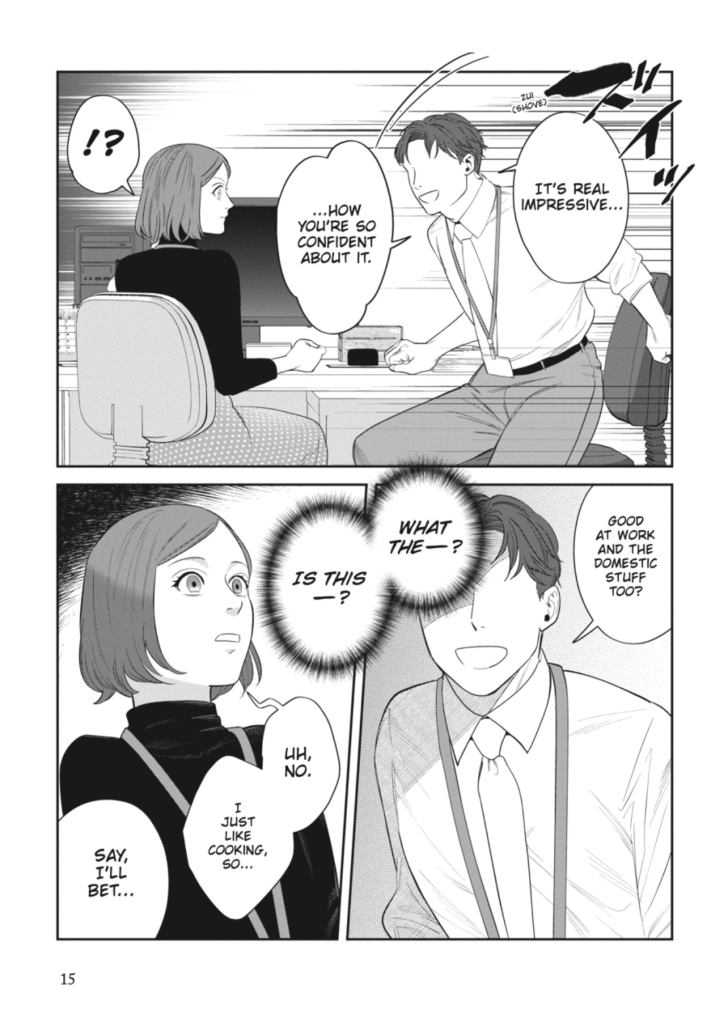
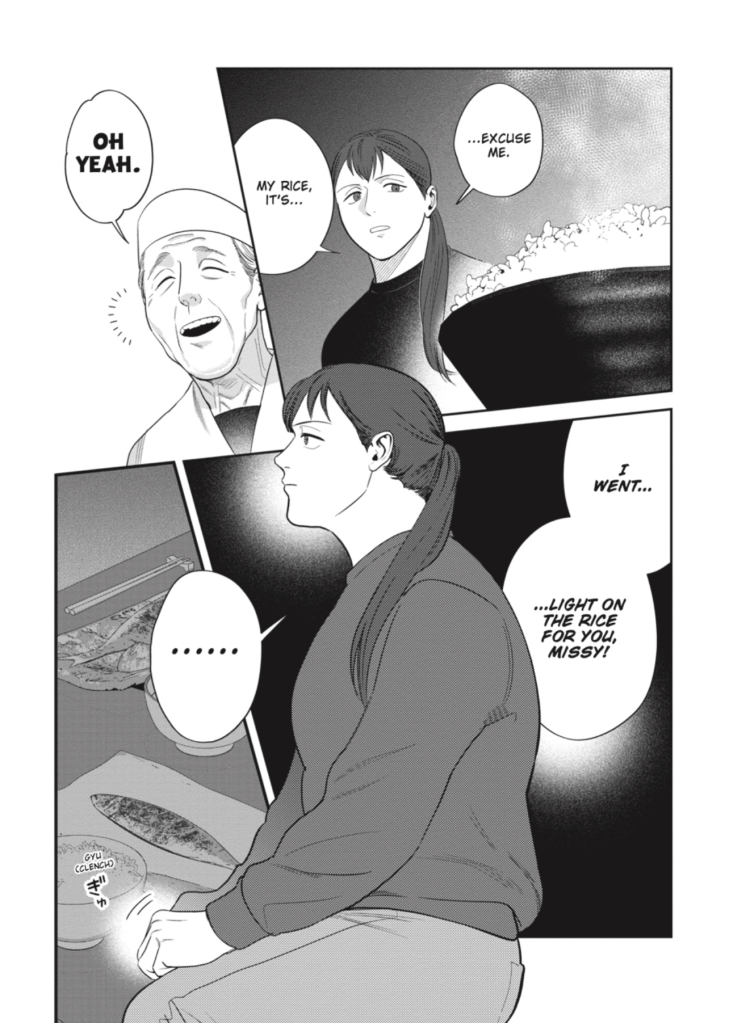
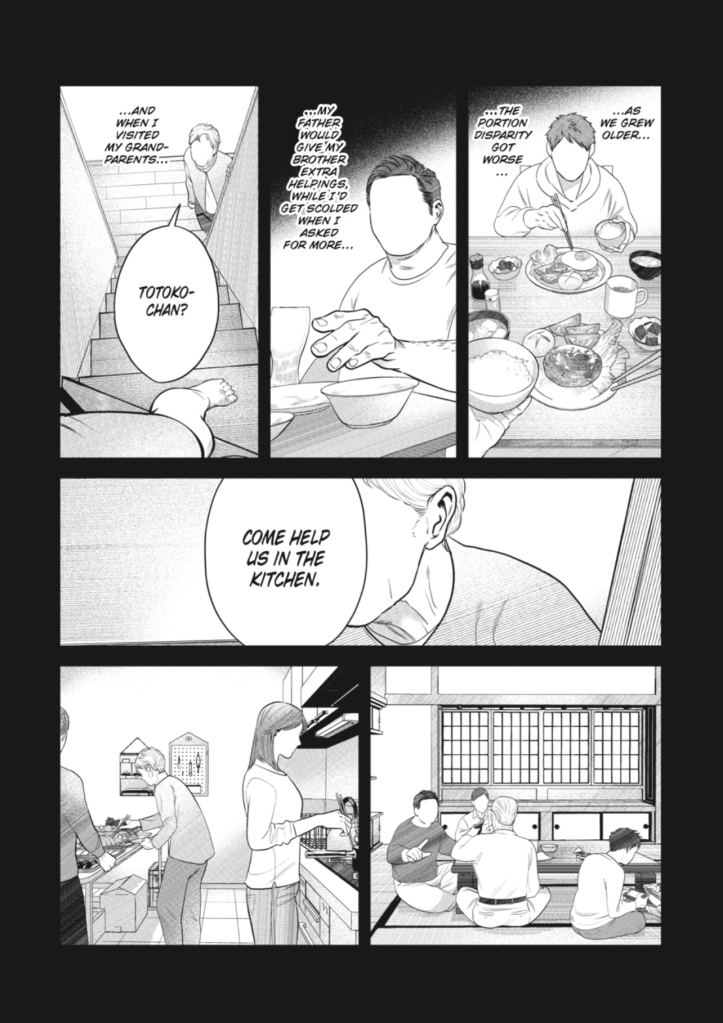
And with Kasuga’s character, this manga delves into the attitudes around women’s appetites and eating habits. The chef at a restaurant gives her a smaller helping of rice because she’s a woman, for example, and growing up, her father and brother got bigger portions and more helpings while she was scolded when she asked for more. She was constantly hungry. Just because she was a girl.
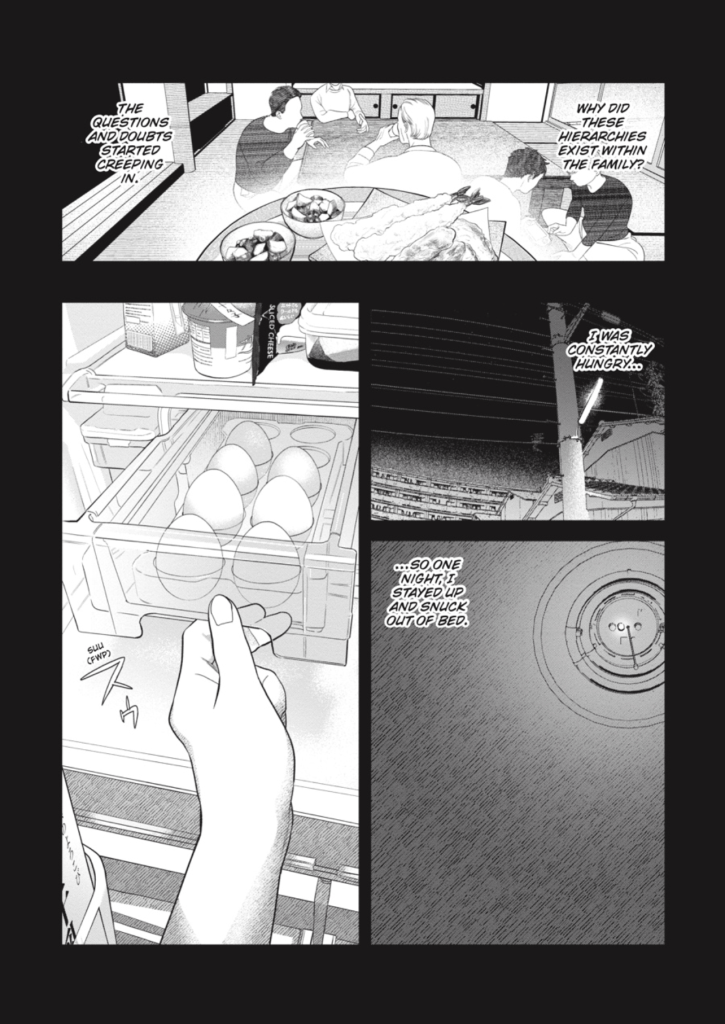
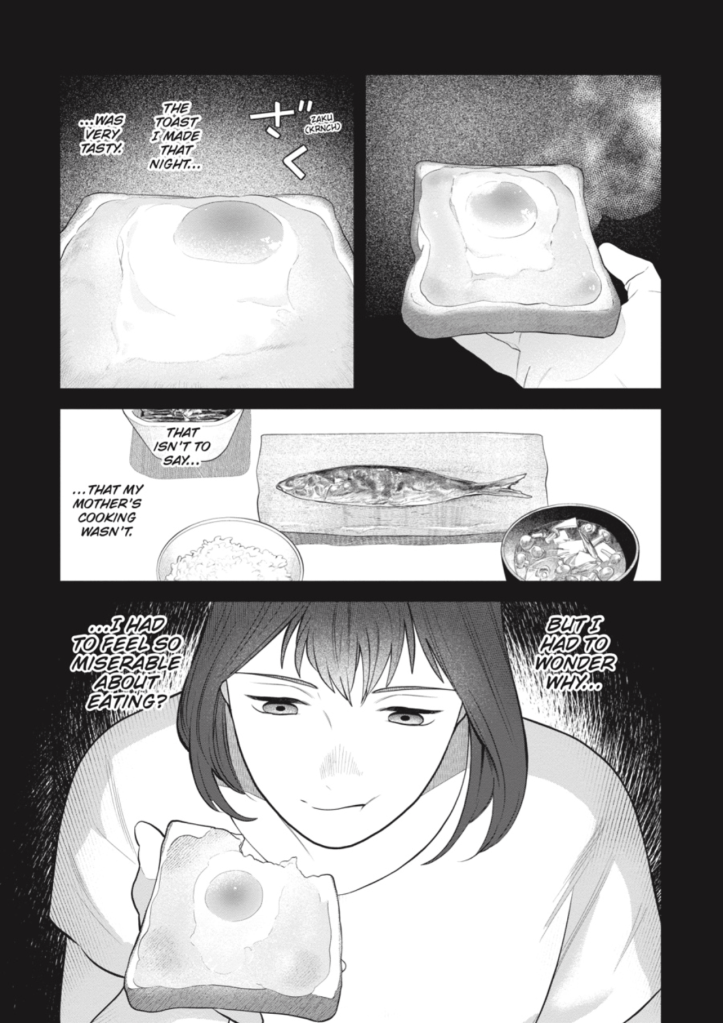
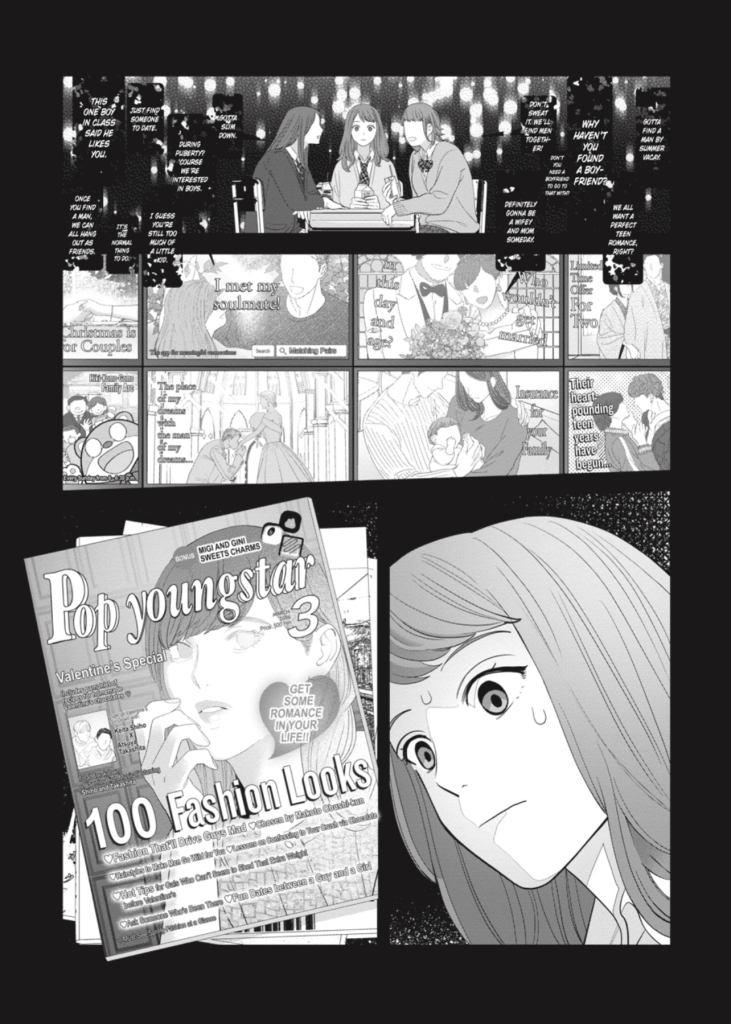
In addition to the food-related issues, Nomoto also deals with her mother pressing her to find a man to settle down with and devaluing her relationship with Kasuga because, she assumes, Kasuga is “just a friend.” Throughout the first two volumes, she makes note of how ubiquitous messaging about romance is. It’s a yuri manga, so I know she and Kasuga will eventually get together romantically, but even so, Nomoto’s experiences speak to how pervasive both heteronormativity and amatonormativity are.
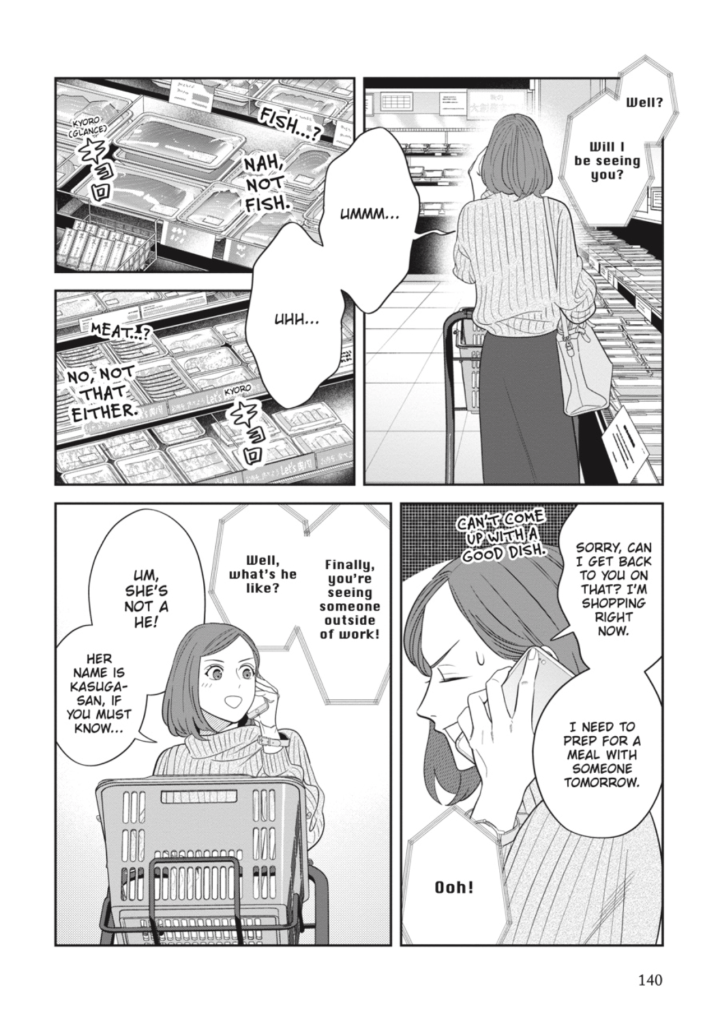
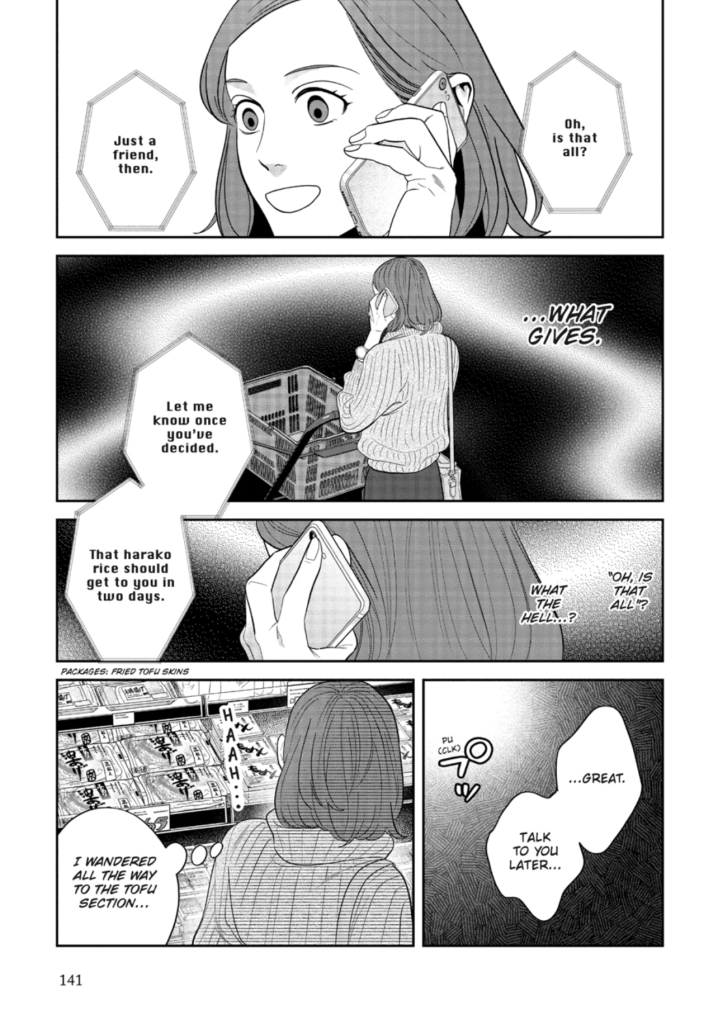
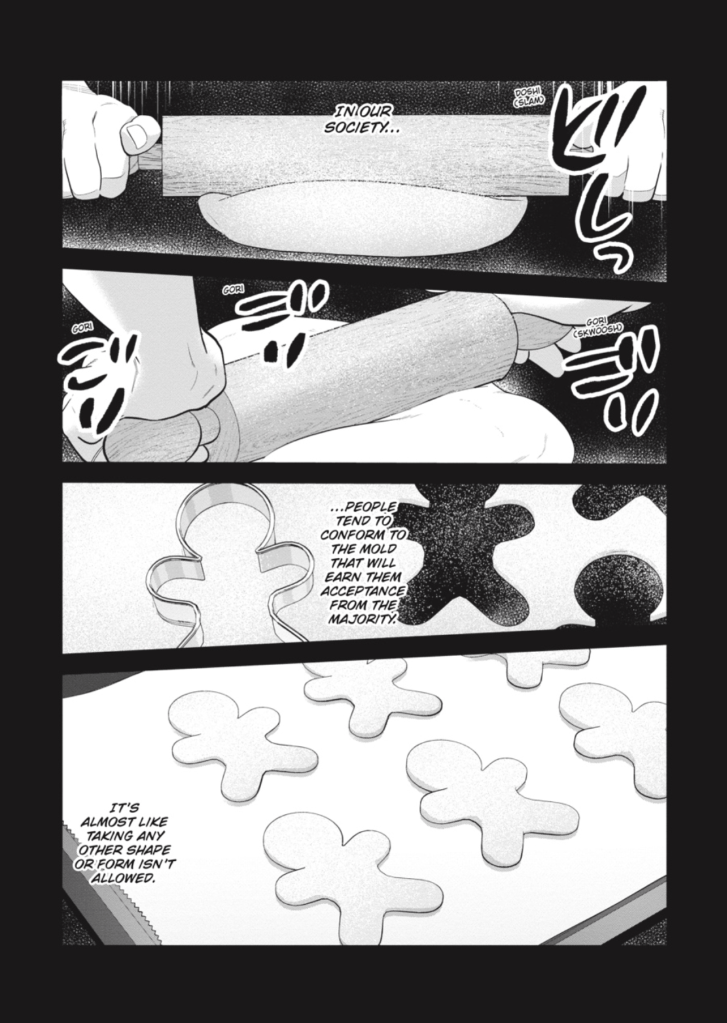
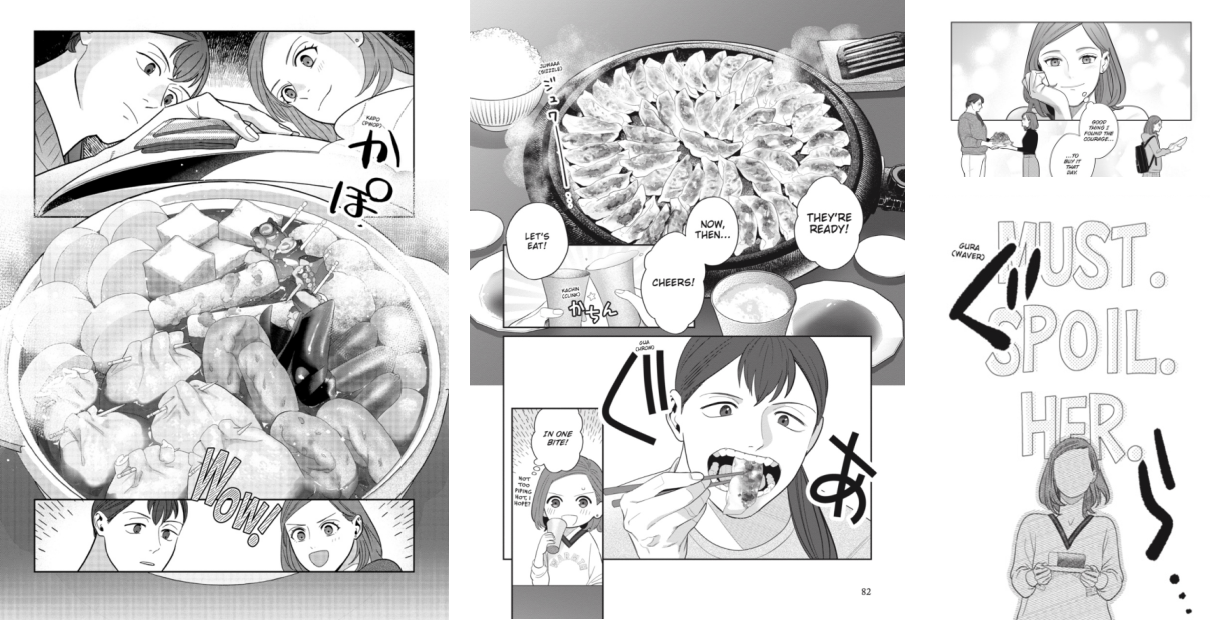
So, reading this, I got an ace vibe. Up to where I’ve read, volume 2, nothing overtly romantic or sexual has happened. I can’t say whether one of both of the main characters will turn out to be canonically ace, but when I googled the title of the manga and asexual, I learned that there’s an ace lesbian character introduced in volume 3, which hasn’t been translated to English yet but the English translation is set to release on October 17th of this year.
This is a beautifully drawn and written series. It is so joyful. And the food looks delicious. Maybe don’t read it on an empty stomach.
In Conclusion
A lot of these works are published by very small or specialized publishers, self-published, or began on alternative platforms like pixiv rather than traditional publishing, and I think this is in line with the broader trend of ace and aro people having to work really hard to carve out space for themselves. Creating a vocabulary to explain our experiences, conducting independent research, starting forums to build community with other a-specs. On one hand, really cool. On the other, I really hope we can start to see more solidarity, and I want to see ace and aro people have the success and recognition and representation we deserve.
Many of these are also very recent releases. The first chapter of I Want to Be a Wall was posted to pixiv in 2019. Mine-kun is Asexual was made in 2019. Is Love the Answer? was released in January 2023. A panel like this probably would not have been possible 10 or even 5 years ago.
Amatonormativity, allonormativity, heteronormativity permeate everything in our society. To go against that current is not easy. If you’re a-spec, you are a revolution.
Works Cited
- https://elizabethbrake.com/amatonormativity/
- https://www.analize-journal.ro/wp-content/uploads/issues/numarul_11/11_3_elizabeth_brake_61-84.pdf
- https://www.aromanticism.org/en/basic-terms
- https://www.penguinrandomhouse.com/books/710512/refusing-compulsory-sexuality-by-sherronda-j-brown/
- https://www.ncbi.nlm.nih.gov/pmc/articles/PMC8321986/pdf/10508_2021_Article_2002.pdf
- https://www.gov.uk/government/publications/national-lgbt-survey-summary-report
- https://www.asexualityarchive.com/asexuality-in-the-dsm-5/
- https://acearocollective.au/read-the-report/
- https://acecommunitysurvey.org/wp-content/uploads/2022/10/2020-Ace-Community-Survey-Summary-Report.pdf
- https://farfaraway.blog/wp-content/uploads/2023/07/12205-arocensus2020report.pdf
- https://elephantbirdaro.wixsite.com/aromanticsurveys/arospec-stigmatization-report
- https://vc.bridgew.edu/cgi/viewcontent.cgi?article=1330&context=honors_proj
- https://trepo.tuni.fi/bitstream/handle/10024/103135/1522145474.pdf?sequence
 farfaraway